About this artwork
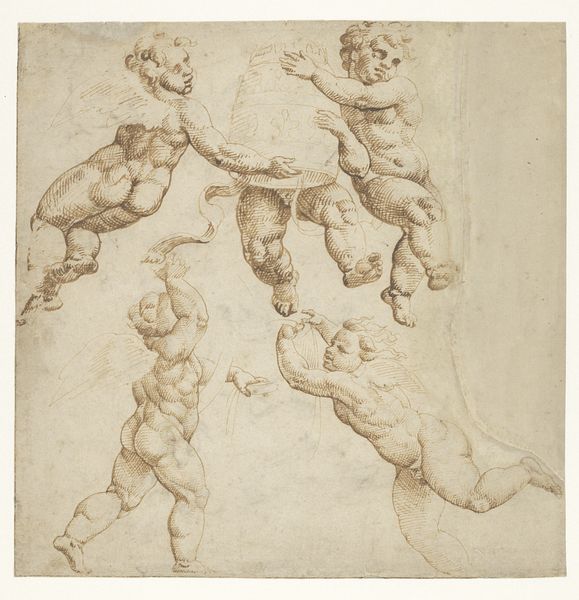
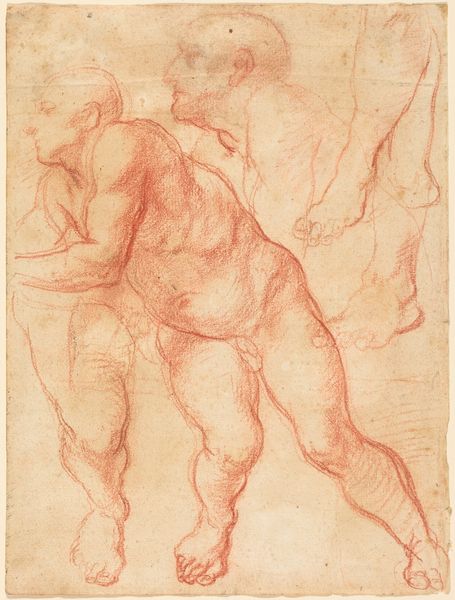
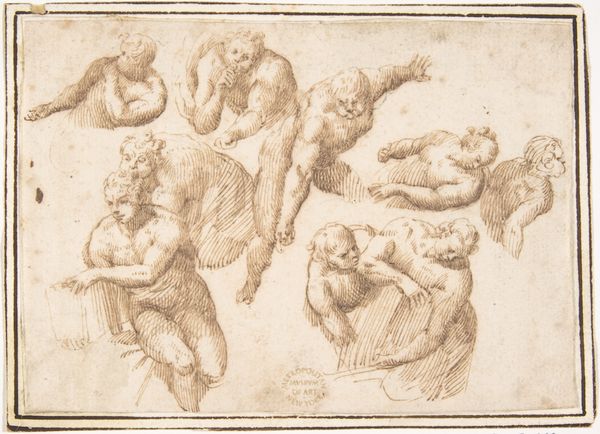
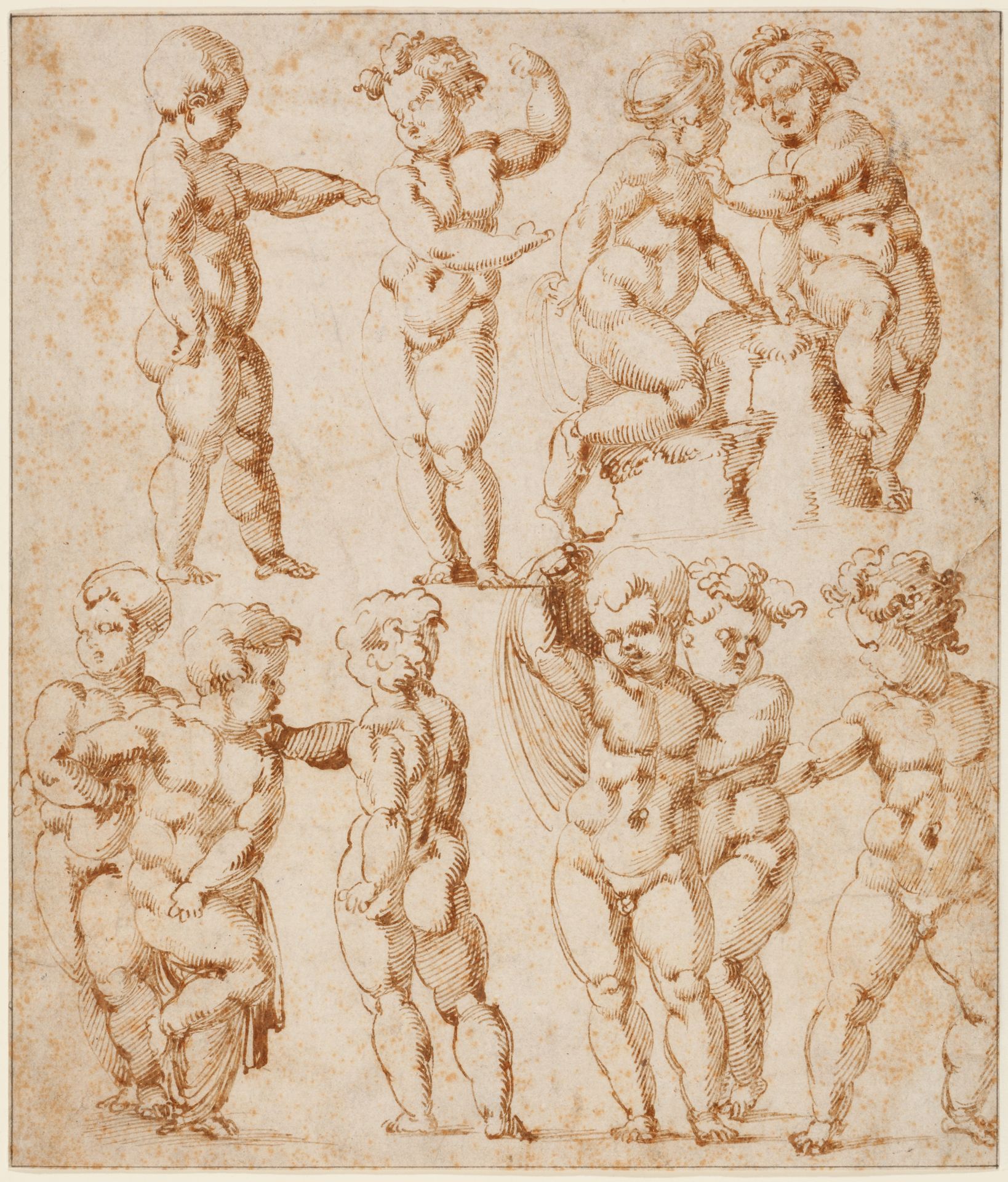
Baccio Bandinelli rendered these Studies of Children with pen and brown ink in the 16th century. These figures, with their plump forms and playful gestures, echo the classical motif of the putto, a symbol deeply embedded in the cultural memory of the Renaissance. The putto, derived from ancient Roman art, originally represented Cupid or Eros, embodying love and desire. Over time, this symbol transformed, taking on religious undertones as cherubic angels in Christian art. Bandinelli's studies capture this evolution, blending classical sensuality with a budding spiritual innocence. Consider the gesture of reaching, repeated throughout the drawing. This motif transcends time, appearing in ancient friezes and resurfacing in Baroque paintings, each time conveying a sense of longing, connection, or supplication. Such gestures tap into our collective subconscious, evoking primal emotions of need and desire. It is through the cyclical return and reinvention of these symbols that we can trace the currents of human experience across centuries.
Studies of Children (Studies after a Mannequin)
c. 1520


Artwork details
- Medium
- drawing, ink, chalk
- Location
- Städel Museum
- Copyright
- Public Domain
Tags
Comments
Share your thoughts
About this artwork
Baccio Bandinelli rendered these Studies of Children with pen and brown ink in the 16th century. These figures, with their plump forms and playful gestures, echo the classical motif of the putto, a symbol deeply embedded in the cultural memory of the Renaissance. The putto, derived from ancient Roman art, originally represented Cupid or Eros, embodying love and desire. Over time, this symbol transformed, taking on religious undertones as cherubic angels in Christian art. Bandinelli's studies capture this evolution, blending classical sensuality with a budding spiritual innocence. Consider the gesture of reaching, repeated throughout the drawing. This motif transcends time, appearing in ancient friezes and resurfacing in Baroque paintings, each time conveying a sense of longing, connection, or supplication. Such gestures tap into our collective subconscious, evoking primal emotions of need and desire. It is through the cyclical return and reinvention of these symbols that we can trace the currents of human experience across centuries.
Comments
Share your thoughts