About this artwork
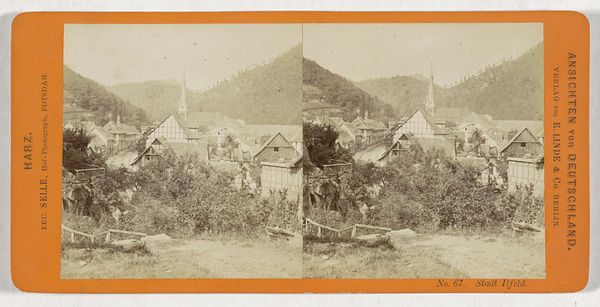
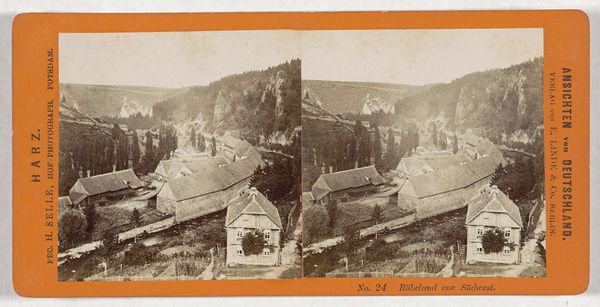
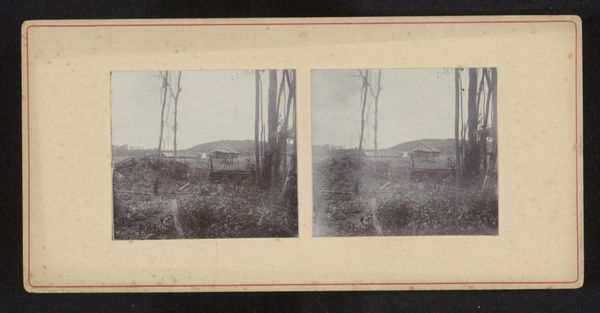
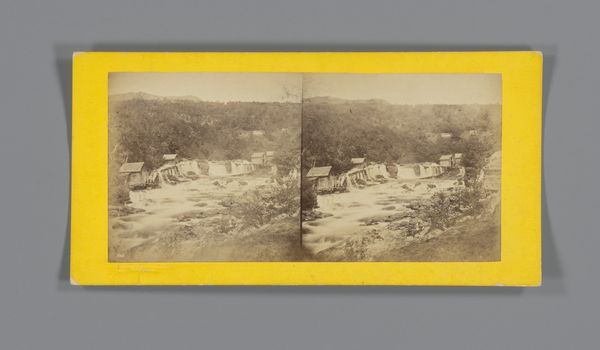
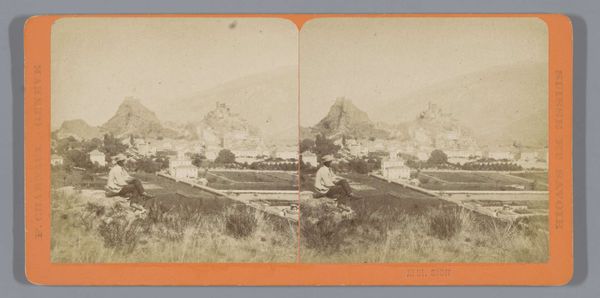
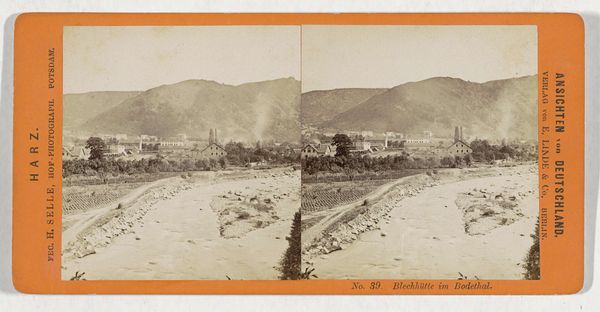
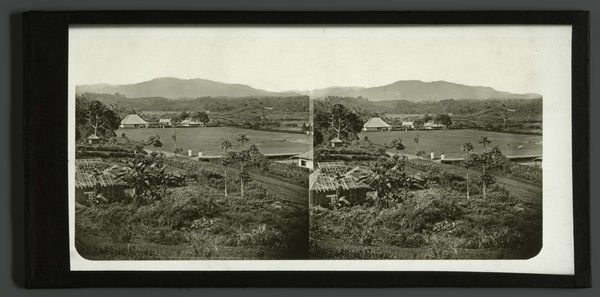
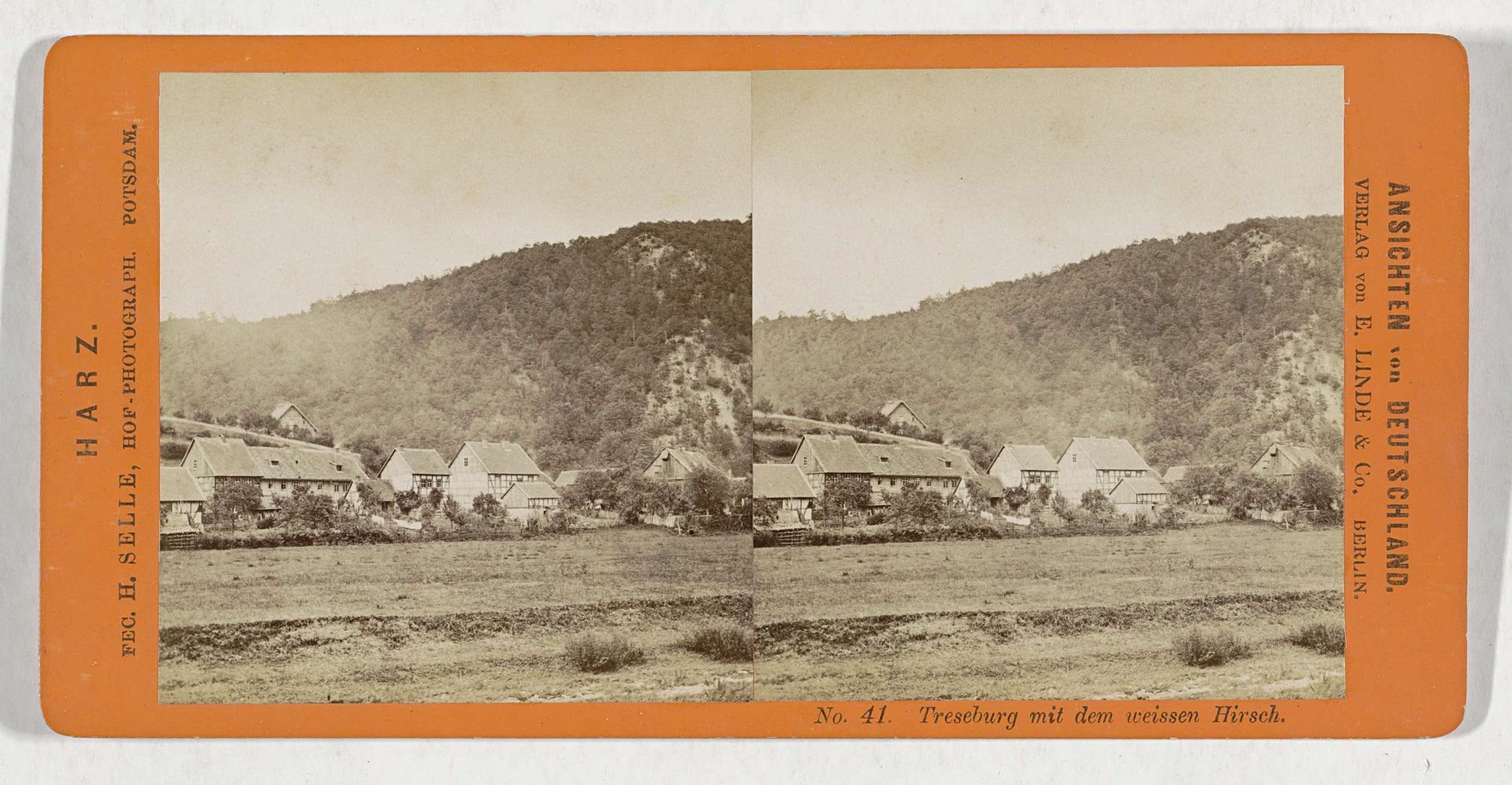
This stereoscopic card titled "Gezicht op Treseburg en de Weisser Hirsch" presents a dual image of a German village scene, captured by Hermann Selle. These cards were a popular form of entertainment, offering a three-dimensional viewing experience. Think about how photography democratized landscape art. Before, only the wealthy could commission paintings of vistas. Now, anyone could possess these intimate views of far-off places. The rise of photography also coincided with a period of rapid industrialization and urbanization, meaning this village scene represents an idealized, rural past. It invites questions around ideas of home, heritage, and the yearning for simpler times. What do you feel when looking at this image? Is it nostalgia, curiosity, or something else? The desire to capture and share these scenes speaks to a collective longing to preserve moments and places, and perhaps, ourselves.

Artwork details
- Dimensions
- height 87 mm, width 176 mm
- Copyright
- Rijks Museum: Open Domain
Comments
Share your thoughts
About this artwork
This stereoscopic card titled "Gezicht op Treseburg en de Weisser Hirsch" presents a dual image of a German village scene, captured by Hermann Selle. These cards were a popular form of entertainment, offering a three-dimensional viewing experience. Think about how photography democratized landscape art. Before, only the wealthy could commission paintings of vistas. Now, anyone could possess these intimate views of far-off places. The rise of photography also coincided with a period of rapid industrialization and urbanization, meaning this village scene represents an idealized, rural past. It invites questions around ideas of home, heritage, and the yearning for simpler times. What do you feel when looking at this image? Is it nostalgia, curiosity, or something else? The desire to capture and share these scenes speaks to a collective longing to preserve moments and places, and perhaps, ourselves.
Comments
Share your thoughts