About this artwork
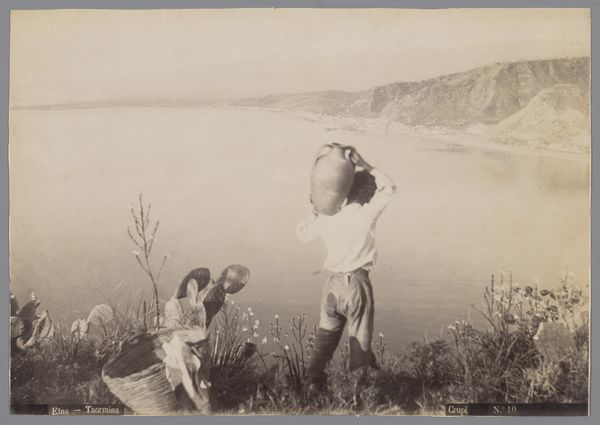
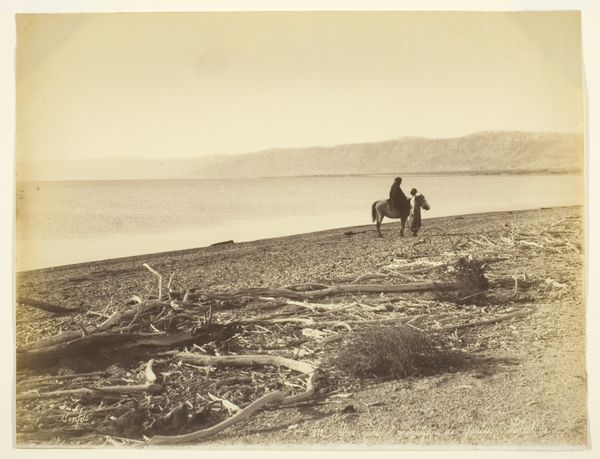
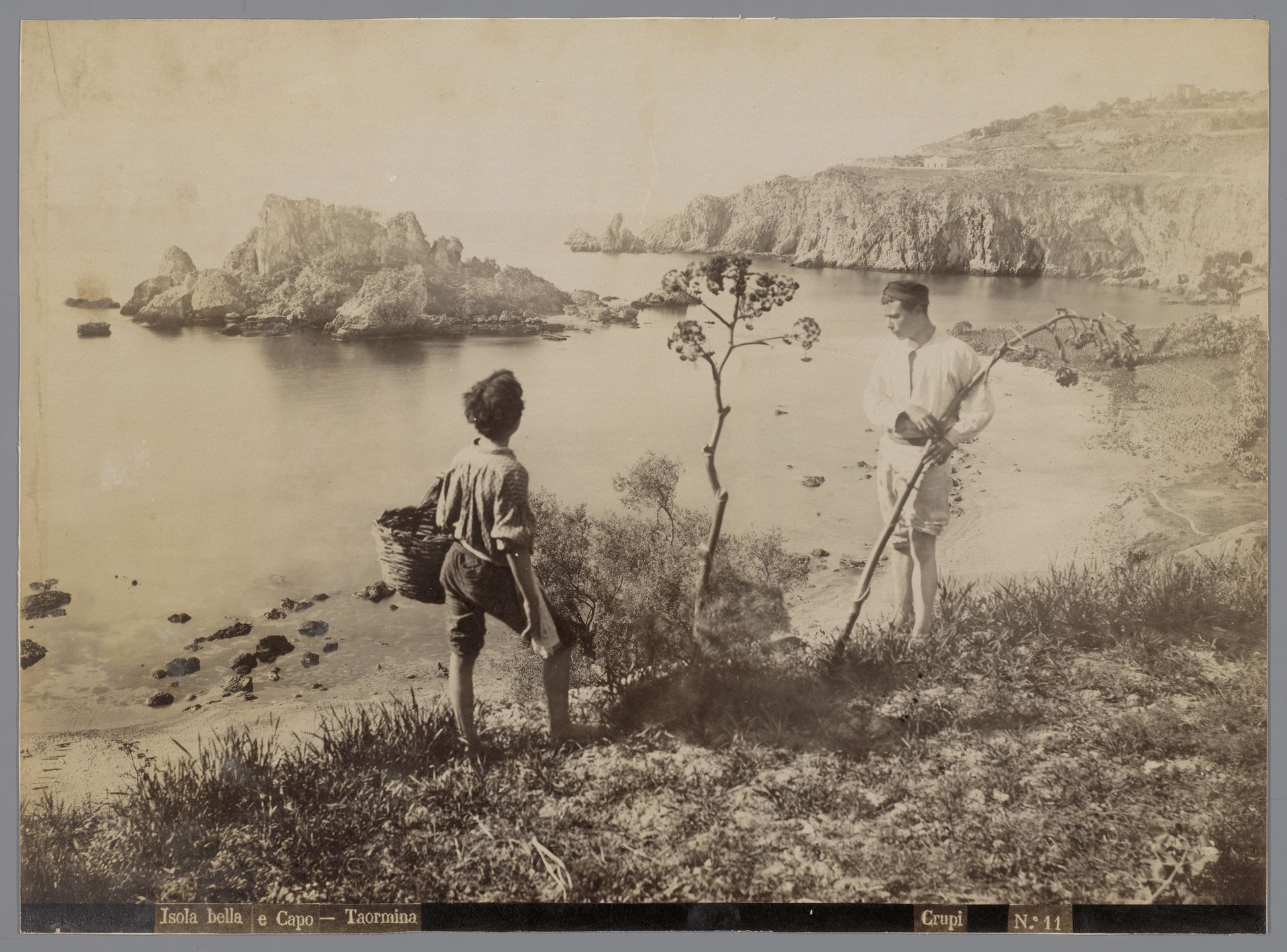
Giovanni Crupi made this photograph of two boys in Taormina, Italy, sometime around the turn of the 20th century. The image is a silver gelatin print, a process that allowed for a wide tonal range and sharp detail. Crupi was clearly interested in more than just a scenic view. Note the boy carrying a woven basket, the other holding a long stick. What are they collecting, and for what purpose? The labor of children, a common sight in this era, is subtly embedded in the composition. The basket, likely made from local plant fibers, speaks to traditional craft practices, while the photographic process itself represents a burgeoning industrial technology. By carefully considering these elements, Crupi's photograph becomes more than just a pretty picture, it turns into a commentary on labor, class, and the changing landscape of early 20th-century Italy. It reminds us that every image is constructed, reflecting choices about what to include, and how to frame the world.
Twee jongens staande op een klif aan een baai nabij Taormina, Italië
1851 - 1900

Artwork details
- Medium
- photography, gelatin-silver-print
- Dimensions
- height 261 mm, width 369 mm
- Copyright
- Rijks Museum: Open Domain
Tags
Comments
Share your thoughts
About this artwork
Giovanni Crupi made this photograph of two boys in Taormina, Italy, sometime around the turn of the 20th century. The image is a silver gelatin print, a process that allowed for a wide tonal range and sharp detail. Crupi was clearly interested in more than just a scenic view. Note the boy carrying a woven basket, the other holding a long stick. What are they collecting, and for what purpose? The labor of children, a common sight in this era, is subtly embedded in the composition. The basket, likely made from local plant fibers, speaks to traditional craft practices, while the photographic process itself represents a burgeoning industrial technology. By carefully considering these elements, Crupi's photograph becomes more than just a pretty picture, it turns into a commentary on labor, class, and the changing landscape of early 20th-century Italy. It reminds us that every image is constructed, reflecting choices about what to include, and how to frame the world.
Comments
Share your thoughts