About this artwork
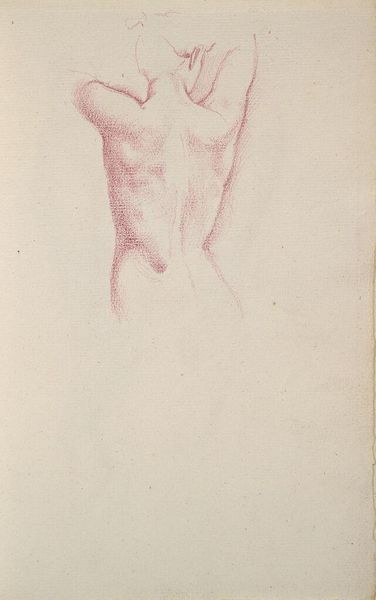
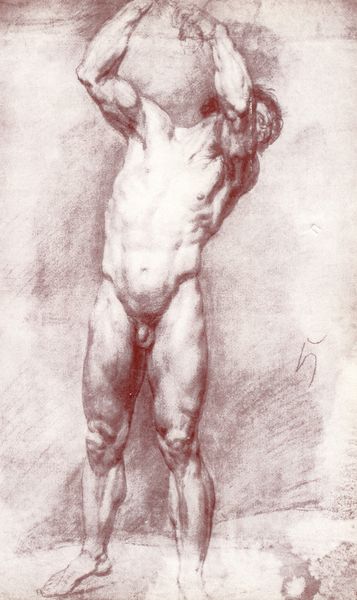
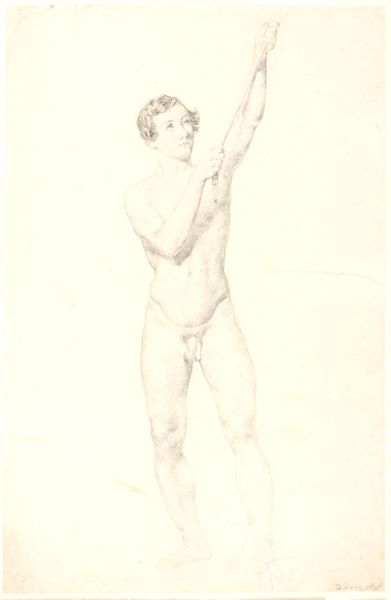
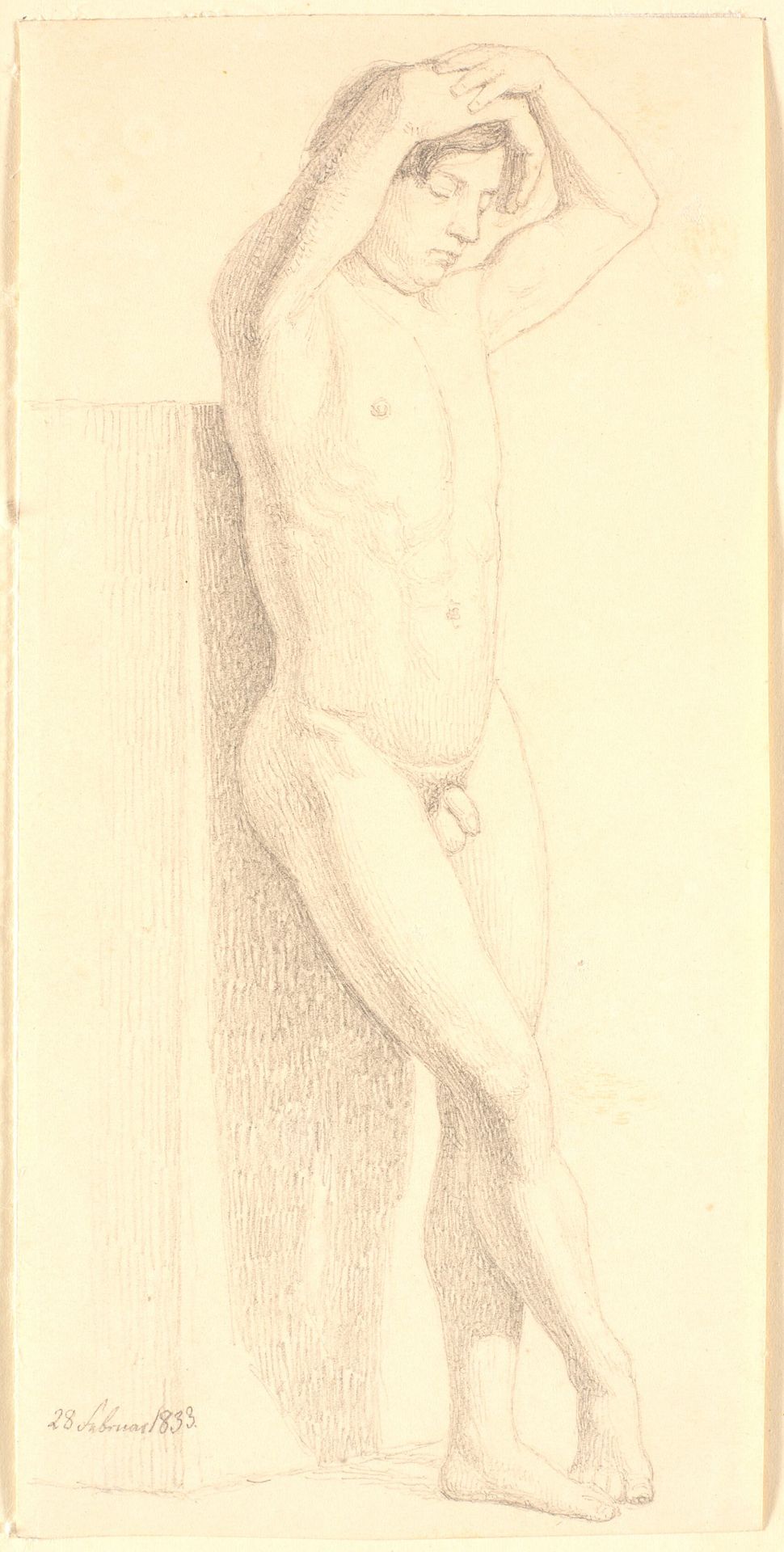
Christen Købke made this pencil drawing of a standing male model in 1833. Created in Denmark, the artwork reflects the period's increasing interest in the human form, influenced by classical ideals and the academic training artists received at institutions like the Royal Danish Academy of Fine Arts. The model's pose, with arms raised above his head, is a conventional one, often used in academic studies to explore anatomy and proportion. However, Købke's approach is notable for its realism and attention to detail, focusing on the play of light and shadow across the figure's body, giving it a very human quality. To fully appreciate this work, we can look at the records of the Royal Danish Academy and investigate its curriculum. We can also research the social status of art models in Copenhagen during the 19th century, to understand the social context in which Købke was working. This drawing isn't just a study; it's also a document of its time, reflecting the artistic values and social structures of 19th-century Denmark.
Stående mandlig model med armene samlet over hovedet. Vendt mod højre 1833


Artwork details
- Medium
- drawing, pencil
- Dimensions
- 199 mm (height) x 97 mm (width) (bladmaal)
- Location
- SMK - Statens Museum for Kunst
Tags
portrait
pencil drawn
drawing
medieval
pencil sketch
figuration
form
pencil drawing
pencil
line
portrait drawing
academic-art
nude
realism
Comments
No comments
About this artwork
Christen Købke made this pencil drawing of a standing male model in 1833. Created in Denmark, the artwork reflects the period's increasing interest in the human form, influenced by classical ideals and the academic training artists received at institutions like the Royal Danish Academy of Fine Arts. The model's pose, with arms raised above his head, is a conventional one, often used in academic studies to explore anatomy and proportion. However, Købke's approach is notable for its realism and attention to detail, focusing on the play of light and shadow across the figure's body, giving it a very human quality. To fully appreciate this work, we can look at the records of the Royal Danish Academy and investigate its curriculum. We can also research the social status of art models in Copenhagen during the 19th century, to understand the social context in which Købke was working. This drawing isn't just a study; it's also a document of its time, reflecting the artistic values and social structures of 19th-century Denmark.
Comments
No comments