
Curatorial notes
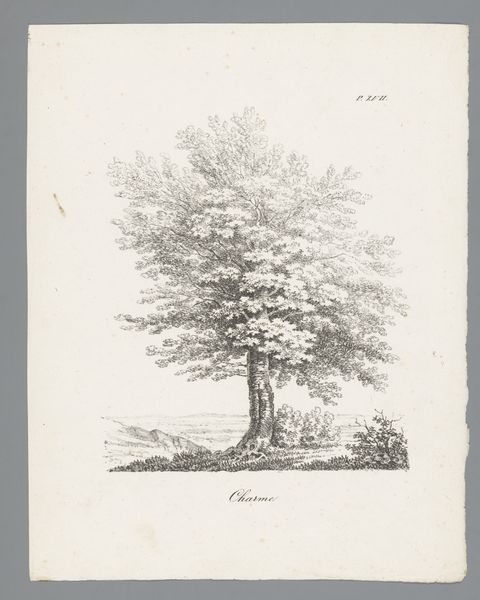
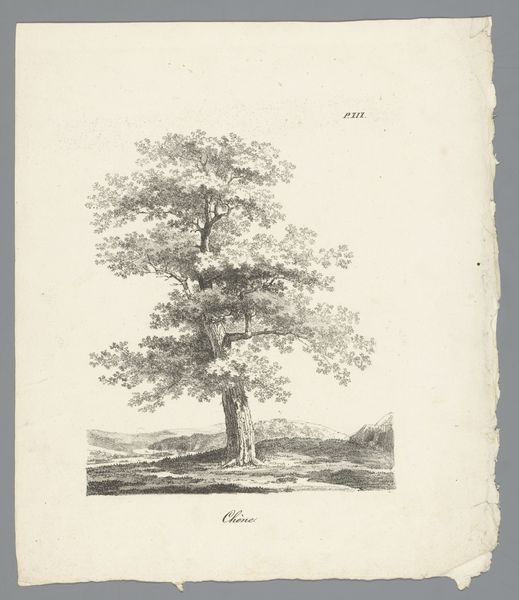
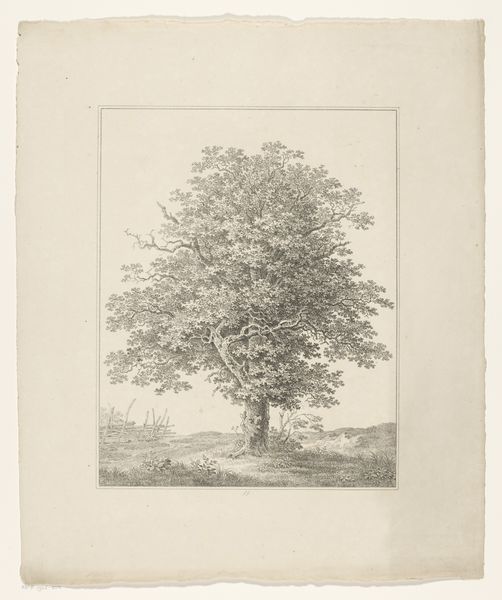
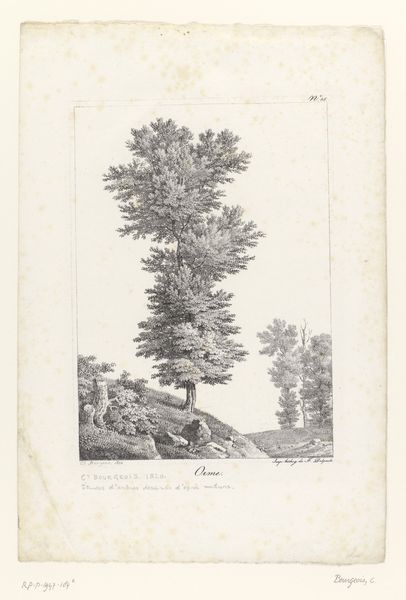
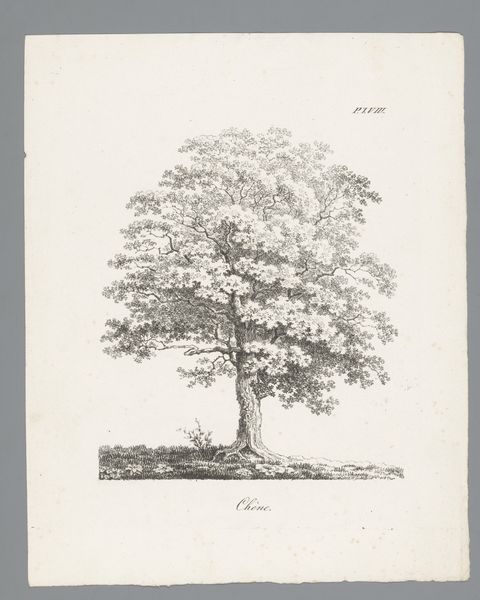
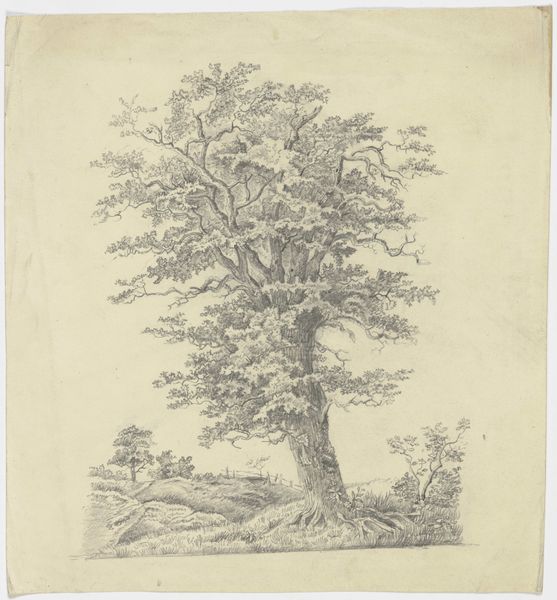
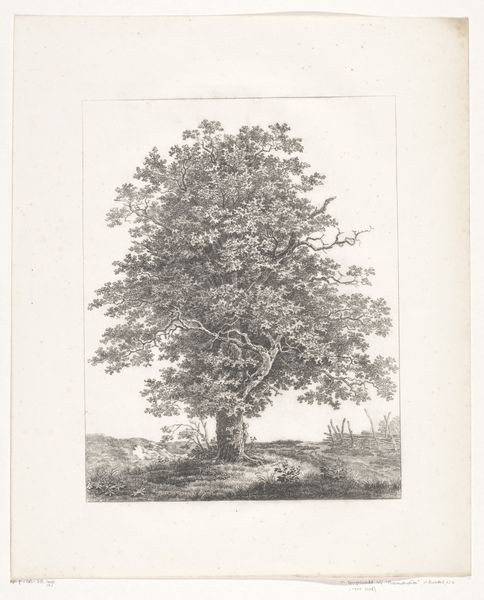
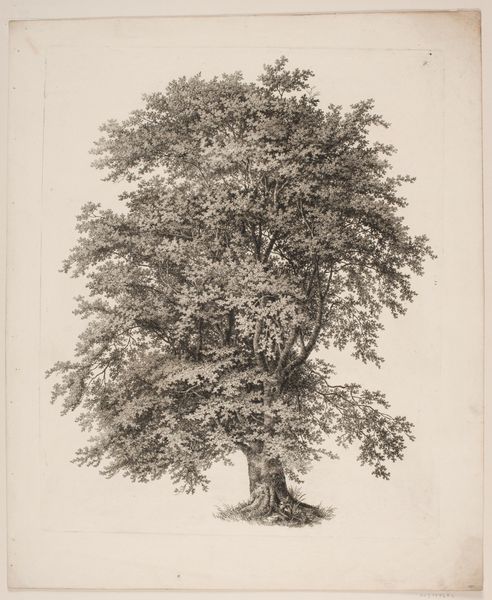
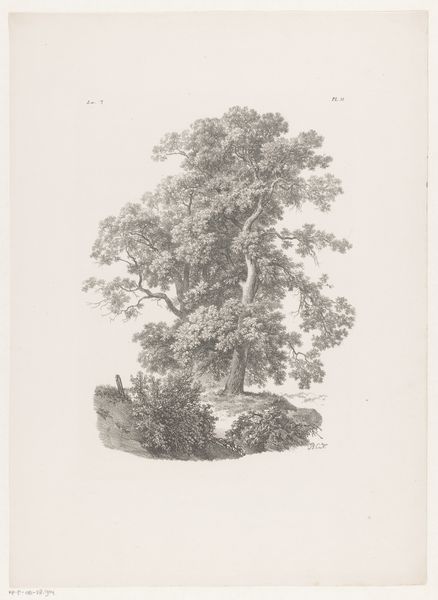
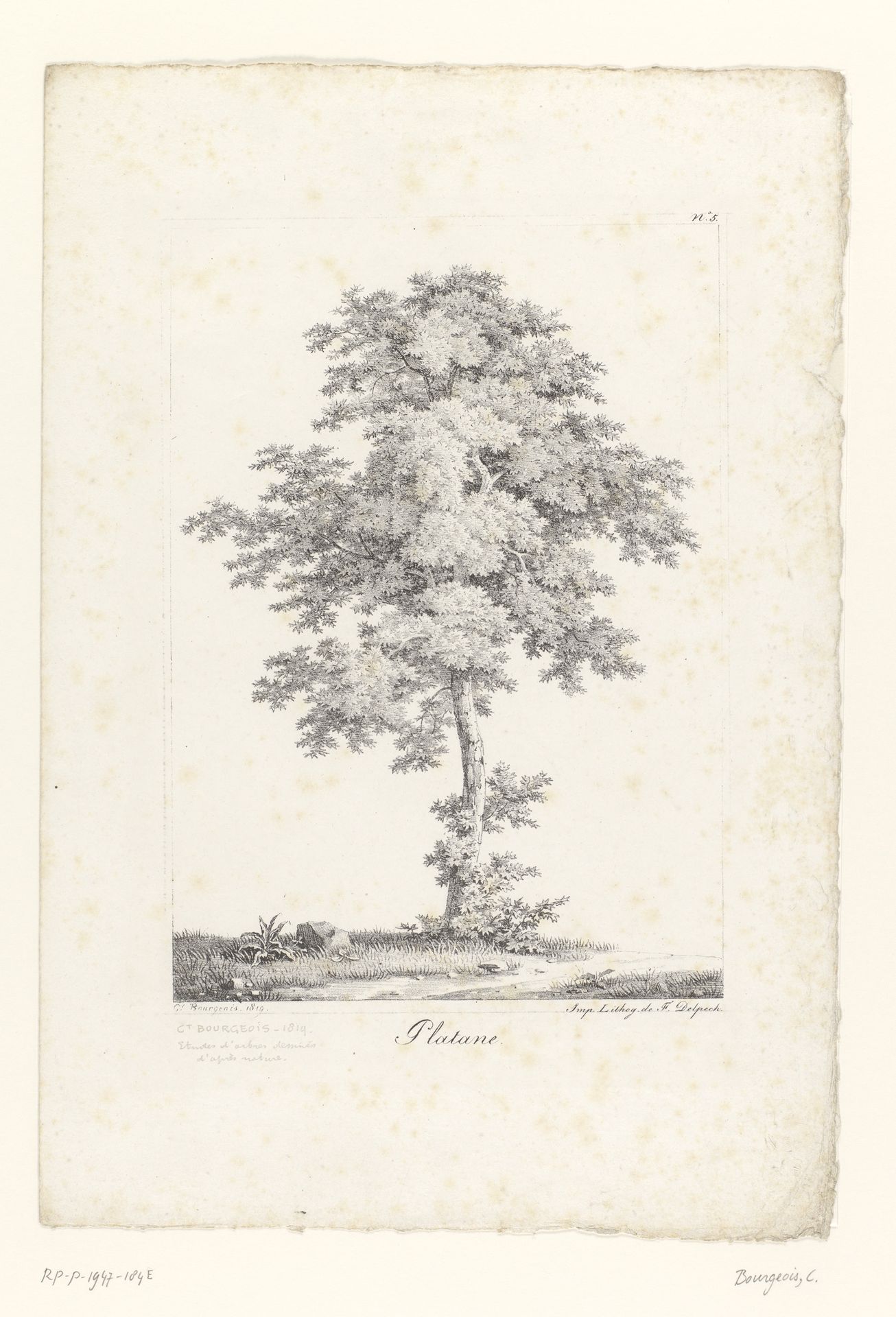
Curator: Ah, here's "Plataan," an etching and drawing created around 1819 by Constant Bourgeois. It's a beautiful example of Neoclassical landscape art. Editor: You know, looking at it, it reminds me of a quiet morning, mist still hanging in the air. It’s delicate, almost like a memory fading at the edges. Curator: That sense of fragility is interesting, especially considering Bourgeois's focus on meticulously rendered detail. Look at how he used etching to capture the texture of the leaves. Editor: Exactly! It's not just about the subject, it's the obsession with process that I find calming. The way the artist clearly delights in rendering detail creates an atmosphere of meditative concentration, which bleeds out onto the artwork. Curator: Etching allowed for multiple reproductions. How do you see its context influencing the understanding of its function? Editor: This touches on the interesting dialogue between mass production and art, which I love. Making landscape accessible shifts our engagement to contemplation rather than mere spectacle, a way to feel presence more tangibly through reproduction rather than being swept by grandeur. Curator: That's a great point. By producing and distributing it as prints, a direct connection between nature, artistic practice and social access is formed. Editor: Mmh, I do think there's an aspect to the scale which might play into it, too. Given the rather contained dimensions, it asks for intimate interaction... almost like a page from a precious botanical textbook. Curator: Indeed, that brings the focus back to Bourgeois's own involvement and skillful workmanship during that transformative historical era. A moment captured forever. Editor: Precisely! A tiny echo of something enormous—art's trick is to give the echo more significance than the thing. Thanks for the lovely reflection.