18th century
Henrik Gerner


Listen to curator's interpretation
Curatorial notes
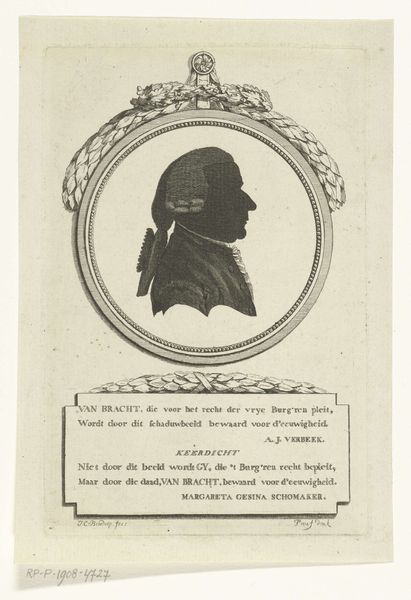
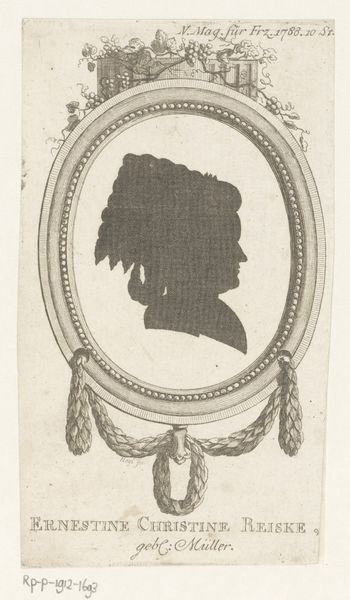
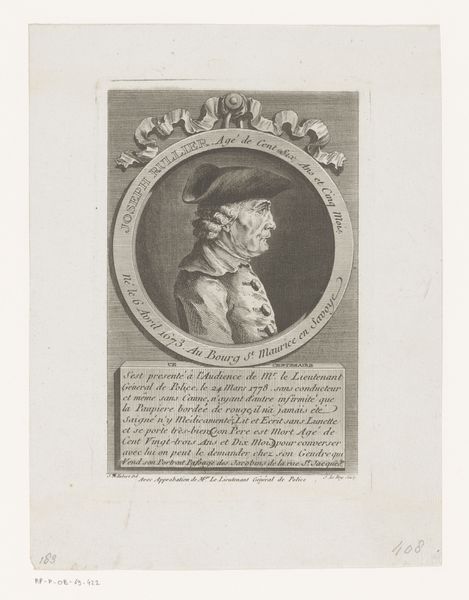
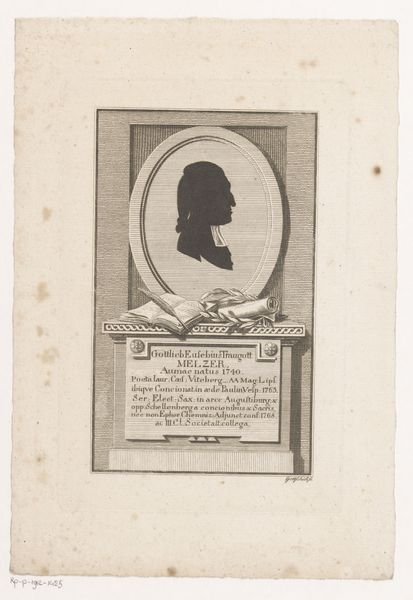
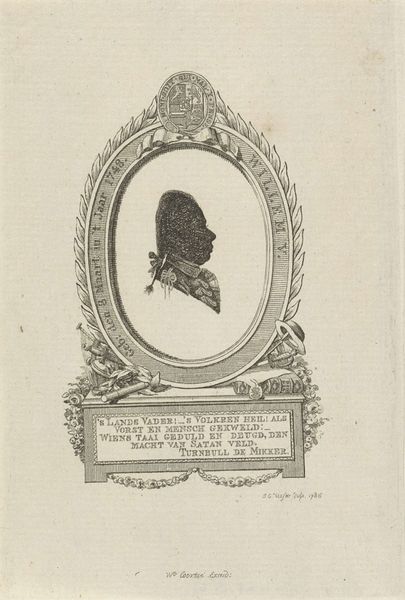
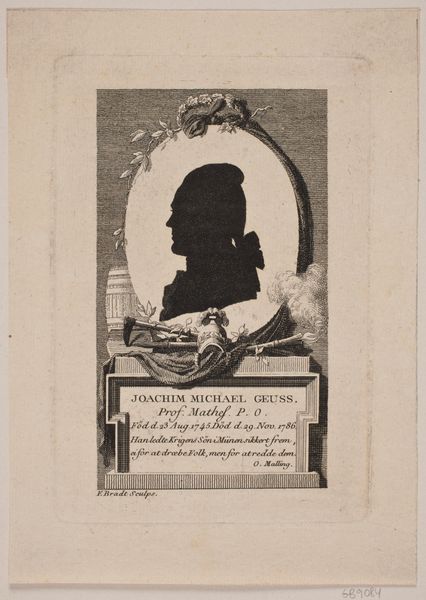
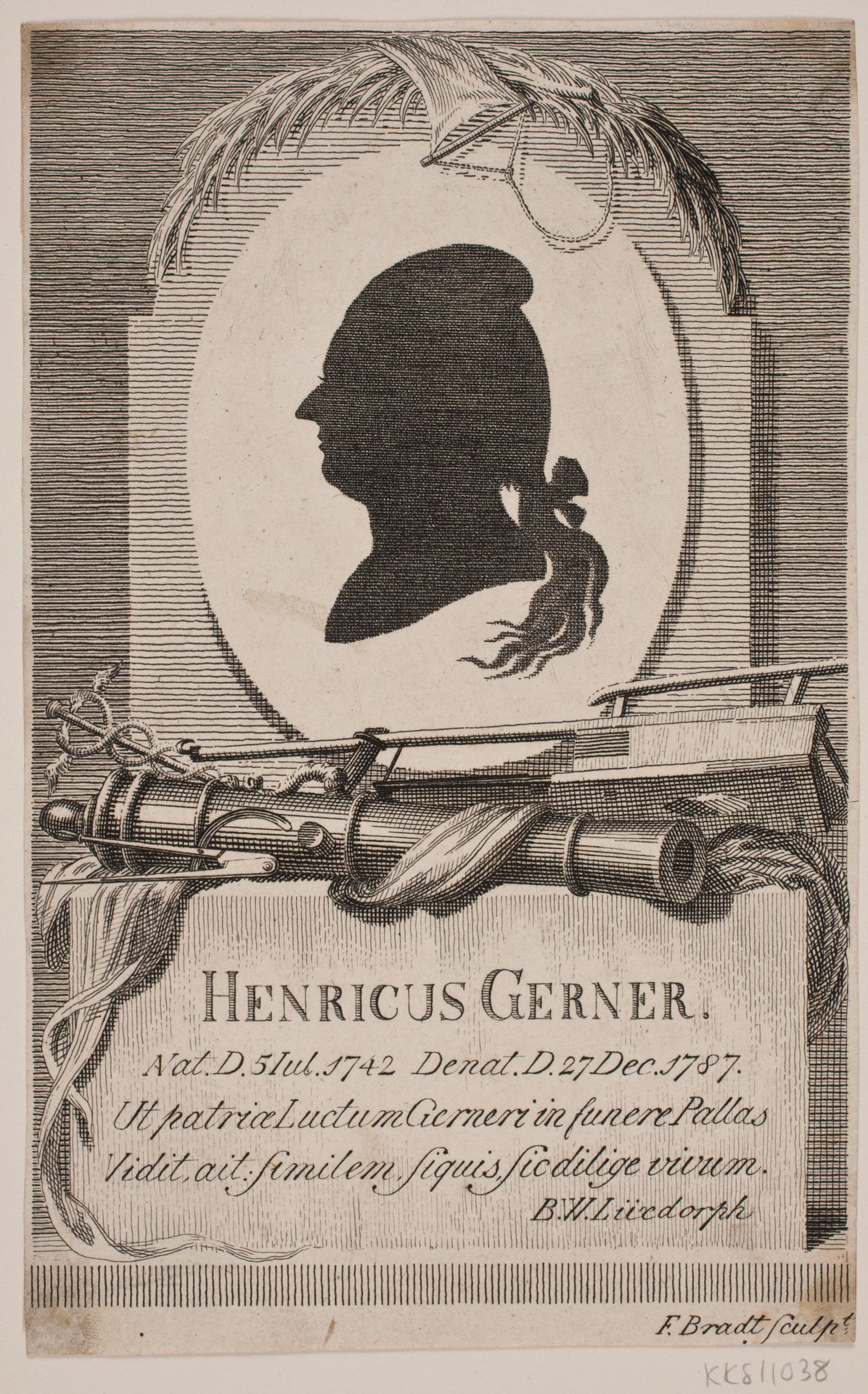
Editor: So here we have an 18th-century print, titled "Henrik Gerner" made by Frederik Ludvig Bradt, held at the SMK. It's a rather stark engraving, mostly monochrome, with this striking silhouette and elaborate cannon detail. I find the overall feeling is one of formal mourning, very controlled and reserved. What do you see in this piece? Curator: Indeed. That strong contrast, the rigid lines – it's a very direct statement. But look closer at the silhouette: almost like a ghost trapped in amber, isn't it? The precision of the lines, typical of baroque engraving, speaks volumes about control and order. It is fascinating, how death becomes a formal, almost beautiful, exercise. What do you make of the cannon there, draped in what appears to be fabric? Editor: I guess the cannon is a reference to Gerner’s status and accomplishments? A sort of military gravitas? Curator: Precisely. It speaks to power, legacy, perhaps even loss on behalf of the state. The draped fabric lends to that air of mourning. And it makes me wonder - how public was grief in this period? This feels almost performative, don't you think? A very public, artistic declaration. Editor: It is interesting to consider that these prints could be tools for managing collective emotions in a very different way than modern images. Curator: Exactly! Did you also notice the elaborate details surrounding the portrait oval? Feathery palm fonds and even what might be seen as a symbolic skull – very emblematic of the *memento mori* traditions so prevelant in the Baroque period. Editor: Absolutely. It's so full of symbols of the era. All the details become part of this story about Gerner, life, and loss. It is amazing to really break down the cultural context. Curator: Exactly! Every element contributes to a grand, carefully constructed narrative, a tiny world unto itself. These engravings, even small, speak volumes!