About this artwork
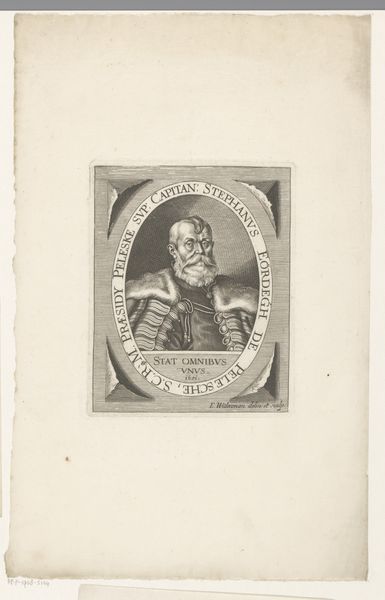
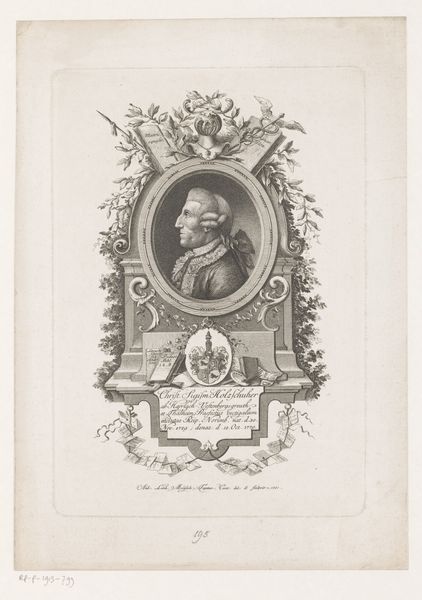
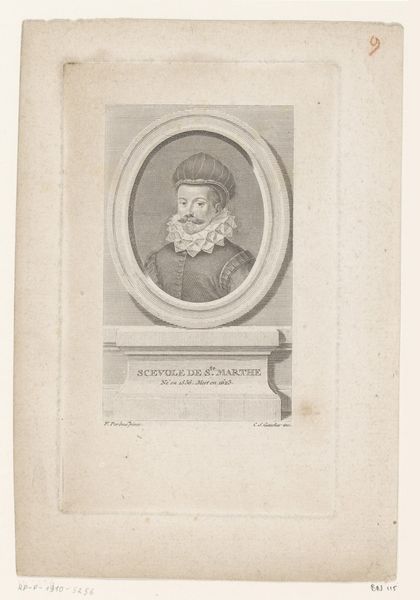
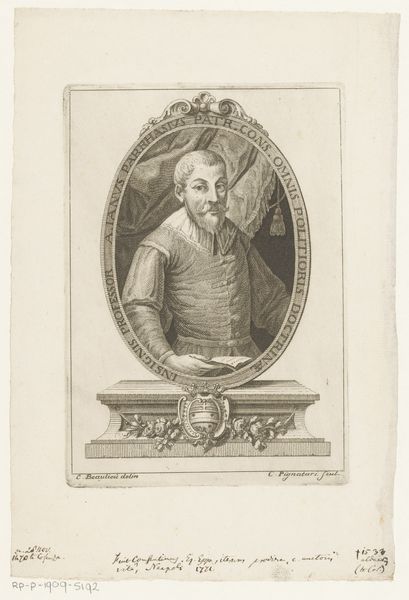
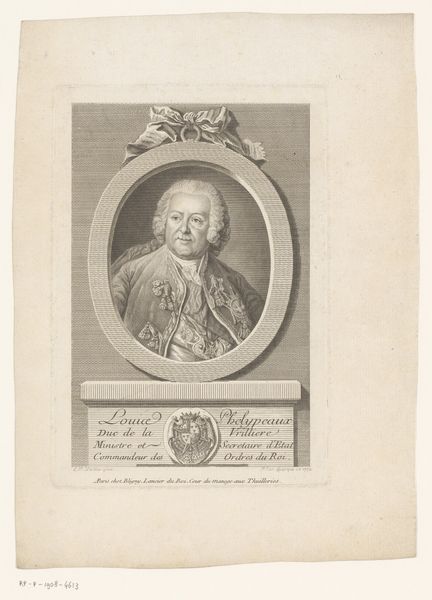
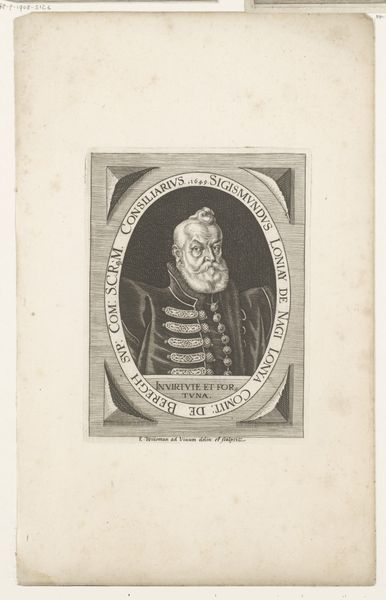
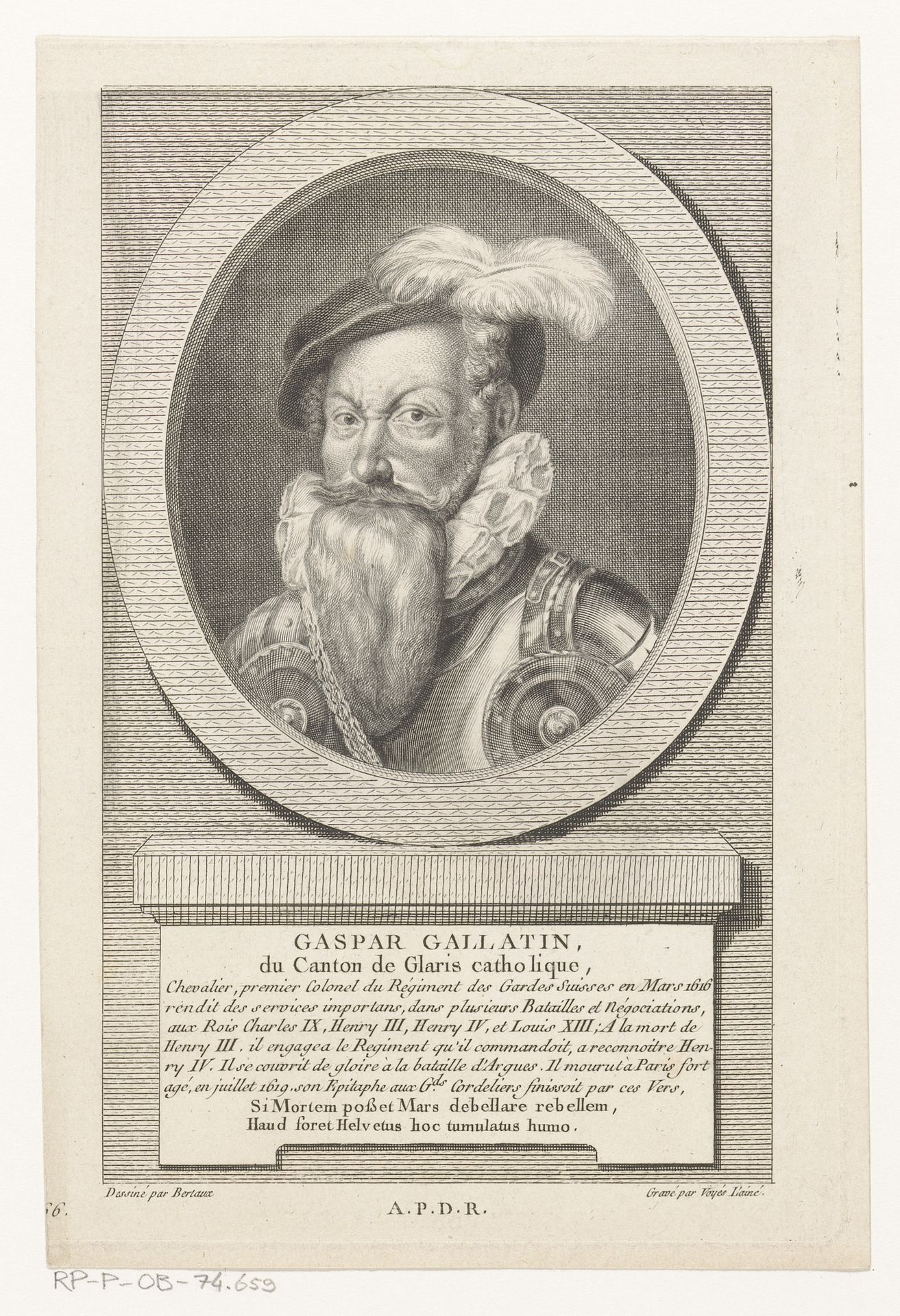
Editor: This engraving is a portrait of Gaspar Gallatin, created sometime between 1752 and 1806 by Nicolas Joseph Voyez. The sternness in his eyes really jumps out – what do you see in this piece? Curator: The portrait is striking for its depiction of power. The symbols here are particularly interesting; consider the armor, the elaborate ruff, the feathered hat, even the oval frame. They coalesce into a powerful declaration of status. It feels less like an individual likeness and more like an archetype of authority. Editor: Authority... that's interesting. The frame and the text below almost turn it into a monument. Is it supposed to commemorate him in a particular way? Curator: Exactly. This goes beyond simple representation. Notice how the text beneath the portrait provides further context, detailing Gallatin's military service. It is a carefully constructed narrative reinforcing his image. Think about how portraits function within family lineage or national identity. It creates cultural memory. Editor: So, the image and the text work together to create this… lasting impression? Like building a legacy. Curator: Precisely. Visual symbols paired with the written word are strategically chosen to construct and maintain a particular memory of Gallatin – his status, his service, and ultimately, his power. Even the very act of creating a print allows this image, and thus his legacy, to circulate widely. Editor: It’s amazing how much a portrait can communicate beyond just a person's face. Thanks! Curator: Indeed. By understanding the symbols, we see the enduring power of the image to shape our understanding of history and identity.

Artwork details
- Dimensions
- height 189 mm, width 128 mm
- Copyright
- Rijks Museum: Open Domain
Comments
Share your thoughts
About this artwork
Editor: This engraving is a portrait of Gaspar Gallatin, created sometime between 1752 and 1806 by Nicolas Joseph Voyez. The sternness in his eyes really jumps out – what do you see in this piece? Curator: The portrait is striking for its depiction of power. The symbols here are particularly interesting; consider the armor, the elaborate ruff, the feathered hat, even the oval frame. They coalesce into a powerful declaration of status. It feels less like an individual likeness and more like an archetype of authority. Editor: Authority... that's interesting. The frame and the text below almost turn it into a monument. Is it supposed to commemorate him in a particular way? Curator: Exactly. This goes beyond simple representation. Notice how the text beneath the portrait provides further context, detailing Gallatin's military service. It is a carefully constructed narrative reinforcing his image. Think about how portraits function within family lineage or national identity. It creates cultural memory. Editor: So, the image and the text work together to create this… lasting impression? Like building a legacy. Curator: Precisely. Visual symbols paired with the written word are strategically chosen to construct and maintain a particular memory of Gallatin – his status, his service, and ultimately, his power. Even the very act of creating a print allows this image, and thus his legacy, to circulate widely. Editor: It’s amazing how much a portrait can communicate beyond just a person's face. Thanks! Curator: Indeed. By understanding the symbols, we see the enduring power of the image to shape our understanding of history and identity.
Comments
Share your thoughts