1737 - 1754
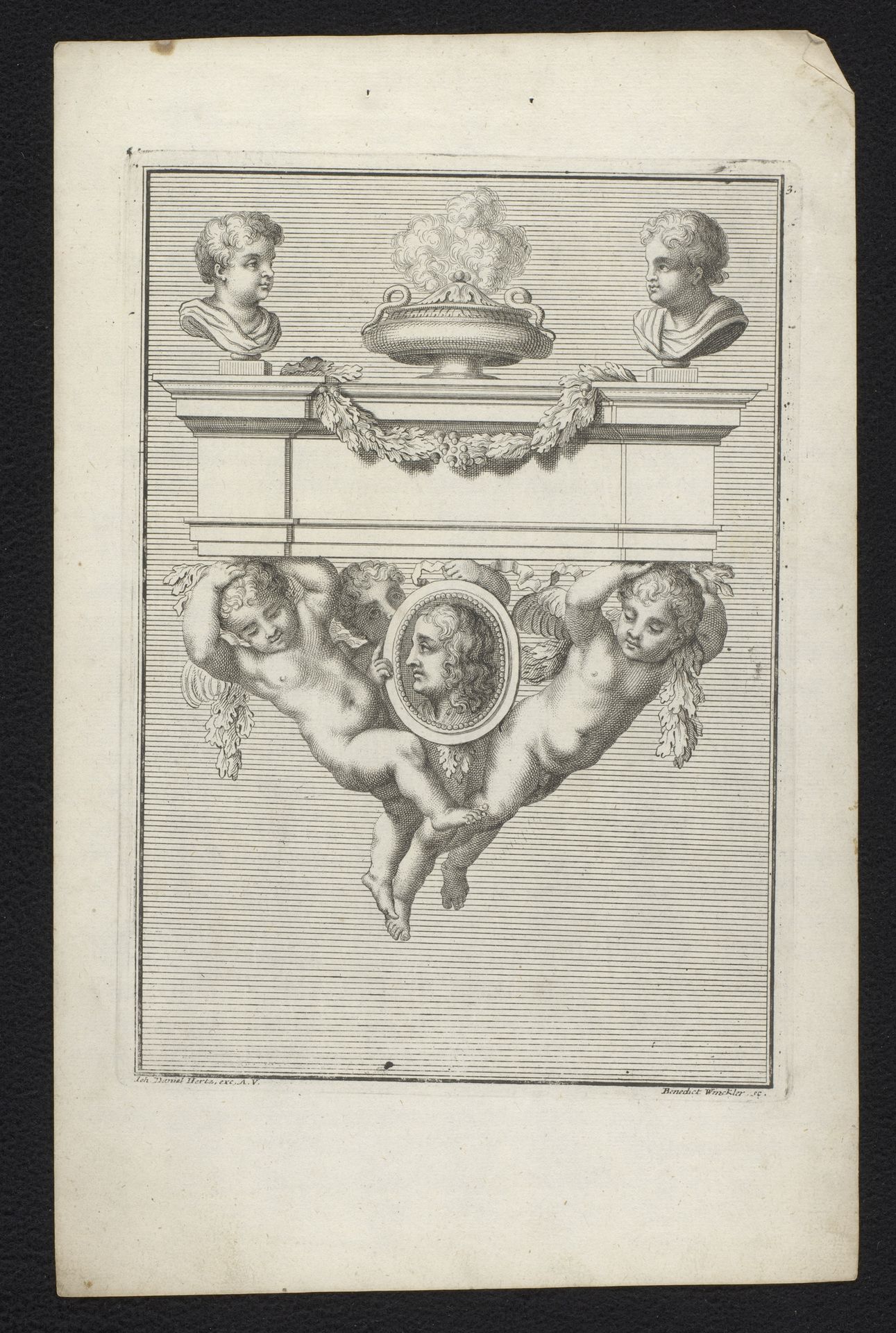
Putti dragen een grafsteen

Benedikt Winkler
1727 - 1797Location
RijksmuseumListen to curator's interpretation
Curatorial notes
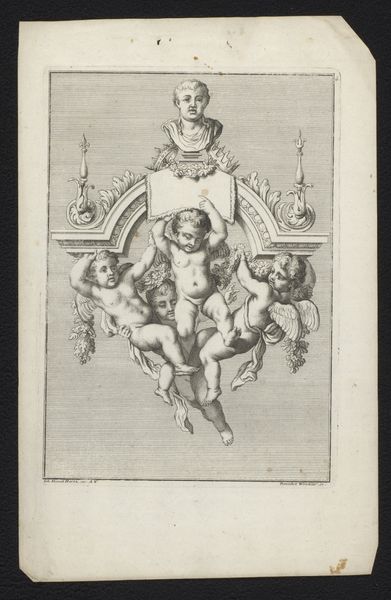
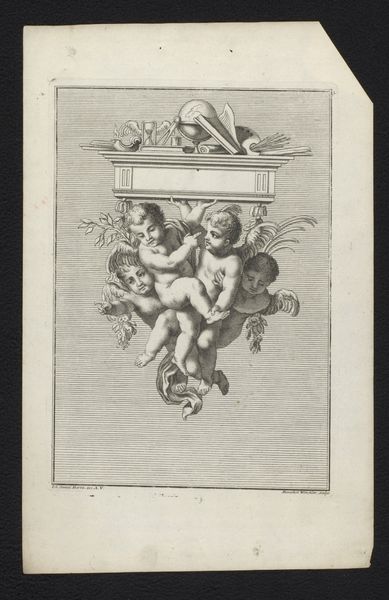
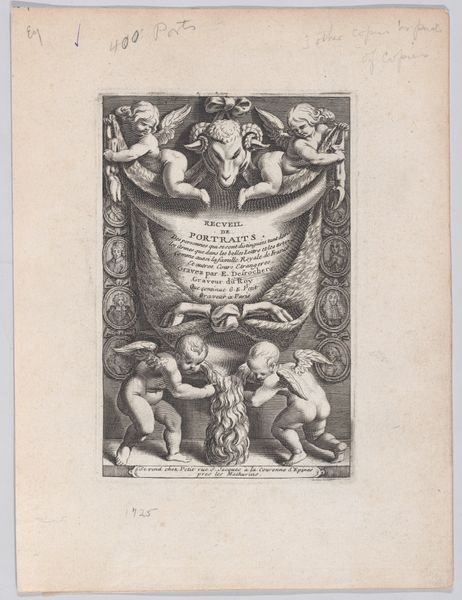
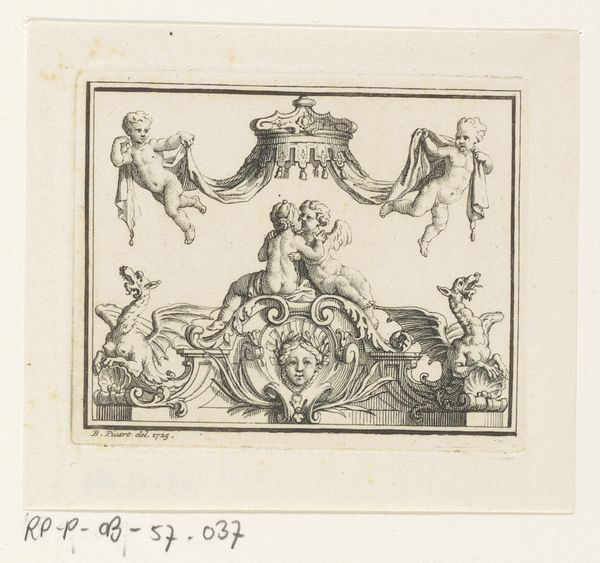
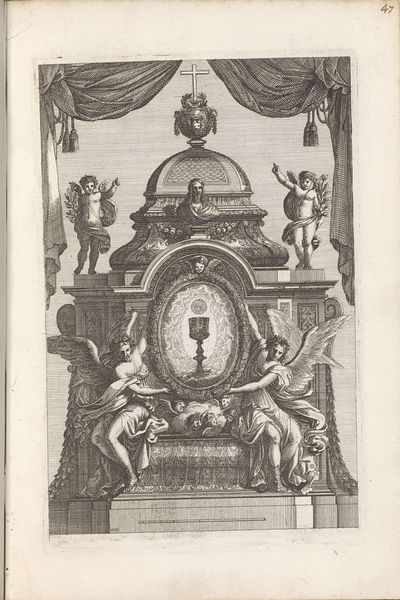
Benedikt Winkler created this engraving, “Putti dragen een grafsteen,” at an unknown date, presenting us with potent symbols of mourning and memory. At the heart of this image are the putti, cherubic figures derived from classical art, who carry not just a gravestone, but the weight of remembrance itself. Note how these figures, often associated with love and innocence, are here burdened with solemn duty. Consider, too, the laurel wreath—an ancient symbol of honor and victory—now repurposed to frame a memorial. This juxtaposition speaks volumes about how societies grapple with loss, transforming symbols of triumph into emblems of grief. The motif of putti appears throughout art history, from ancient Roman sarcophagi to Renaissance paintings. Yet, their presence here, supporting a gravestone, is particularly poignant. It reflects a cultural desire to soften the harsh reality of death, imbuing it with a sense of gentle cherubic transition. The emotional power lies in the recognition of mortality, yet softened by the innocent beauty of the putti. It's a reminder of how deeply embedded these archetypes are in our collective consciousness, continuously evolving to express the complexities of the human experience.