About this artwork
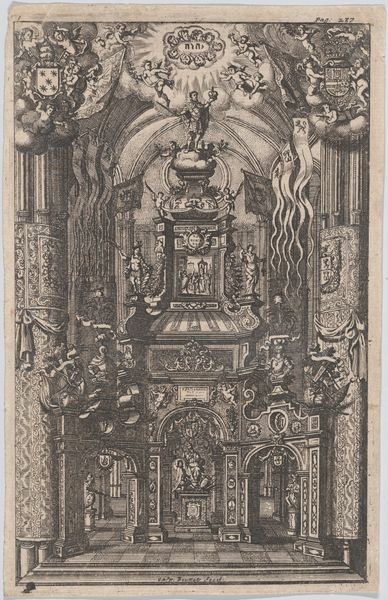
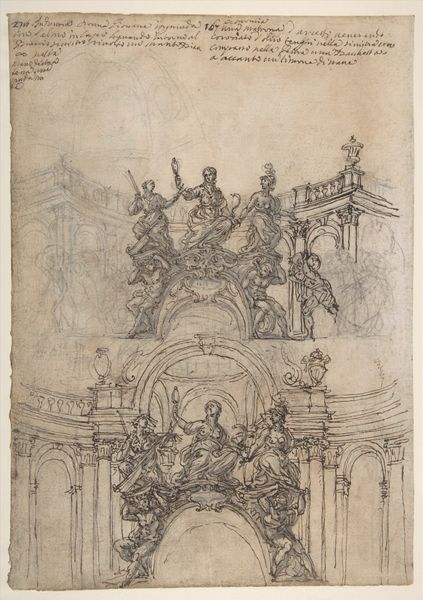
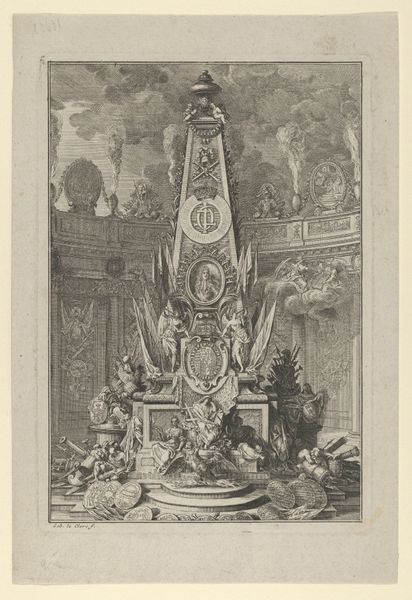
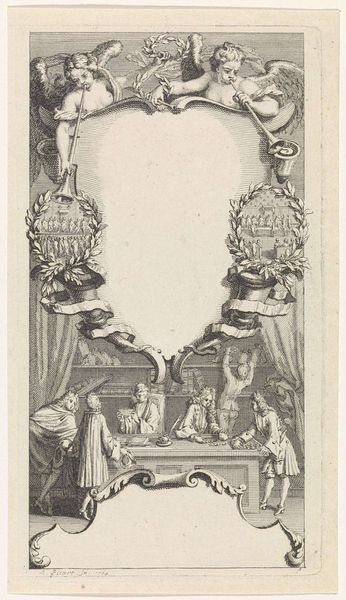
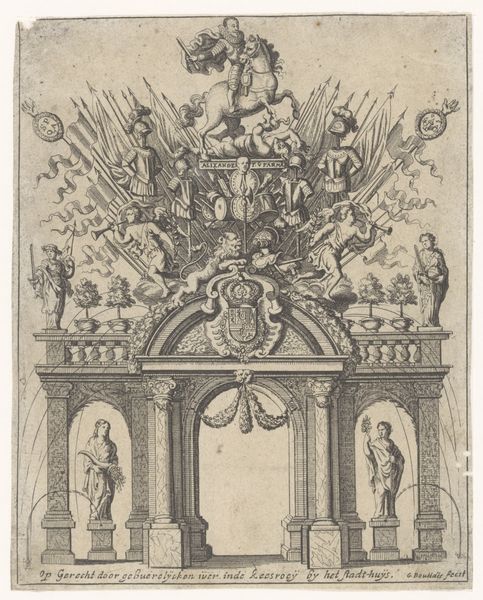
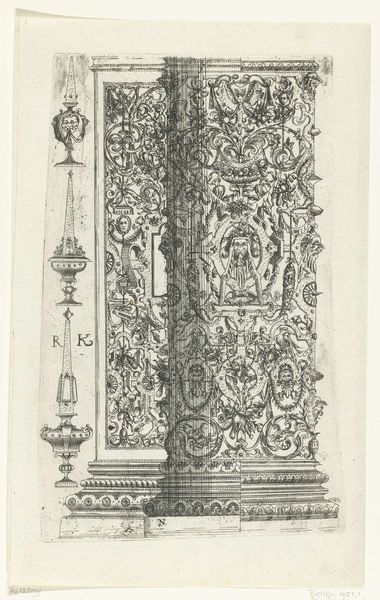
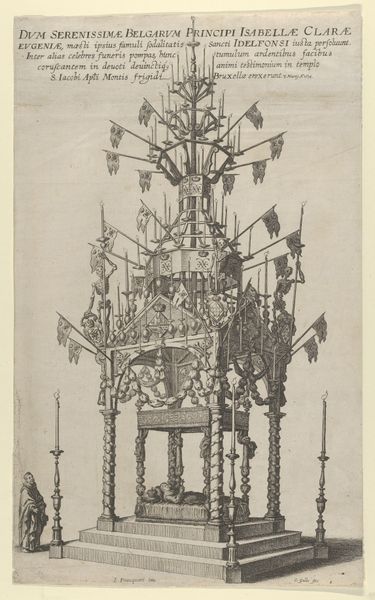
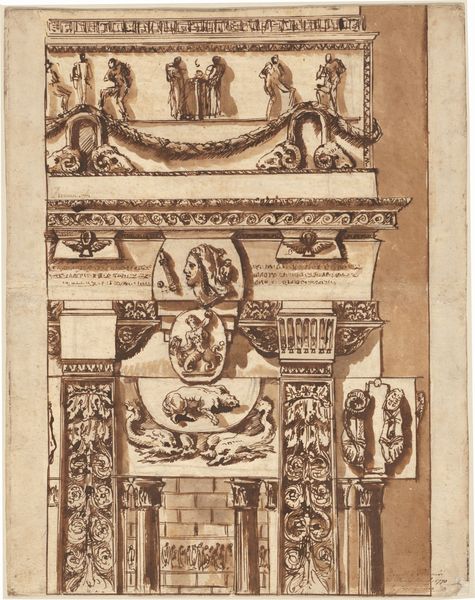
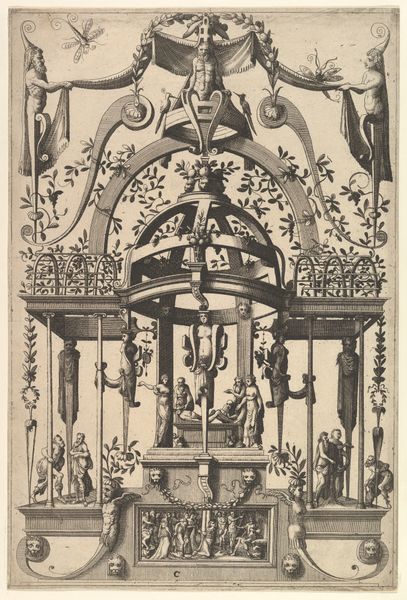
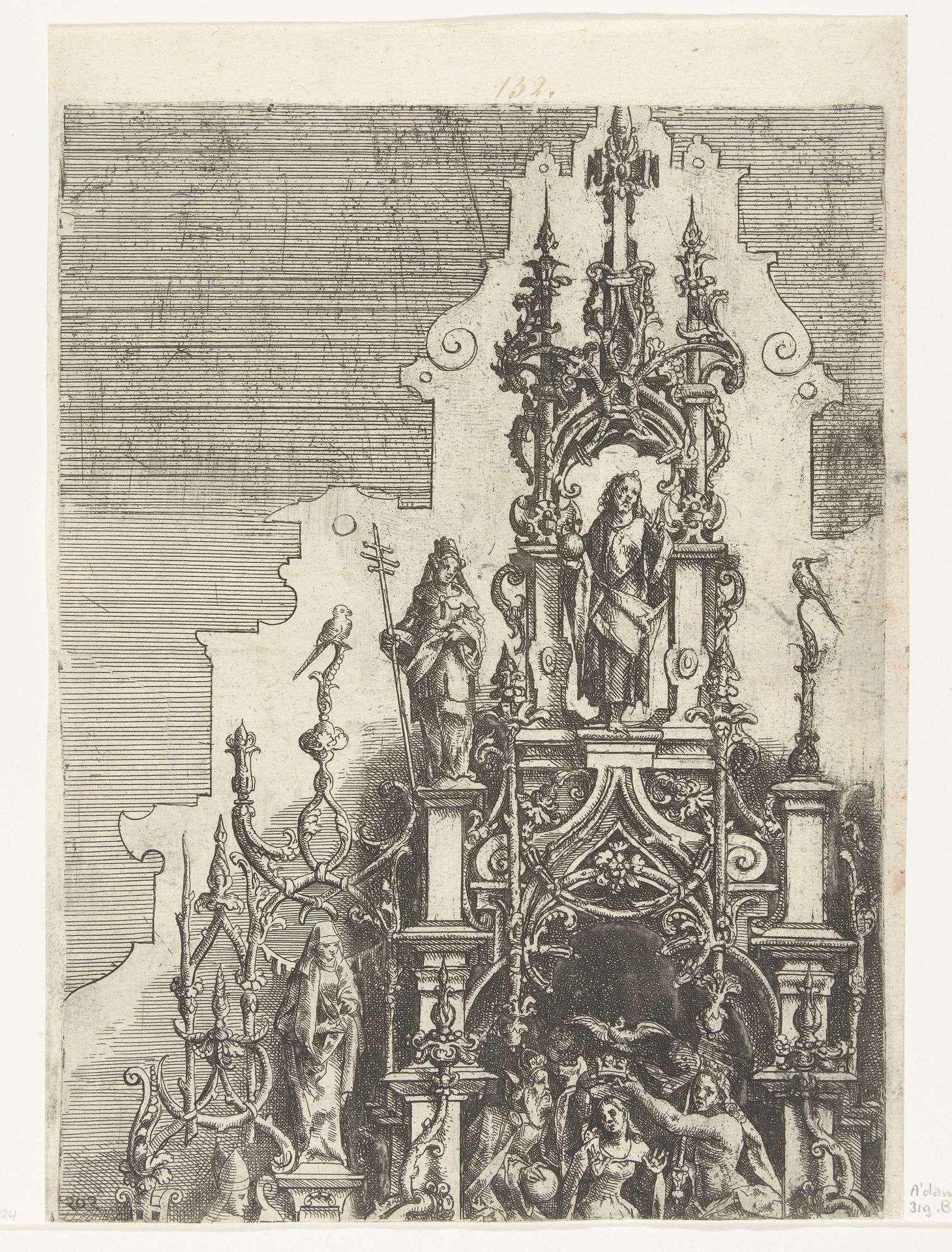
Wendel Dietterlin created this etching of the upper portion of an altarpiece with the Coronation of the Virgin, sometime in the late 16th century. The image is dominated by a complex, symmetrical structure, teeming with figures and ornamentation. Dietterlin’s precise linework creates a dense, almost claustrophobic space, reflecting the ornate style of the period. The composition is rigidly hierarchical, with the coronation scene at the very top, and the figures below arranged in tiers. The interplay of vertical and horizontal lines, coupled with the intricate details, gives the work a sense of both grandeur and complexity. Dietterlin’s approach here reflects a broader artistic concern with elaborate, architectonic forms. Through its careful arrangement of form and line, the etching evokes the religious and cultural values of its time. The altarpiece becomes a visual representation of a structured cosmos, with divine order reflected in its architectural design. This structured image invites us to consider how such displays of power and order are constructed through art.
Bovenste gedeelte van een retabel met de kroning van Maria
1560 - 1598

Artwork details
- Medium
- carving, print, engraving
- Dimensions
- height 247 mm, width 181 mm
- Copyright
- Rijks Museum: Open Domain
Tags
Comments
Share your thoughts
About this artwork
Wendel Dietterlin created this etching of the upper portion of an altarpiece with the Coronation of the Virgin, sometime in the late 16th century. The image is dominated by a complex, symmetrical structure, teeming with figures and ornamentation. Dietterlin’s precise linework creates a dense, almost claustrophobic space, reflecting the ornate style of the period. The composition is rigidly hierarchical, with the coronation scene at the very top, and the figures below arranged in tiers. The interplay of vertical and horizontal lines, coupled with the intricate details, gives the work a sense of both grandeur and complexity. Dietterlin’s approach here reflects a broader artistic concern with elaborate, architectonic forms. Through its careful arrangement of form and line, the etching evokes the religious and cultural values of its time. The altarpiece becomes a visual representation of a structured cosmos, with divine order reflected in its architectural design. This structured image invites us to consider how such displays of power and order are constructed through art.
Comments
Share your thoughts