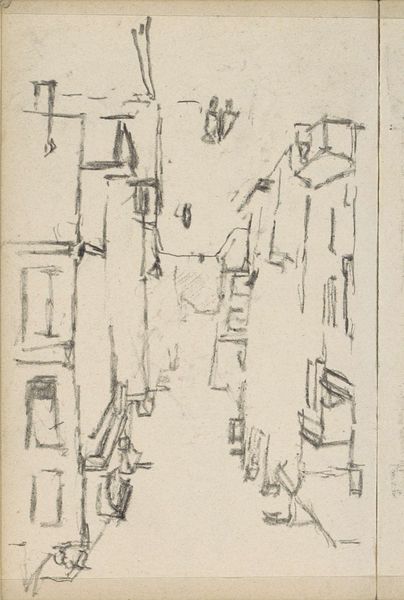
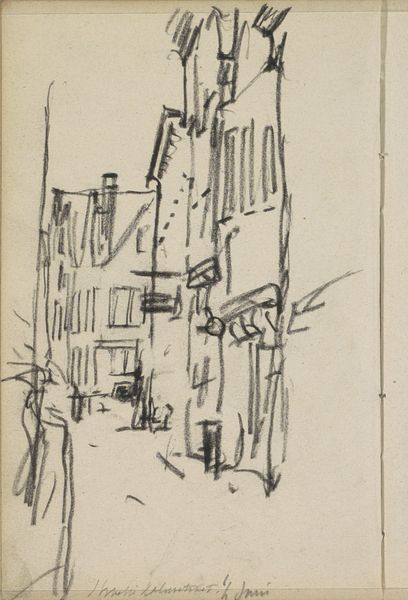
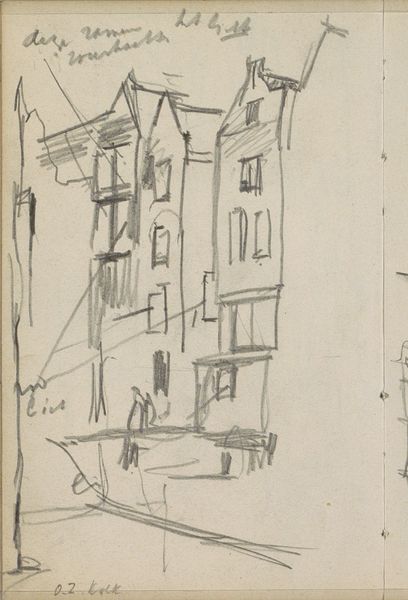
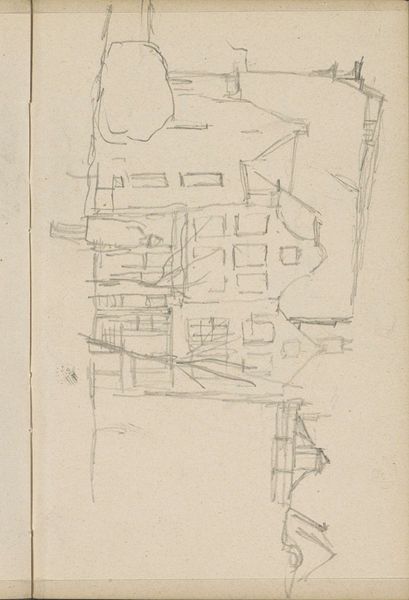
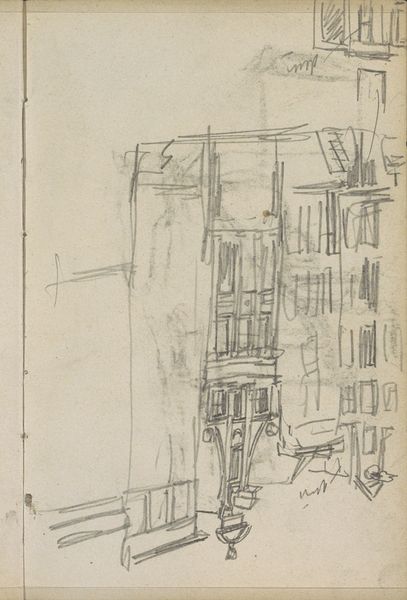
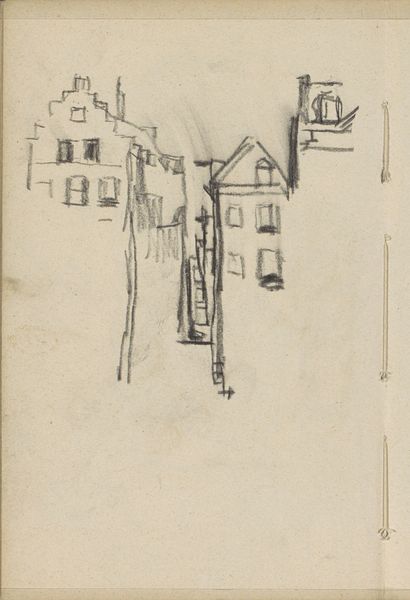
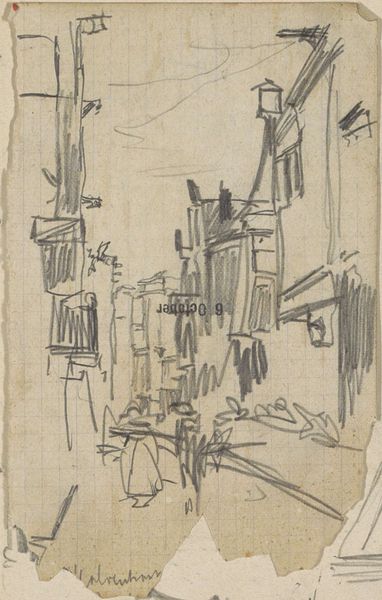
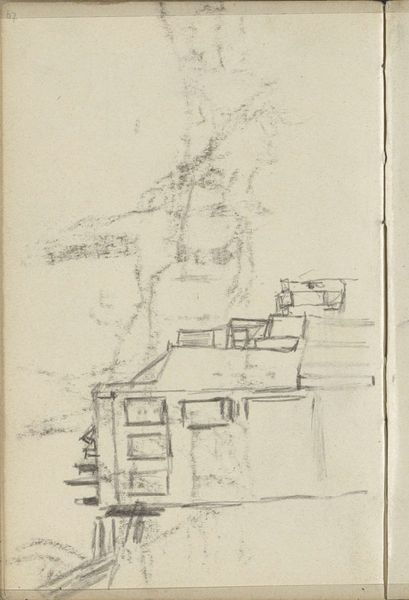
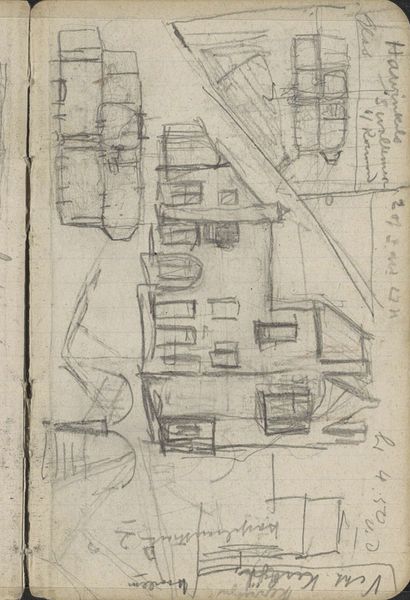
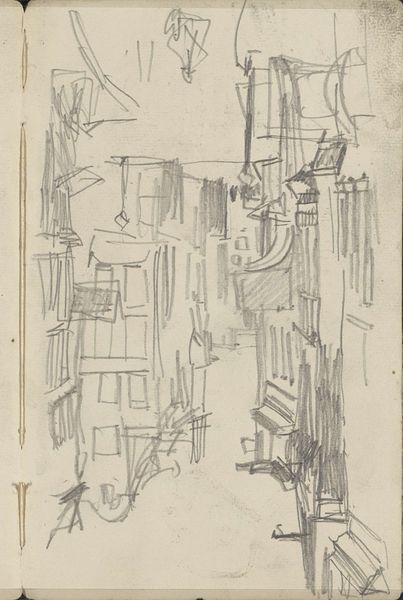
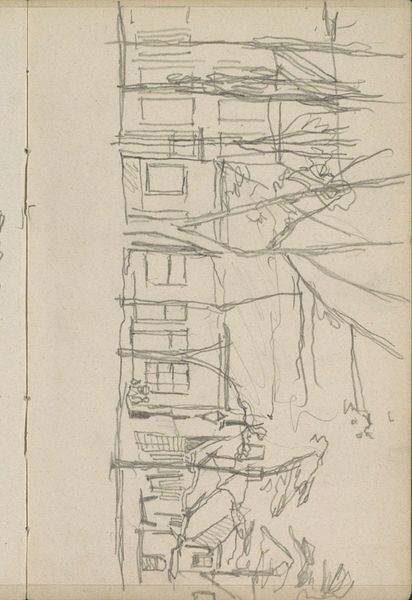
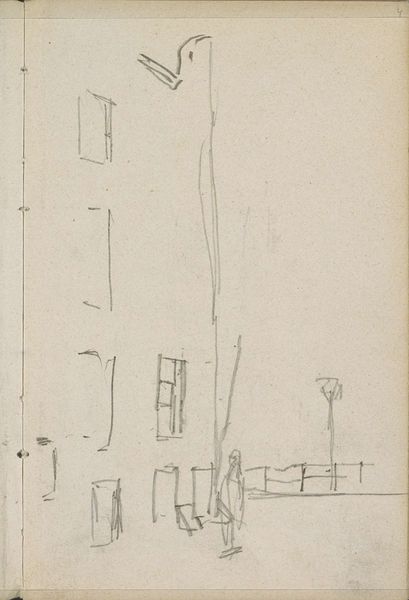
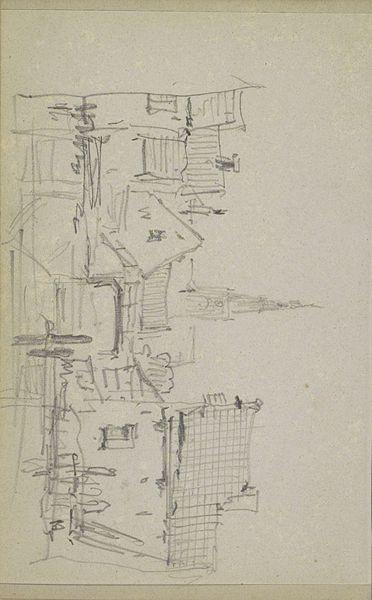
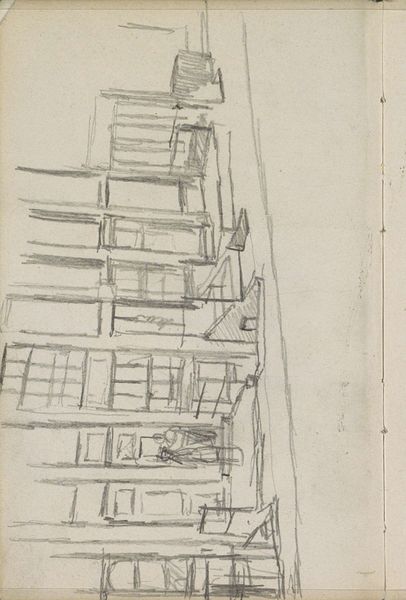
Gezicht op de hoek van de Keizersgracht en de Berenstraat te Amsterdam c. 1903
0:00
0:00

georgehendrikbreitner
Rijksmuseum
Copyright: Rijks Museum: Open Domain
Editor: Here we have George Hendrik Breitner's pencil drawing, "View of the Corner of Keizersgracht and Berenstraat in Amsterdam," circa 1903. I find the sketch quite evocative in its simplicity; it suggests so much with just a few lines. How do you interpret this work? Curator: This drawing acts as a poignant historical record. Breitner’s impressionistic style captured Amsterdam’s urban development during a time of rapid social change. He focused on the working class. How does the absence of people impact our reading of this cityscape? Editor: It’s interesting that you point that out. I hadn't really noticed that they were absent before. It does create a certain sense of emptiness or…waiting. It feels unfinished in a way. Curator: Exactly. It forces us to consider *whose* Amsterdam is being depicted and for whom. Was the move towards representing just the shell, just the walls a representation of capitalistic expansion or a commentary on it? Editor: I think that's a fascinating point. That he's documenting change and that even just the choice of viewpoint or what's included suggests the way that these huge changes would affect real people. Curator: Yes! And the Berenstraat specifically, connects this specific work directly to questions of wealth, class, and space. It’s vital we consider these structures in their historical context; in the early 1900s it was a center of significant tension between the affluent and the working class. Editor: That context completely shifts the mood of the piece. Thanks, that's a really important thing to keep in mind when analyzing any art from that time. Curator: Indeed, viewing this as a representation of inequality gives his impressionistic sketch a critical voice, challenging us to confront uncomfortable truths about societal divides.
Comments
No comments
Be the first to comment and join the conversation on the ultimate creative platform.
 Collect
 React
React Comment
More like this