Dimensions: image: 672 x 872 mm support: 727 x 1020 mm
Copyright: © The estate of Richard Hamilton | CC-BY-NC-ND 4.0 DEED, Photo: Tate
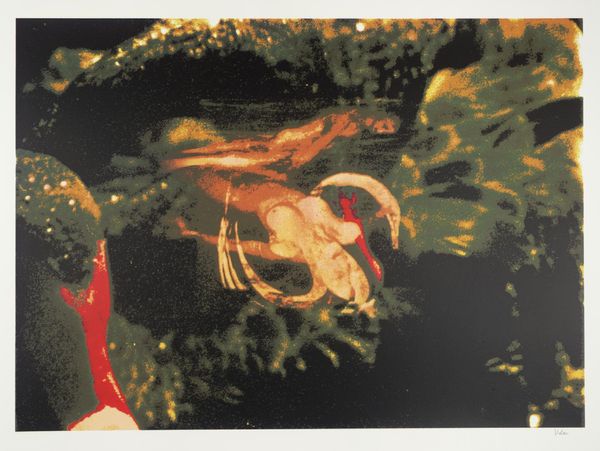
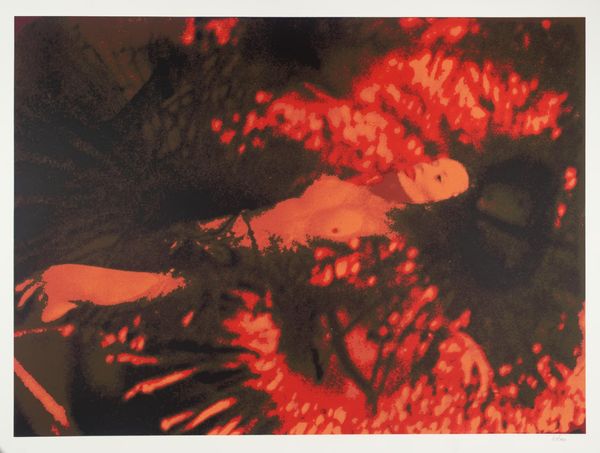
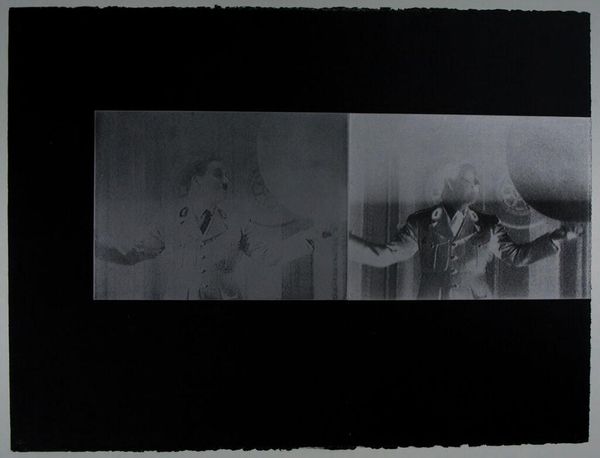
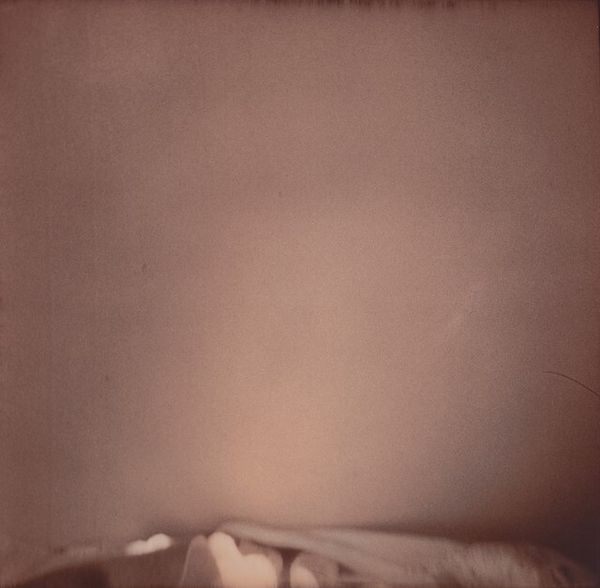
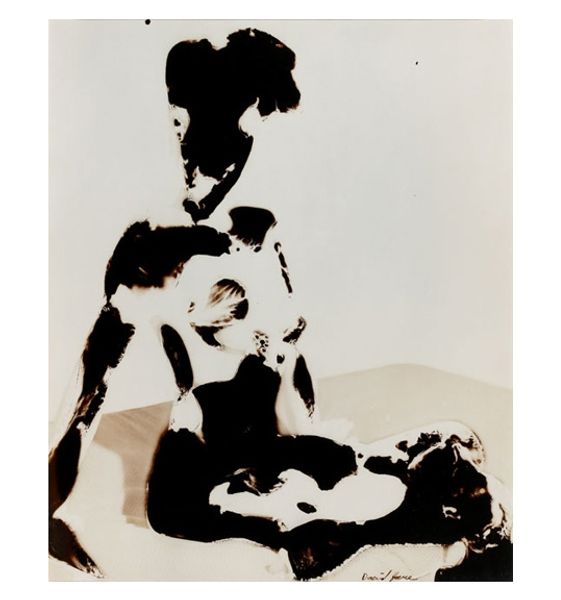
Curator: Richard Hamilton’s “Kent State” presents a blurred image, seemingly captured from a television screen. It’s held in the Tate Collections. Editor: It feels ghostly, like a half-remembered nightmare. The indistinct figures and washed-out colors contribute to an unsettling atmosphere. Curator: Hamilton was very interested in mass media. He used the silkscreen printing process in this instance to replicate the degraded quality of televised images of the Kent State shootings. Editor: The television, then, becomes a symbol in itself, representing both the horror and the mediated distance from it. Did Hamilton intend to implicate the viewer, passively watching from afar? Curator: Possibly. He often explored the social and political implications of consumer culture and media representation. Editor: The red accents amid the grey palette—they feel like a visual echo of spilled blood, heightening the tragedy's symbolic impact. It haunts the image. Curator: Considering its technical reproduction and dissemination, the horror here turns into just another object of consumption. Editor: Indeed, this pushes us to consider the circulation and cultural memory of such tragic symbols.
Comments


Join the conversation
Join millions of artists and users on Artera today and experience the ultimate creative platform.

tate 12 months ago
⋮
In May 1970, a series of protests against US involvement in Vietnam and Cambodia on the campus of Kent State University, Ohio, culminated in the shooting of student demonstrators by the National Guard. Hamilton's print was made using a photograph of a TV screen, taken during a news broadcast that day. Hamilton commented: 'It was too terrible an incident in American history to submit to arty treatment. Yet there it was in my hand, by chance¿¿ It seemed right, too, that art could help to keep the shame in our minds.' Gallery label, September 2004
 Collect
More like this