About this artwork
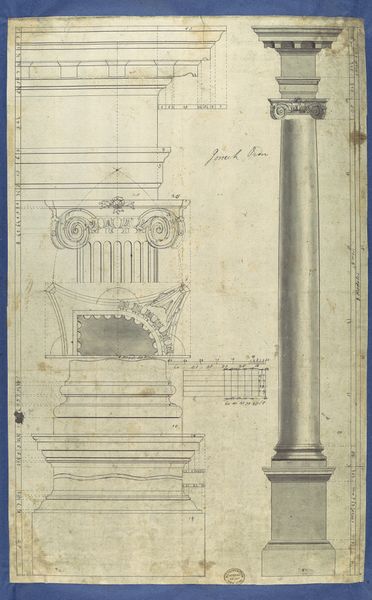
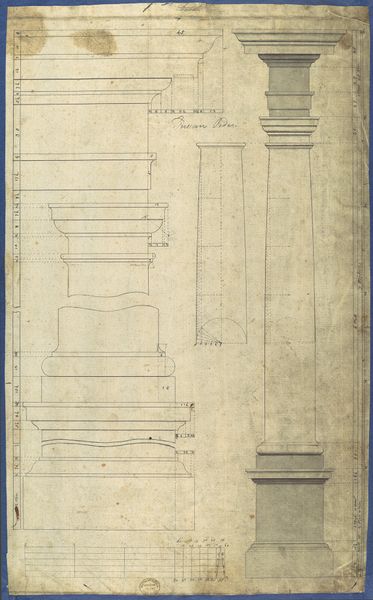
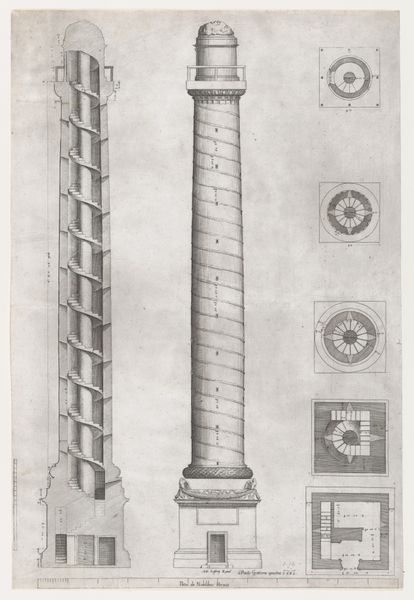
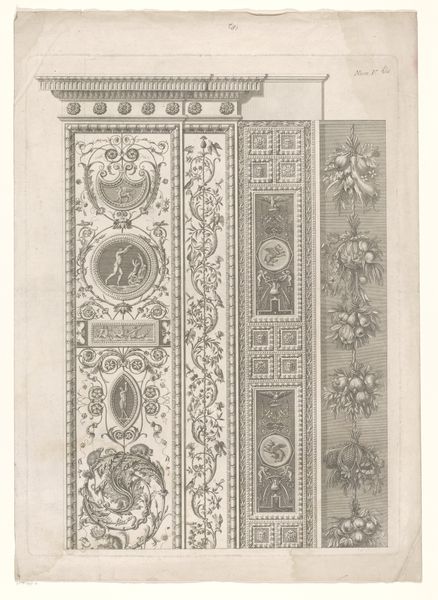
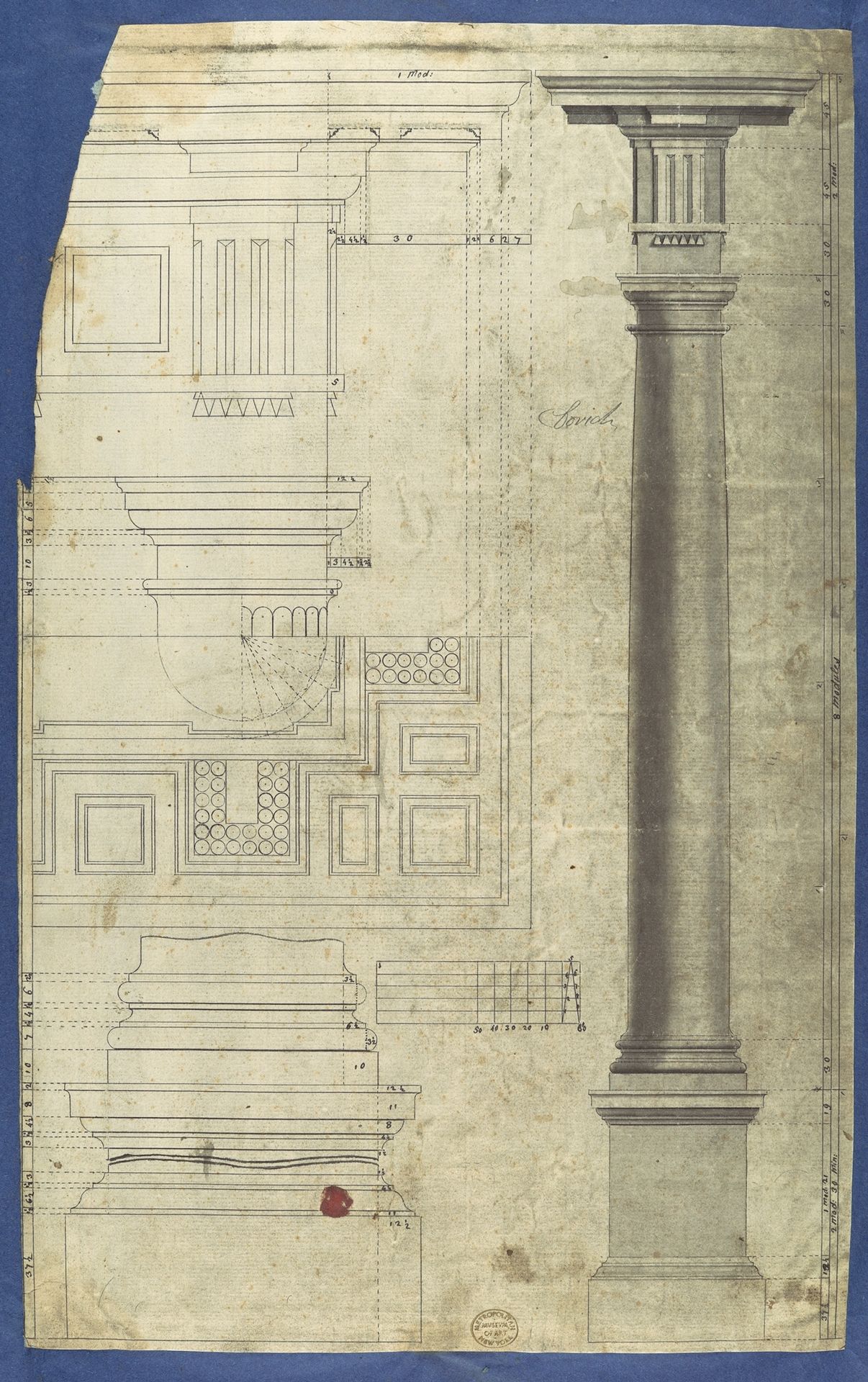
Thomas Chippendale made this drawing of the Doric order, now at the Metropolitan Museum, in ink on paper. It is dominated by a tall, elegantly rendered column on the right, balanced by detailed architectural elevations on the left. The linear precision and methodical arrangement give the drawing its visual strength. Chippendale's adherence to classical proportions reflects a deep engagement with the architectural theories of his time. The Doric order, known for its simplicity and strength, is meticulously dissected, revealing a fascination with underlying geometric relationships and a desire to codify architectural knowledge. The column functions as a signifier of stability and order, principles that Chippendale aimed to integrate into his furniture designs. The systematic deconstruction of the Doric order into constituent parts challenges fixed notions of architectural unity. Chippendale's drawing invites us to consider architecture not as a static form but as a dynamic interplay of elements, each contributing to the overall structure and meaning. This architectural drawing serves as a testament to the enduring influence of classical ideals.
The General Proportion of the Doric Order, in Chippendale Drawings, Vol. I
1753


Artwork details
- Medium
- drawing, print, pencil, architecture
- Dimensions
- sheet: 14 1/8 x 8 7/8 in. (35.9 x 22.5 cm)
- Location
- Metropolitan Museum of Art, New York, NY
- Copyright
- Public Domain
Tags
Comments
Share your thoughts
About this artwork
Thomas Chippendale made this drawing of the Doric order, now at the Metropolitan Museum, in ink on paper. It is dominated by a tall, elegantly rendered column on the right, balanced by detailed architectural elevations on the left. The linear precision and methodical arrangement give the drawing its visual strength. Chippendale's adherence to classical proportions reflects a deep engagement with the architectural theories of his time. The Doric order, known for its simplicity and strength, is meticulously dissected, revealing a fascination with underlying geometric relationships and a desire to codify architectural knowledge. The column functions as a signifier of stability and order, principles that Chippendale aimed to integrate into his furniture designs. The systematic deconstruction of the Doric order into constituent parts challenges fixed notions of architectural unity. Chippendale's drawing invites us to consider architecture not as a static form but as a dynamic interplay of elements, each contributing to the overall structure and meaning. This architectural drawing serves as a testament to the enduring influence of classical ideals.
Comments
Share your thoughts