1722 - 1784
Te Schellingwou

Simon Fokke
1712 - 1784Location
RijksmuseumListen to curator's interpretation
Curatorial notes
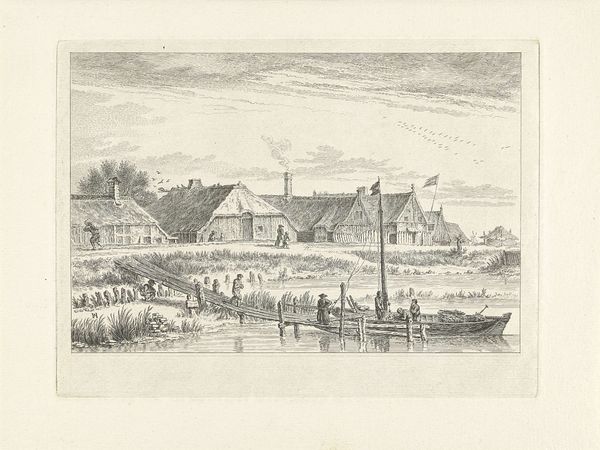
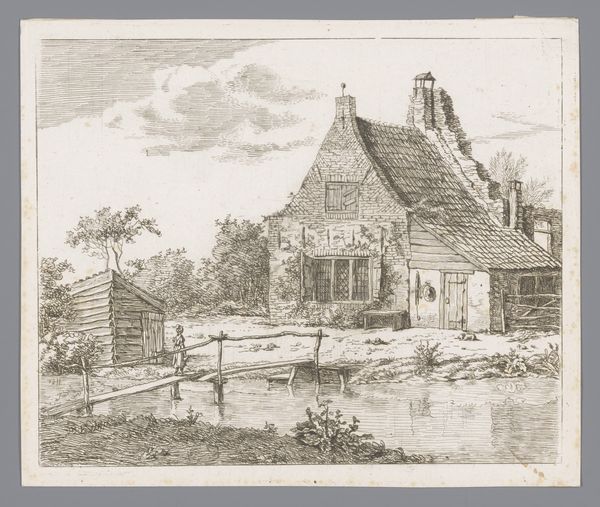
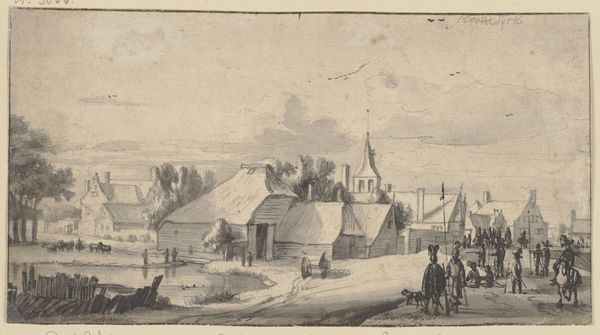
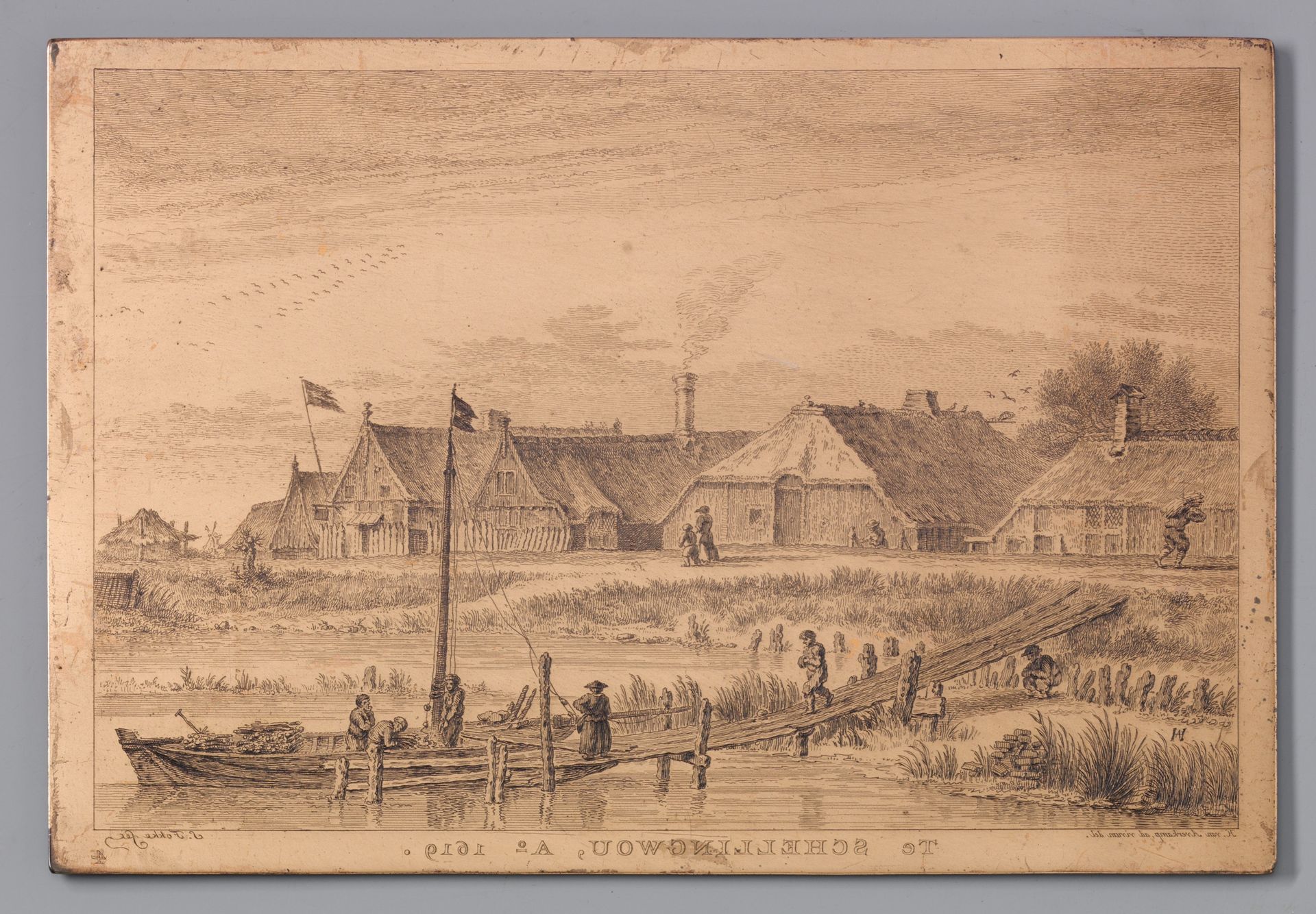
Editor: This is "Te Schellingwou," a pen and ink drawing by Simon Fokke, dating sometime between 1722 and 1784. I’m immediately drawn to how much activity is captured in such a small space, giving a slice-of-life feeling. What visual cues jump out to you in this piece? Curator: Indeed, it’s a deceptively simple image brimming with symbolic weight. Notice how the architecture, the thatched roofs and the flag, root us firmly in place – yet the presence of water, the boat and the birds in flight, introduce an element of transition and journey. Does this juxtaposition strike you as deliberate? Editor: Absolutely, it's a snapshot, but it’s not static. It's also got this quaint, almost nostalgic atmosphere. Is that something you see reflected in other works of the time? Curator: The domestic scene is meticulously rendered. These elements act almost as cultural anchors. The figures on the bridge are engaging in commerce or daily errands; they speak to continuity and collective identity. Do you get a sense of this collective spirit or shared cultural identity as you look at the drawing? Editor: I see people going about their daily lives, but I didn't initially read it as symbolic of something larger. The image now has layers that I didn’t appreciate at first glance. Curator: Think about the use of light and shadow too – the contrast between them brings definition. The image quietly asks: what pieces of our lives carry this symbolic weight, this emotional resonance, as time moves on? Editor: So it’s less about this specific village and more about the idea of "home" and daily life across time. That makes it so much more profound. Thanks!