About this artwork
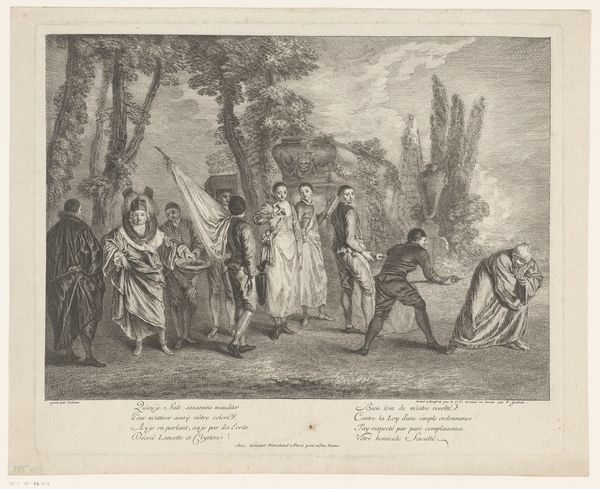
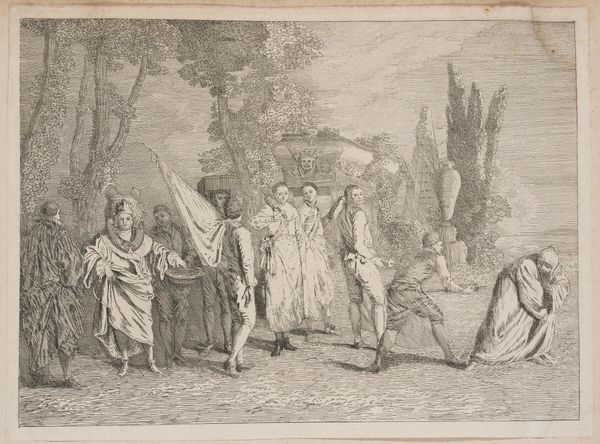
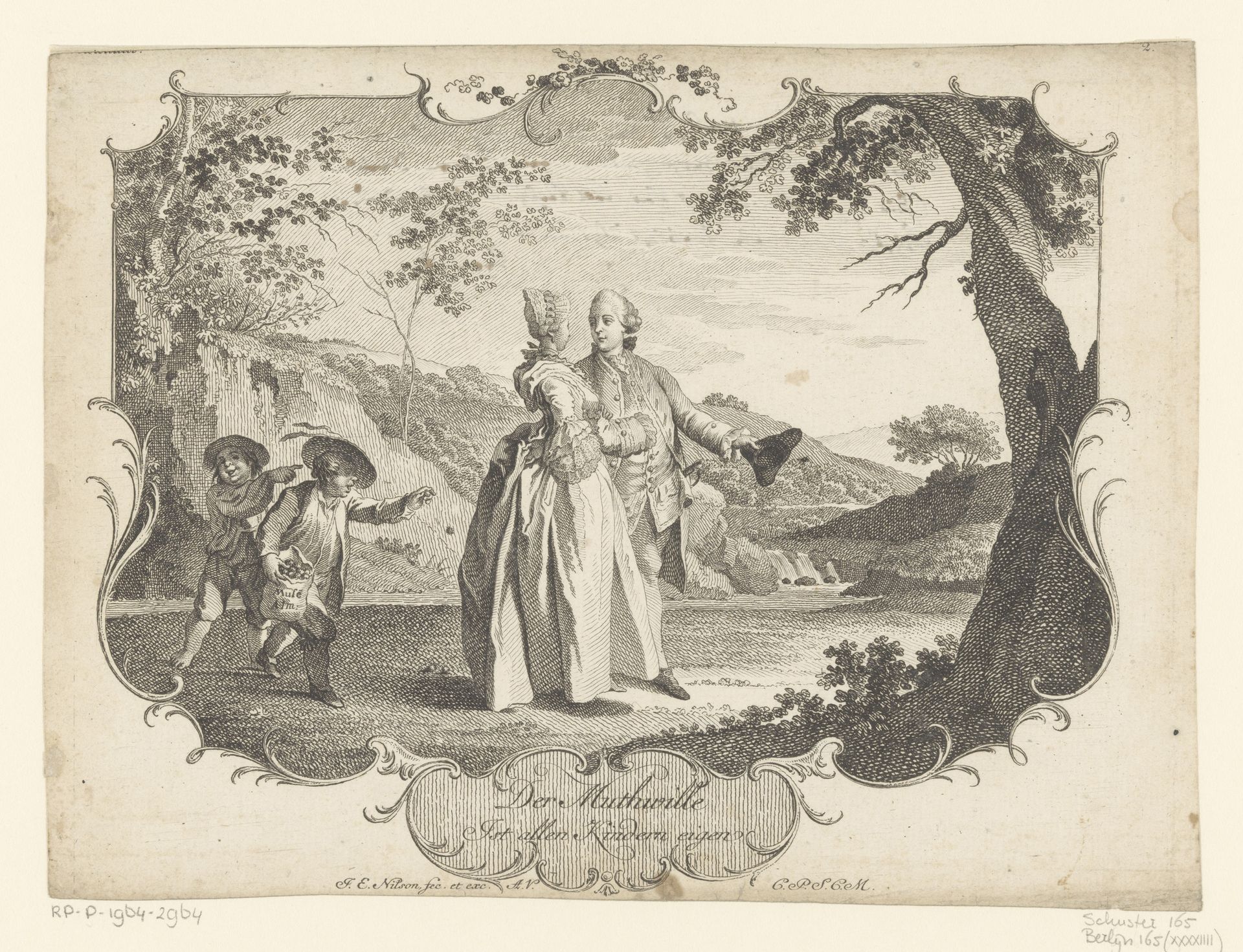
Johann Esaias Nilson’s etching presents a scene of children bombarding a strolling couple. This seemingly simple image is rich with symbols of disruption and the loss of innocence. The act of pelting, often with stones, appears in various cultures, symbolizing aggression, punishment, or even cleansing, yet here, it’s delivered by children, suggesting a deeper societal unease. Observe how the children, positioned on the periphery, challenge the central couple's composure. This dynamic resonates with ancient rituals where the marginal disrupt the established order. Consider, for instance, the Dionysian revels, where chaos serves to question societal norms. The act of throwing also evokes primal urges—aggression, territorial defense, and the instinctive rejection of outsiders, all bubbling beneath the veneer of civilized behavior. Are these children acting out a deeper societal conflict, or are they simply indulging in a cruel game? This image is a stark reminder that beneath the surface of any society, the shadow of primal instincts lurks.
Kinderen bekogelen wandelend paar 1770 - 1788

Johann Esaias Nilson
1721 - 1788Location
RijksmuseumArtwork details
- Dimensions
- height 195 mm, width 257 mm
- Location
- Rijksmuseum
- Copyright
- Rijks Museum: Open Domain
Comments
No comments
About this artwork
Johann Esaias Nilson’s etching presents a scene of children bombarding a strolling couple. This seemingly simple image is rich with symbols of disruption and the loss of innocence. The act of pelting, often with stones, appears in various cultures, symbolizing aggression, punishment, or even cleansing, yet here, it’s delivered by children, suggesting a deeper societal unease. Observe how the children, positioned on the periphery, challenge the central couple's composure. This dynamic resonates with ancient rituals where the marginal disrupt the established order. Consider, for instance, the Dionysian revels, where chaos serves to question societal norms. The act of throwing also evokes primal urges—aggression, territorial defense, and the instinctive rejection of outsiders, all bubbling beneath the veneer of civilized behavior. Are these children acting out a deeper societal conflict, or are they simply indulging in a cruel game? This image is a stark reminder that beneath the surface of any society, the shadow of primal instincts lurks.
Comments
No comments