drawing, print, woodcut, engraving
#
portrait
#
drawing
#
line-art
#
allegories
#
allegory
# print
#
pen illustration
#
figuration
#
line art
#
ink line art
#
woodcut
#
line
#
northern-renaissance
#
engraving
Copyright: Public domain
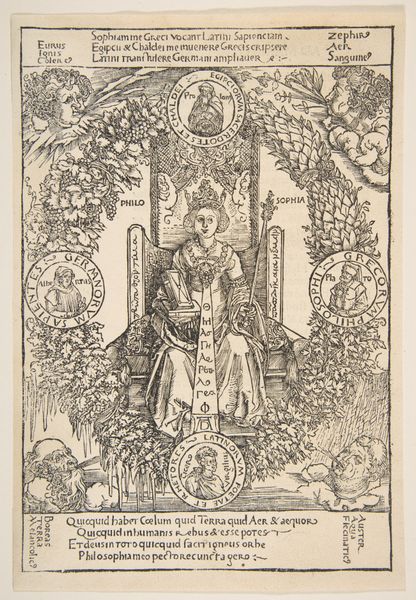
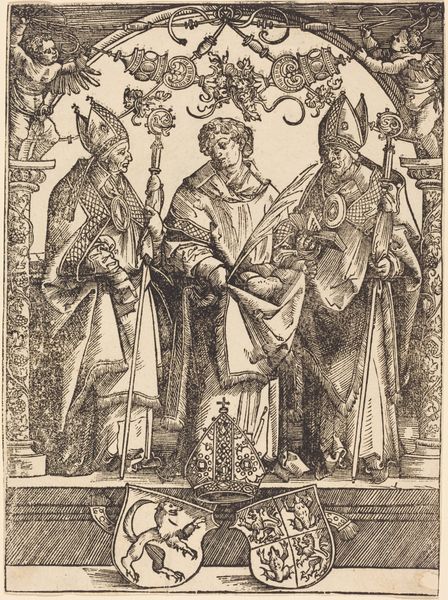
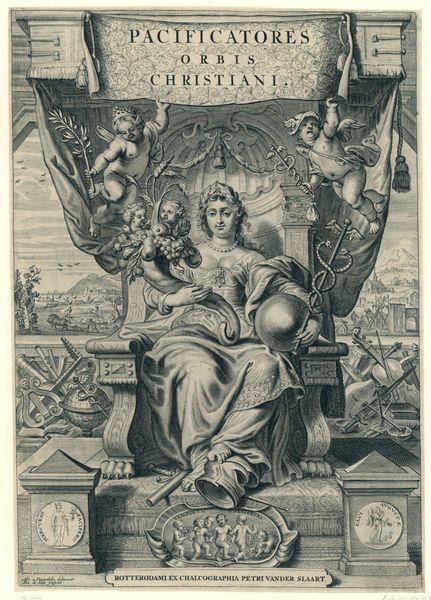
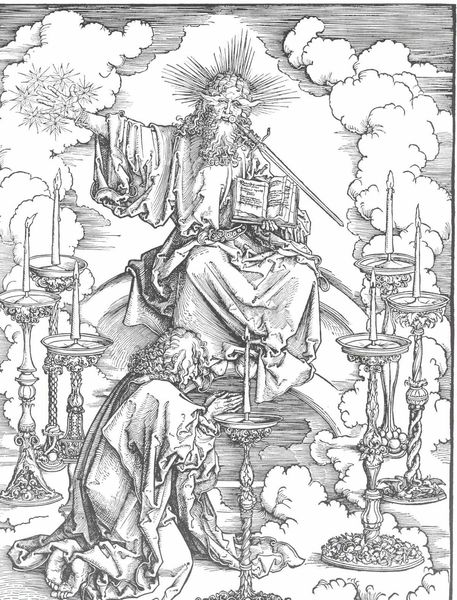
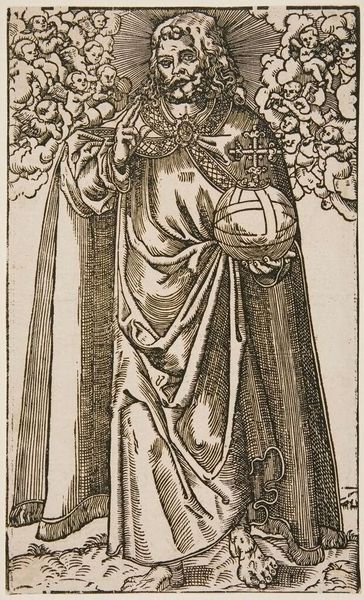
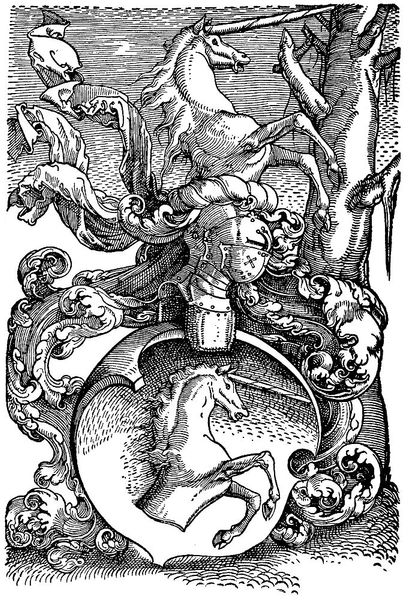
Albrecht Dürer made this personification of philosophy, "Philosophia," around the turn of the 16th century, using the distinctly reproducible technique of woodcut. The stark contrast of the black lines on white paper immediately conveys the graphic impact of printmaking. Look closely, and you’ll notice the extraordinary level of detail Dürer achieved; the texture of the foliage, the folds of Philosophia’s robes, and the lettering surrounding the central figure. Woodcut, a relief printing process, involves carving away the negative space from a block of wood, leaving the design to be printed raised. The labor-intensive process, requiring patience and skilled hands, reflects the slow, deliberate nature of philosophical thought that the image itself represents. Beyond its aesthetic qualities, woodcut was essential for disseminating knowledge during the Renaissance; it democratized access to images and ideas in a pre-digital age. In this context, the medium is inextricably linked to the content. Dürer was not only an accomplished artist, but also an entrepreneur of sorts. His prints like this one were relatively affordable, and they had a wide circulation – extending his influence far beyond the circles of elite patronage.
Comments
No comments
Be the first to comment and join the conversation on the ultimate creative platform.
 Collect
 React
React Comment
More like this