1635 - 1660
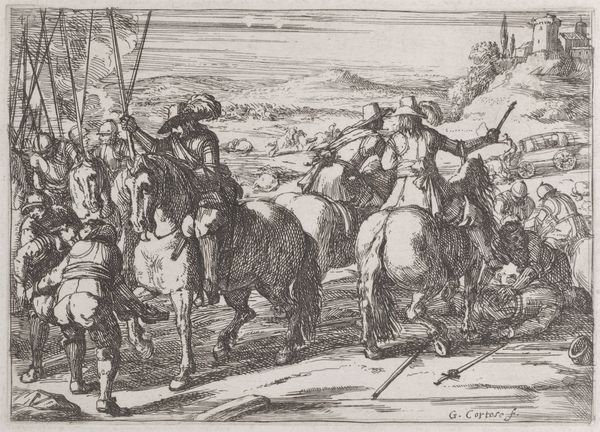
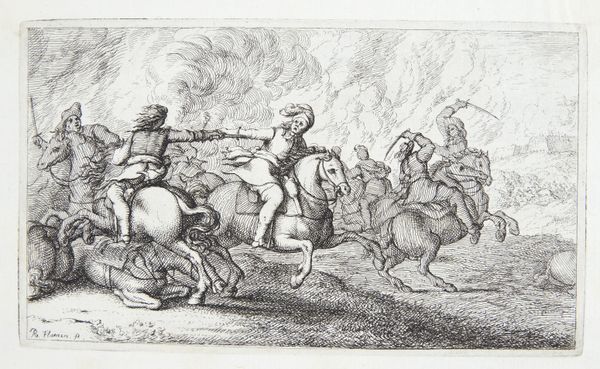
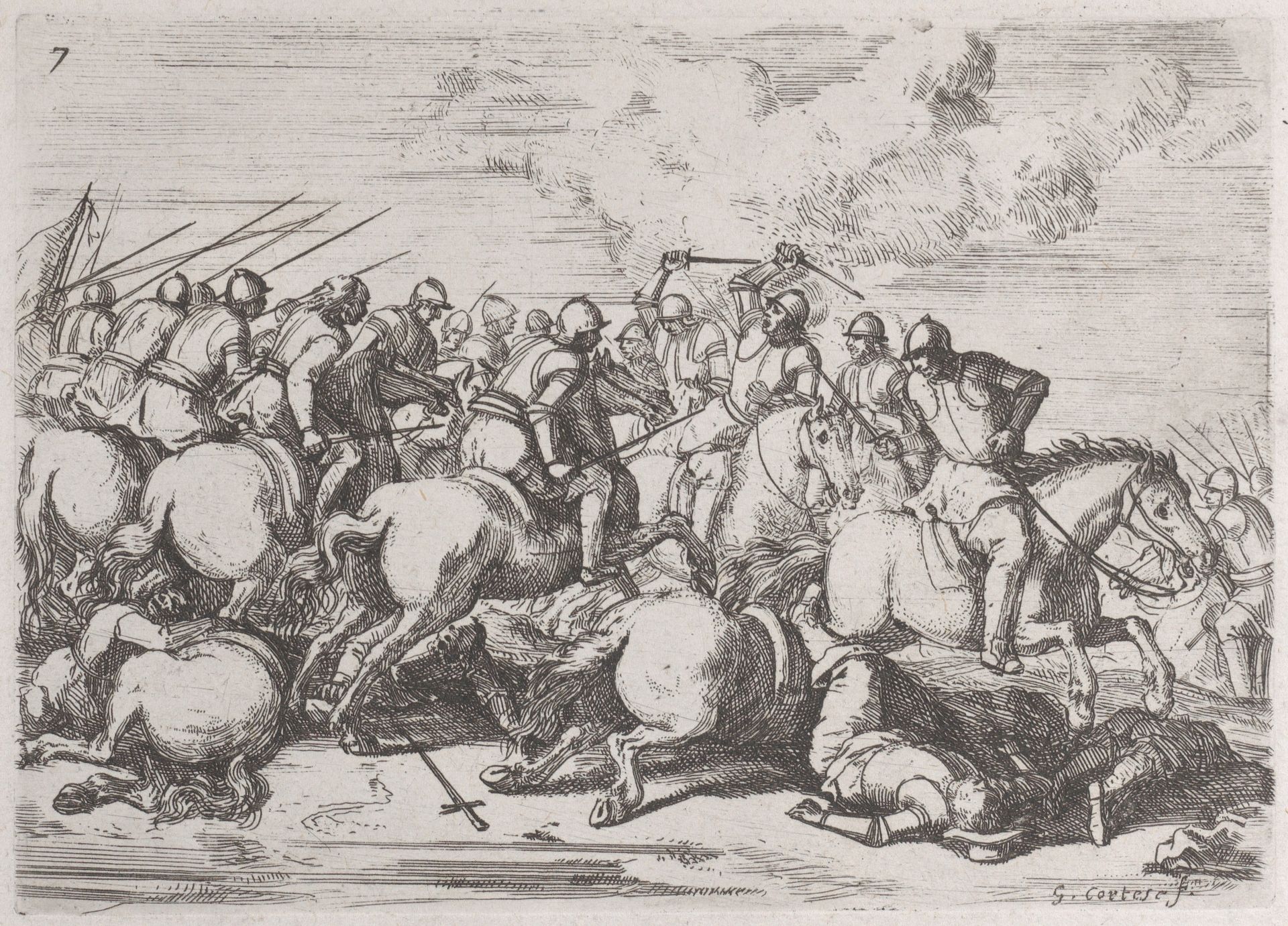
Plate 7: shock of a cavalry


Listen to curator's interpretation
Curatorial notes
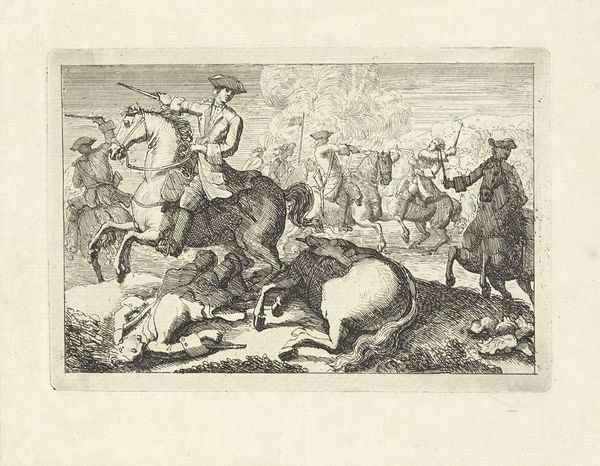
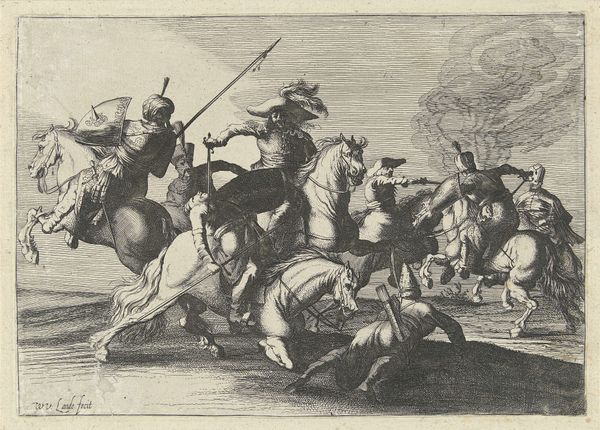
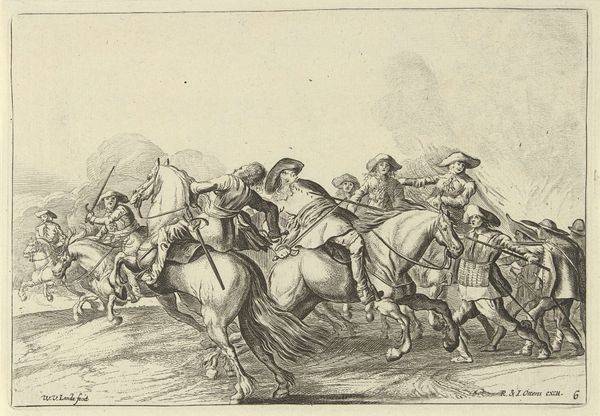
Editor: We’re looking at "Plate 7: shock of a cavalry" created between 1635 and 1660 by Jacques Courtois. It’s a print, currently housed at the Metropolitan Museum of Art. The scene is chaotic, a mass of soldiers and horses engaged in battle. What strikes you most about the formal qualities of this work? Curator: Immediately, the dynamism is palpable, achieved through the layering of figures and the stark contrast in light and shadow. Consider how Courtois has structured the composition: a dense concentration of figures in the center giving way to a more sparse background. How does that asymmetry impact your reading of the image? Editor: It draws the eye right to the thick of it, that central clash. But I'm curious, beyond just leading the eye, what effect does that contrast achieve formally? Curator: The contrast accentuates the chaos, mirroring the real violence of battle. Also, consider the lines. Short, rapid strokes construct forms. What kind of expressive potential is enabled through such a technique? Editor: It creates a sense of movement, of everything happening at once! Like a snapshot. Are you suggesting it mirrors baroque ideals? Curator: Precisely. There’s a tension and energy embedded within the very materiality of the work. Did this analysis affect how you understand its themes? Editor: Yes, actually. The visible energy within the work certainly amplifies the visual depiction of conflict in interesting ways. It gives the work an urgency that wouldn't be possible otherwise! Curator: Indeed, a marriage of technique and subject matter, where form directly embodies and intensifies content. This connection truly elevates Courtois' work.