
Curatorial notes
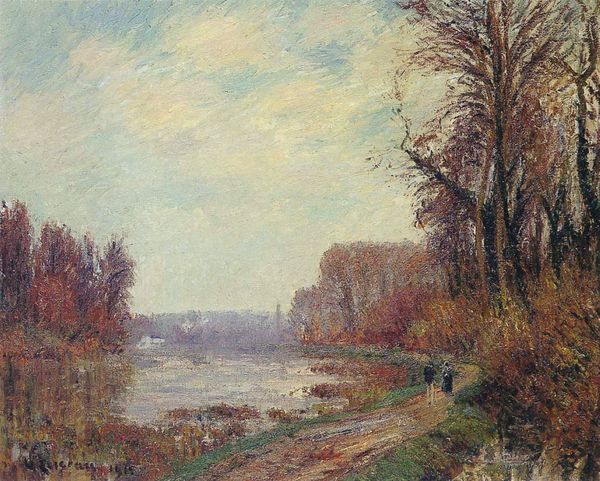
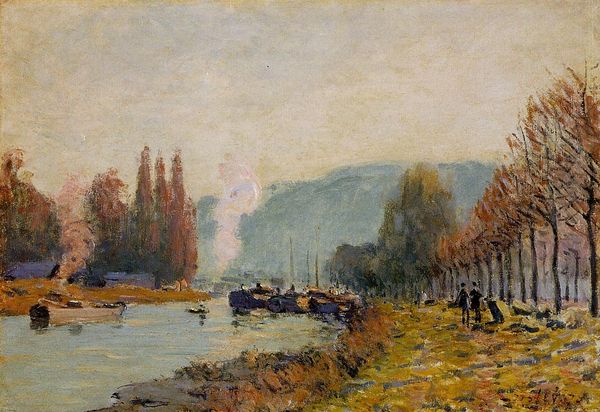
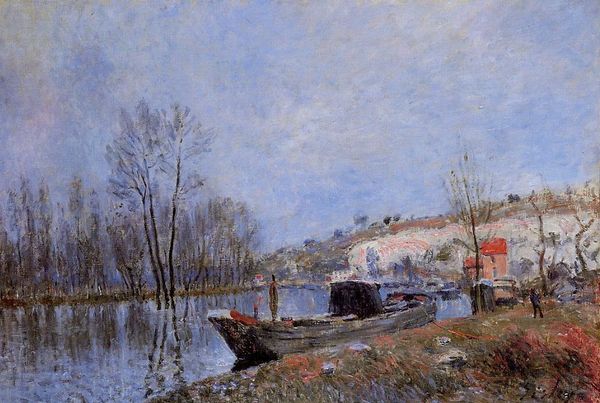
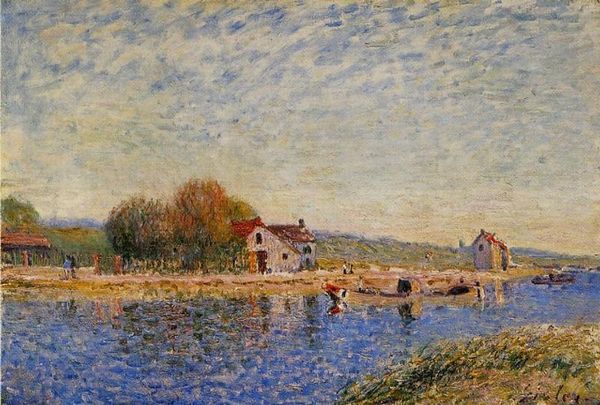
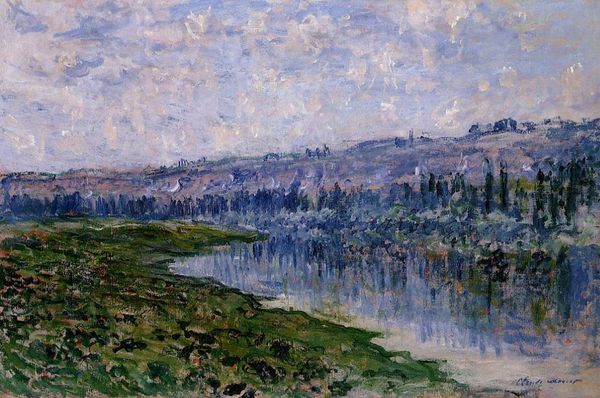
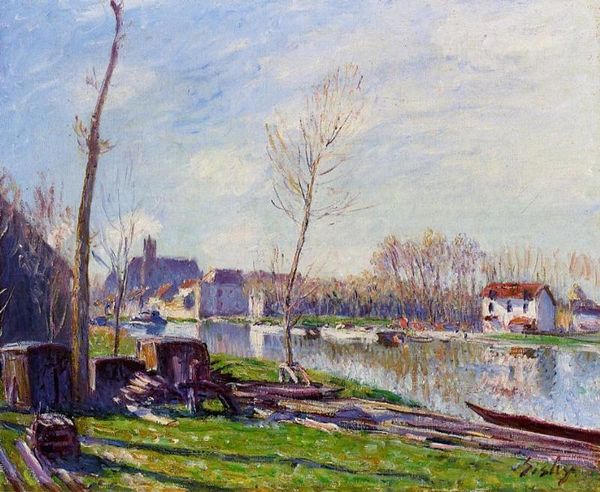
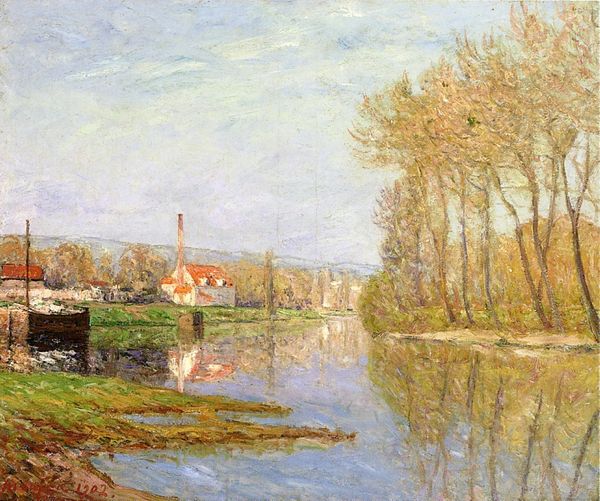
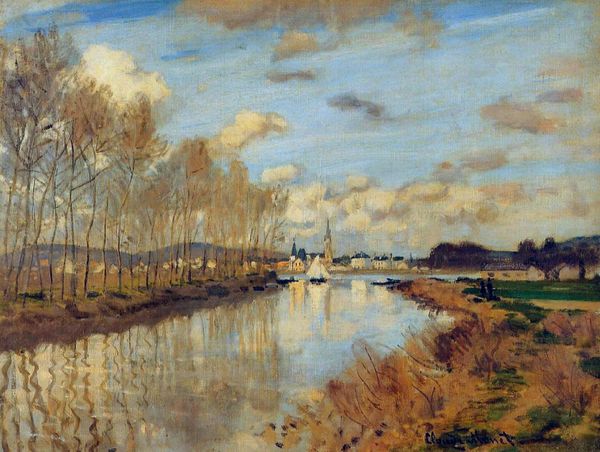
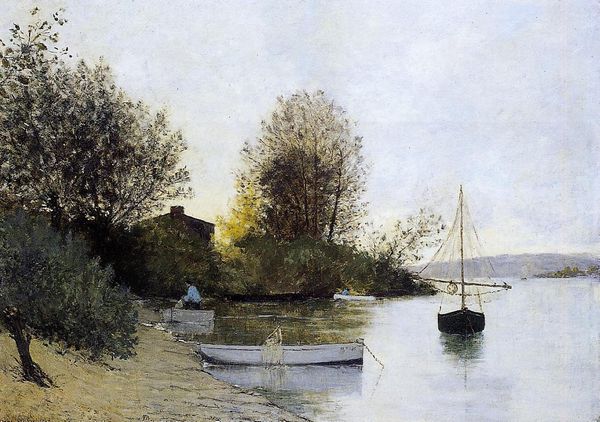
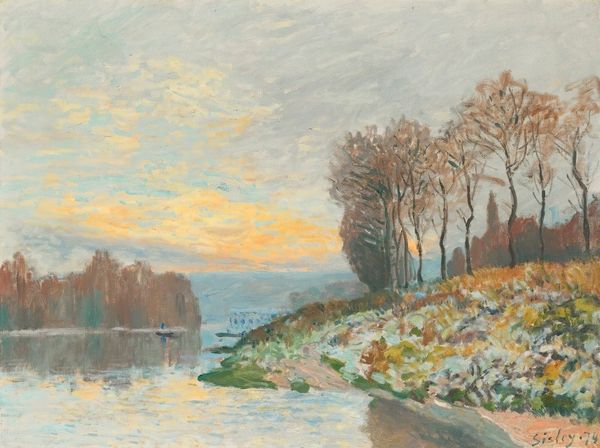
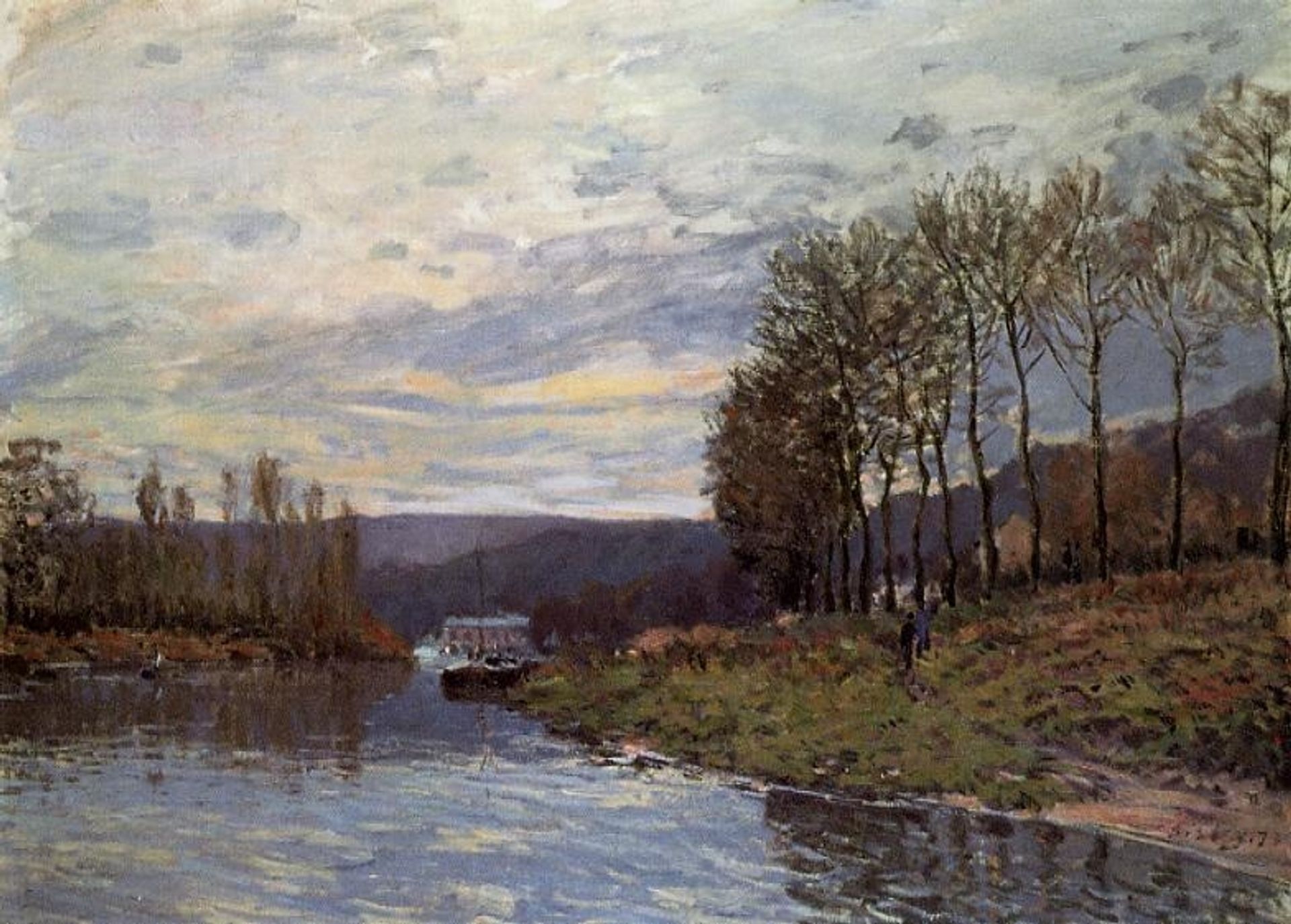
Curator: Welcome. Before us hangs Alfred Sisley’s "Seine at Bougival," completed in 1873. Editor: It strikes me as wonderfully still. A tranquil slice of the everyday. I feel an autumn chill in the air just looking at it. Curator: The horizontal composition is quite deliberate, note how it guides the eye along the Seine and invites a peaceful reading of the landscape. Sisley employed a limited palette here, largely blues, grays, and browns. Editor: True, and the near absence of vibrant color almost suggests a commentary on the bleakness of post-Franco-Prussian War France. Sisley, like many artists, lived through this period of upheaval, and it’s fair to consider how that reality shaped his artistic choices. Curator: A plausible argument, though perhaps leaning too heavily on external factors. Look instead at the brushwork – the short, broken strokes that create texture and capture the fleeting effects of light on the water. Semiotically, each dab carries representational information. Editor: Yet, consider that the plein-air approach wasn't merely about optical truth. Capturing light and shadow became intertwined with depicting leisure activities along the Seine and in turn reinforced emerging middle-class values during that period. Curator: You highlight a key tension in Impressionism itself, that liminal space between observation and ideology. What's undeniable is the sense of immediacy. Editor: Precisely. It almost anticipates snapshot photography which was taking off at the time and documenting leisure along the same waterways in similar ways. Curator: And, perhaps that's the enduring appeal – the suggestion of movement arrested and then permanently, formally structured. Editor: I agree. Considering "Seine at Bougival" and how the artistic decisions around landscape reflected shifting cultural currents does make one see it with fresh eyes. Thank you.