About this artwork
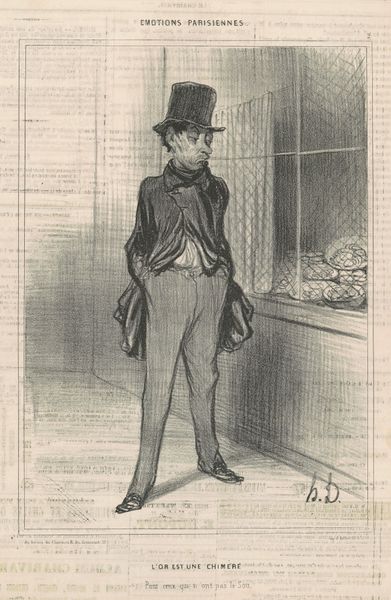
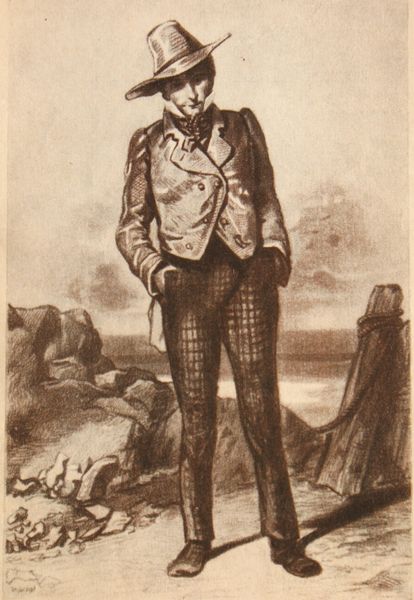
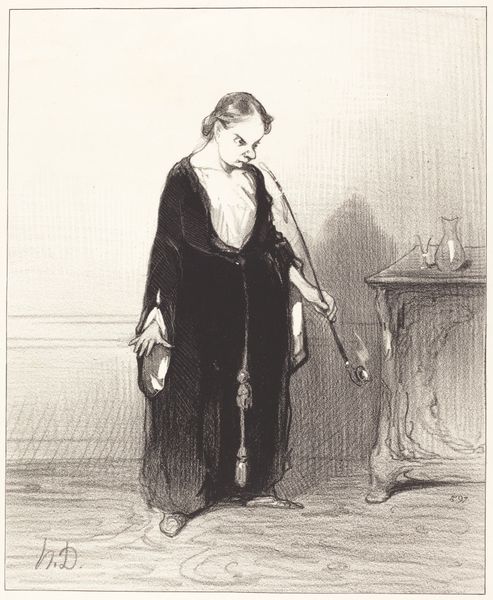
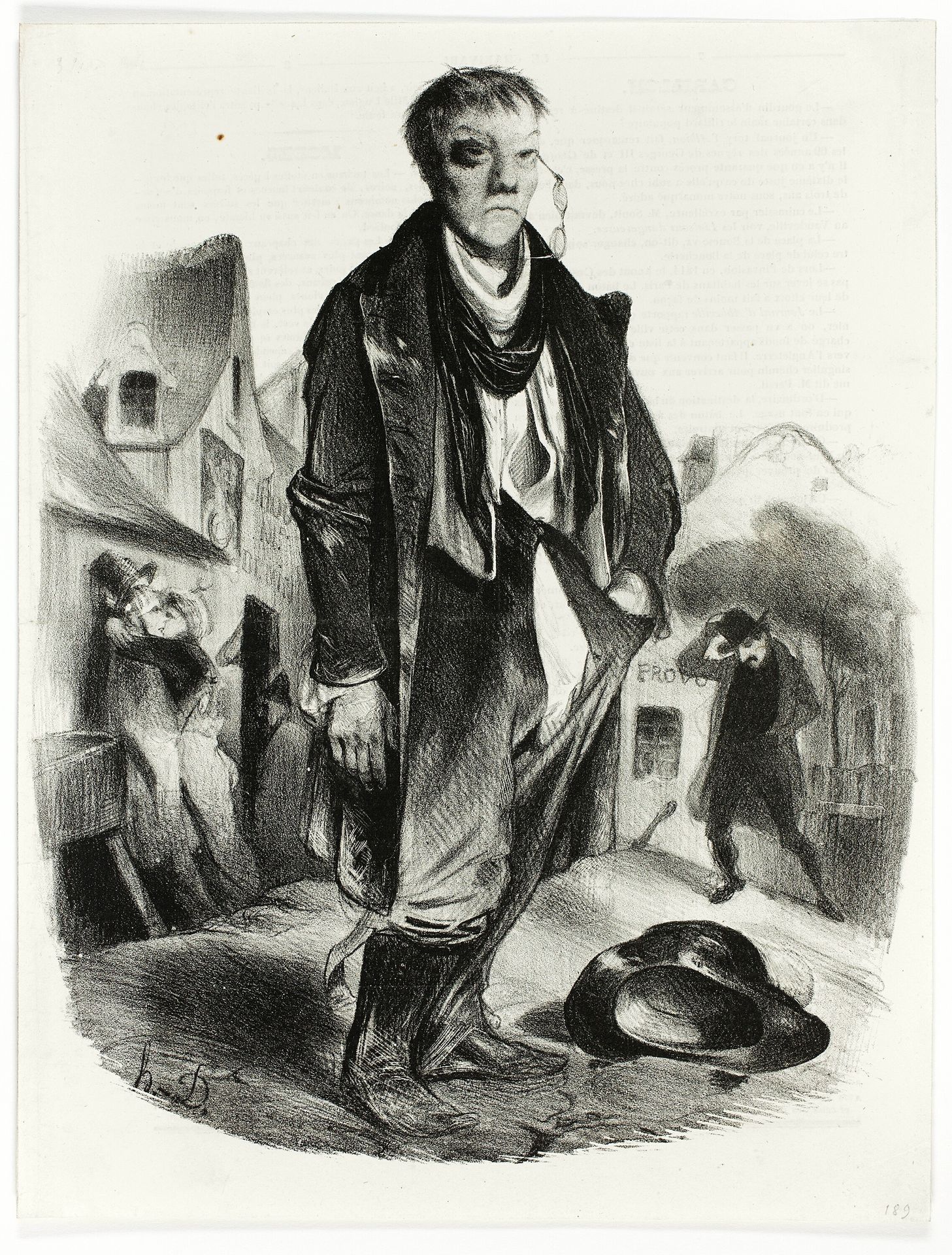
Editor: This is "The Drunkard," a lithograph by Honoré Daumier from around 1834. There's a stark, almost confrontational quality to the figure, the lines feel really harsh, like he's been through something awful. What do you see in this piece beyond the surface level? Curator: I see Daumier using caricature not just for humour, but for social critique. "The Drunkard" exists within a broader narrative of 19th-century France, a period of immense social upheaval and industrialisation. Who is this 'drunkard' and how is Daumier positioning him within this changing society? Is this just an individual portrait, or a comment on the conditions that lead to this state? Editor: That’s interesting. So, it's less about the individual’s moral failing and more about the societal pressures maybe? Curator: Exactly! Consider the Romantic era's fascination with the "common man," then add Daumier’s own political leanings. He was known for his unflinching portrayals of Parisian life, especially of those marginalized by the bourgeoisie. What does this depiction of inebriation *mean* at a time when social mobility was limited, and poverty rampant? Think of it as a commentary on the destructive forces of inequality and alienation. The charcoal almost feels like it's smudging his humanity. Editor: I never thought about it that way. I was focused on the grimness of the scene. Seeing it as a challenge to social inequality really shifts my perspective. Curator: And how might the burgeoning Temperance movement of the time have received a piece like this? How might *we* read it differently now? Art challenges us to make these connections across time. Editor: That makes the piece much more resonant and, frankly, disturbing. I am grateful for that analysis. Curator: Indeed, the personal becomes political, and the historical informs the contemporary.
The Drunkard
c. 1834


Artwork details
- Medium
- drawing, lithograph, print, paper, charcoal
- Dimensions
- 275 × 222 mm (image); 300 × 230 mm (sheet)
- Location
- The Art Institute of Chicago
- Copyright
- Public Domain
Tags
Comments
Share your thoughts
About this artwork
Editor: This is "The Drunkard," a lithograph by Honoré Daumier from around 1834. There's a stark, almost confrontational quality to the figure, the lines feel really harsh, like he's been through something awful. What do you see in this piece beyond the surface level? Curator: I see Daumier using caricature not just for humour, but for social critique. "The Drunkard" exists within a broader narrative of 19th-century France, a period of immense social upheaval and industrialisation. Who is this 'drunkard' and how is Daumier positioning him within this changing society? Is this just an individual portrait, or a comment on the conditions that lead to this state? Editor: That’s interesting. So, it's less about the individual’s moral failing and more about the societal pressures maybe? Curator: Exactly! Consider the Romantic era's fascination with the "common man," then add Daumier’s own political leanings. He was known for his unflinching portrayals of Parisian life, especially of those marginalized by the bourgeoisie. What does this depiction of inebriation *mean* at a time when social mobility was limited, and poverty rampant? Think of it as a commentary on the destructive forces of inequality and alienation. The charcoal almost feels like it's smudging his humanity. Editor: I never thought about it that way. I was focused on the grimness of the scene. Seeing it as a challenge to social inequality really shifts my perspective. Curator: And how might the burgeoning Temperance movement of the time have received a piece like this? How might *we* read it differently now? Art challenges us to make these connections across time. Editor: That makes the piece much more resonant and, frankly, disturbing. I am grateful for that analysis. Curator: Indeed, the personal becomes political, and the historical informs the contemporary.
Comments
Share your thoughts