About this artwork
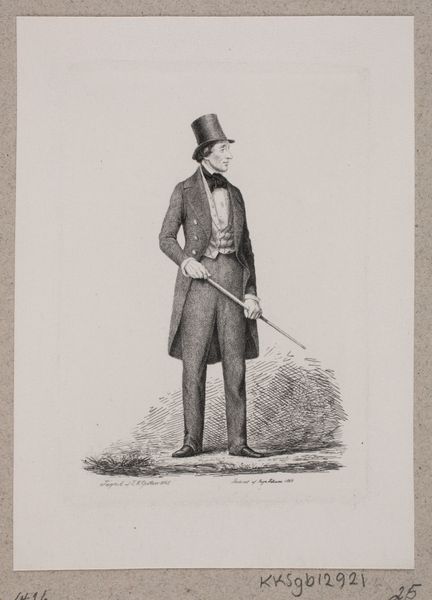
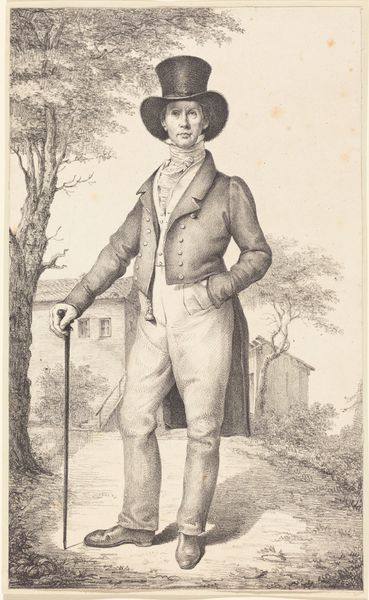
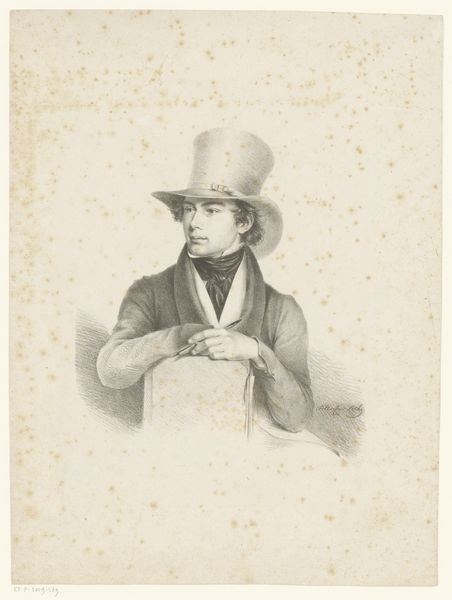
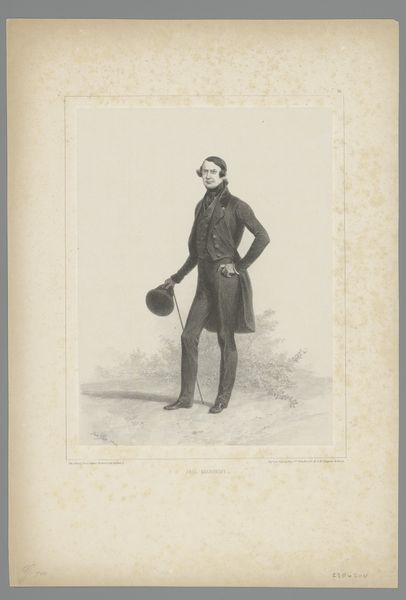
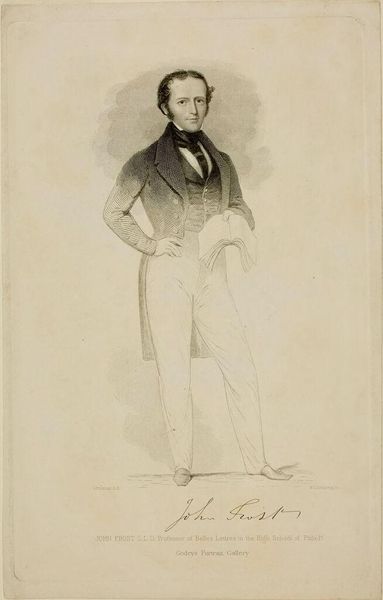
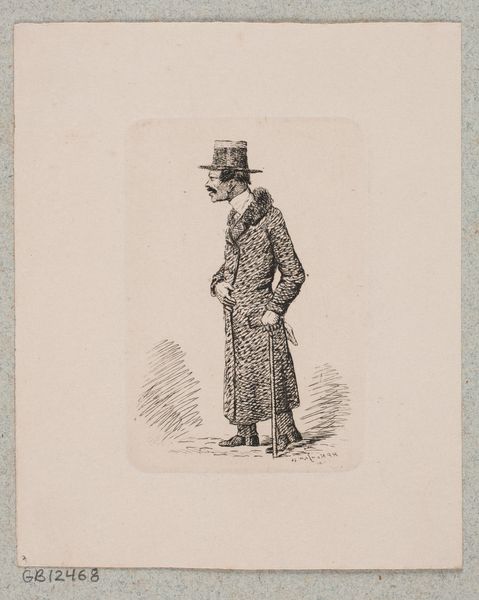
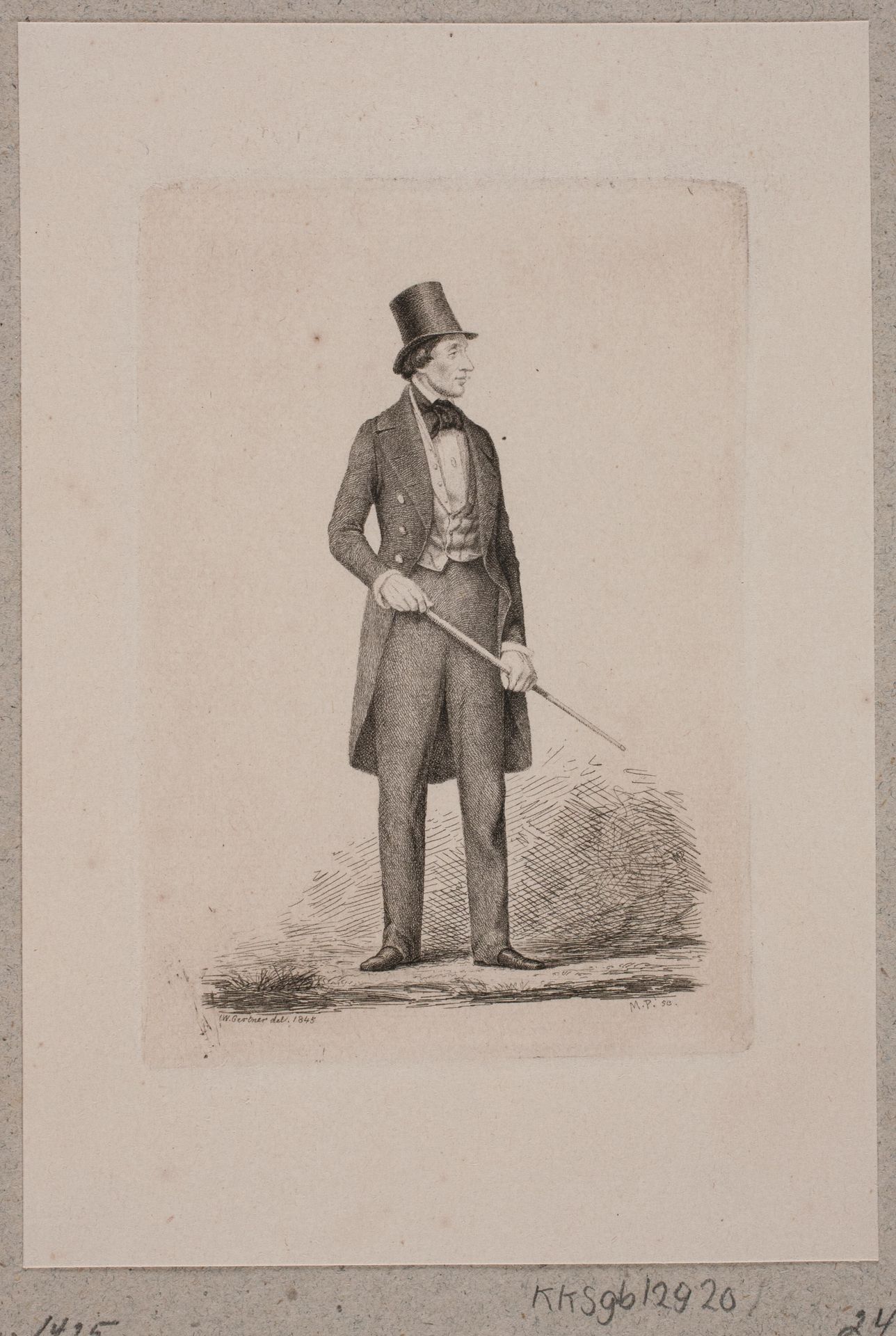
Curator: Here we have "H.C. Andersen," an etching created in 1864 by Julius Magnus-Petersen. It's currently part of the collection at the Statens Museum for Kunst. Editor: It's striking. The portrait's delicate, almost spectral quality gives the subject an ethereal feel. The limited tonal range concentrates attention on form and line. Curator: The etching, made during a period when Andersen's literary reputation was solidifying internationally, presents him as a figure of respectable, bourgeois society. He's presented not as some tormented artist, but a cultivated gentleman. Editor: Yes, and look how the artist captures Andersen's likeness with such precise detail using only a dense network of fine lines. There’s almost a sculptural effect given the illusion of form and volume. Curator: The proliferation of these kinds of images speaks to the commodification of celebrity during this time. Andersen was, in essence, a brand. This portrait served to reinforce that brand, associating him with respectability. Editor: Do you think the somewhat restrained palette affects its reception? The monochrome actually contributes to a timeless feel, doesn’t it? And that ever-so-slight blurring of some lines – intentionally or not – seems to enhance the sense of character and the overall texture. Curator: Absolutely, its muted tones are an artifact of the etching process itself. But it is important to remember that etched and printed portraits, disseminated widely, played a crucial role in shaping public figures and maintaining social hierarchies. Editor: Thinking about the process allows an additional connection with the author himself. In all, there's an elegance to it; it almost seems like one can hear the scratching of the stylus upon the plate. It seems fitting for a literary man to be captured so exquisitely. Curator: The context certainly deepens my appreciation. Thinking about how an image like this helped solidify his societal position gives the work so much more resonance. Editor: Yes, I concur. The confluence of image and narrative truly amplifies the experience.
H. C. Andersen
1864


Artwork details
- Medium
- print, etching
- Dimensions
- 103 mm (height) x 70 mm (width) (plademaal)
- Location
- SMK - Statens Museum for Kunst
Tags
portrait
aged paper
toned paper
light pencil work
etching
sketch book
personal sketchbook
realism
Comments
Be the first to share your thoughts about this work.
About this artwork
Curator: Here we have "H.C. Andersen," an etching created in 1864 by Julius Magnus-Petersen. It's currently part of the collection at the Statens Museum for Kunst. Editor: It's striking. The portrait's delicate, almost spectral quality gives the subject an ethereal feel. The limited tonal range concentrates attention on form and line. Curator: The etching, made during a period when Andersen's literary reputation was solidifying internationally, presents him as a figure of respectable, bourgeois society. He's presented not as some tormented artist, but a cultivated gentleman. Editor: Yes, and look how the artist captures Andersen's likeness with such precise detail using only a dense network of fine lines. There’s almost a sculptural effect given the illusion of form and volume. Curator: The proliferation of these kinds of images speaks to the commodification of celebrity during this time. Andersen was, in essence, a brand. This portrait served to reinforce that brand, associating him with respectability. Editor: Do you think the somewhat restrained palette affects its reception? The monochrome actually contributes to a timeless feel, doesn’t it? And that ever-so-slight blurring of some lines – intentionally or not – seems to enhance the sense of character and the overall texture. Curator: Absolutely, its muted tones are an artifact of the etching process itself. But it is important to remember that etched and printed portraits, disseminated widely, played a crucial role in shaping public figures and maintaining social hierarchies. Editor: Thinking about the process allows an additional connection with the author himself. In all, there's an elegance to it; it almost seems like one can hear the scratching of the stylus upon the plate. It seems fitting for a literary man to be captured so exquisitely. Curator: The context certainly deepens my appreciation. Thinking about how an image like this helped solidify his societal position gives the work so much more resonance. Editor: Yes, I concur. The confluence of image and narrative truly amplifies the experience.
Comments
Be the first to share your thoughts about this work.