Copyright: Rijks Museum: Open Domain
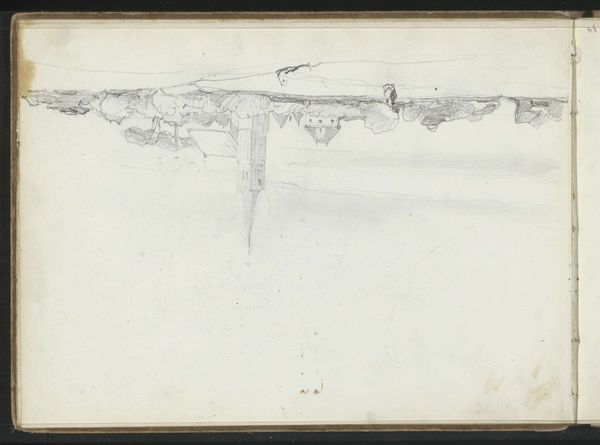
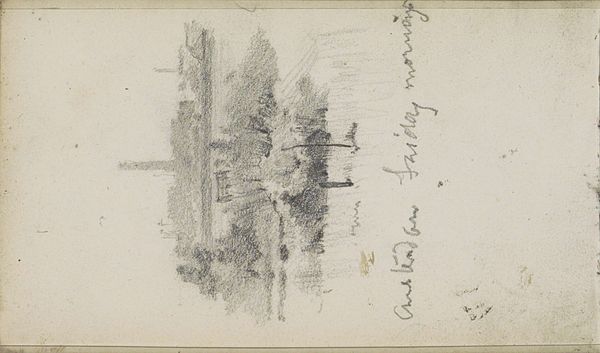
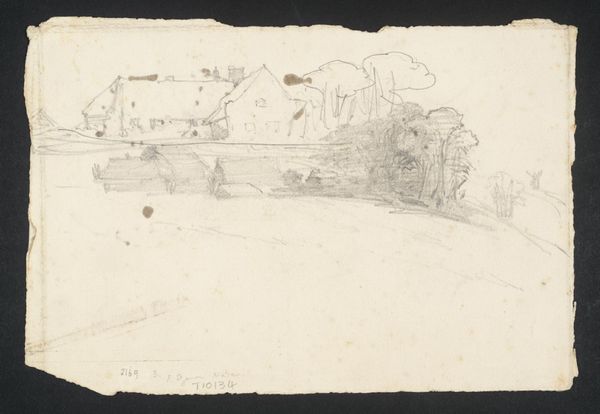
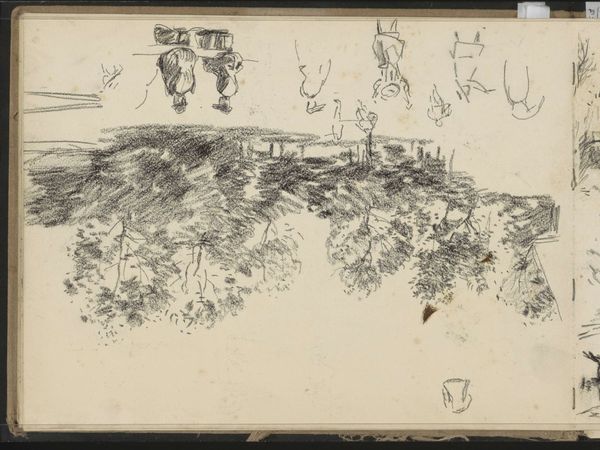
Maria Vos sketched this view of the Luxor Obelisk on the Place de la Concorde using graphite. The obelisk, a monolithic monument, initially erected in ancient Egypt to honor the sun god Ra, stands as a potent symbol of power and divine connection. Consider how obelisks, these ancient solar symbols, have been re-contextualized through time and culture. Originally erected to align earthly power with the celestial order in ancient Egypt, they were later appropriated and transplanted to new urban centers. In Rome, obelisks were erected as symbols of imperial dominance. Here, one stands in Paris, on the Place de la Concorde, a site marked by revolution and public executions. This juxtaposition reveals a complex layering of meanings: from pharaonic authority to Roman imperial power, and now, a silent witness to revolutionary fervor. The act of moving an obelisk embodies a culture's desire to connect with the past while asserting its dominance over it. The subconscious lure of the obelisk may stem from its representation of stability, power, and continuity. Each re-contextualization is not linear, but an evolution, a negotiation between past meanings and present realities.
Comments
No comments
Be the first to comment and join the conversation on the ultimate creative platform.
 Collect
 React
React Comment
More like this