print, engraving
#
portrait
#
baroque
# print
#
old engraving style
#
traditional media
#
history-painting
#
engraving
Dimensions: height 181 mm, width 135 mm
Copyright: Rijks Museum: Open Domain
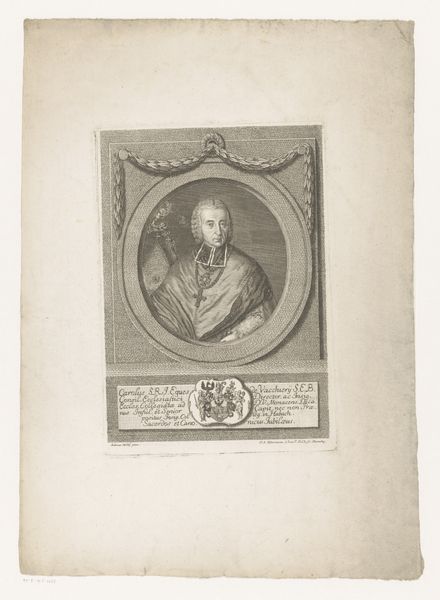
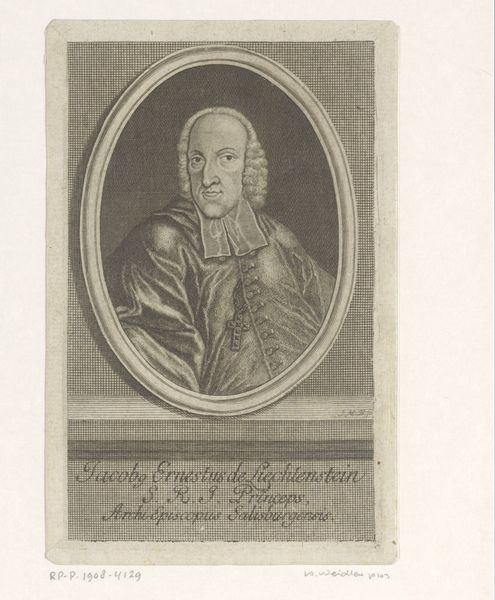
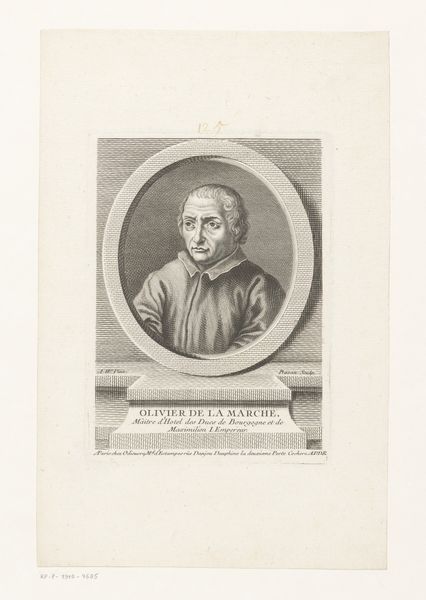
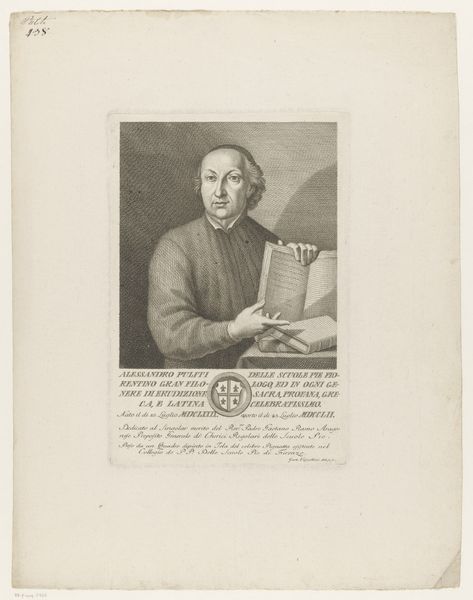
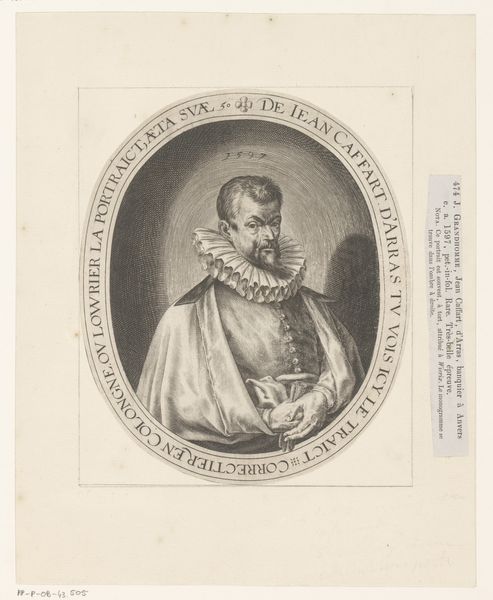
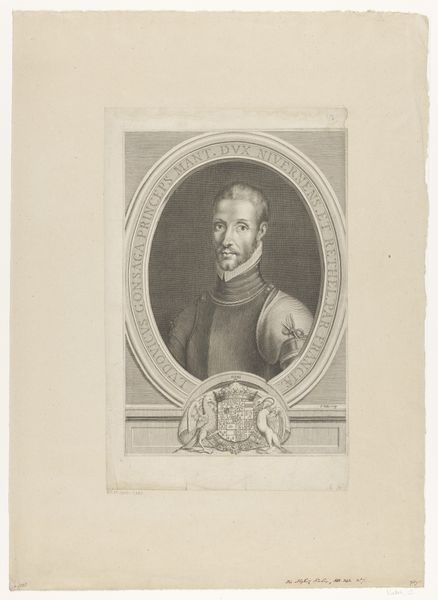
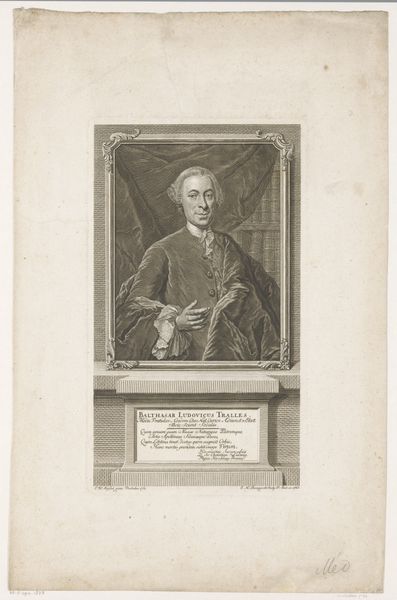
Curator: Looking at this portrait, the lines are so fine, almost impossibly delicate. Editor: It's compelling, though slightly severe. I find my eyes drawn to the subject's gaze; it seems like a demand. Curator: Well, the artwork here is Edme de Boulonois’ 1682 engraving, "Portret van Frans Floris," currently residing at the Rijksmuseum. What's remarkable is how Boulonois captures the very essence of artistic authority, wouldn't you agree? Editor: It is definitely deliberate. Frans Floris with his palette, holding up a sketch of a nude… it all speaks to self-promotion, the artist showcasing his capabilities and… importance. Consider the context, though. By 1682, Floris had been dead for over a century. This engraving feels like an attempt to solidify his place in the artistic canon. Curator: Ah, the politics of memory. I love how printmaking could elevate or cement reputations—sort of the 17th-century version of going viral, in a more refined way, of course. Do you think Boulonois succeeded? Does this engraving *make* us see Floris as important? Editor: Well, it’s difficult to say for sure what viewers thought then, but the details absolutely shape our view now. The Baroque style gives Floris a sense of grandeur and dynamism, though the black and white lends an austerity. It is meant to be persuasive, undeniably. I wonder, though, about accessibility. Prints like these would have circulated among a certain class, shaping the taste of collectors and connoisseurs. Curator: A targeted meme! I see your point entirely. And even with its restrictions, imagine the ambition involved in taking such care to translate something so visual into a tangible object of historical value. Editor: Precisely. What is lasting or culturally relevant gets filtered through many people. Even portraits like this serve purposes, from marketing an artist to constructing legacies. The act of selecting, depicting, and distributing that imagery… it’s all incredibly loaded. Curator: Such detail opens doors in art. What begins looking static comes to life through understanding and the power that history wields in shaping narratives around it. Editor: Indeed. And on that thoughtful note, it prompts me to look closer next time at these kind of posthumous celebrations and acknowledge that these portraits can indeed reveal just as much, if not more, about the societal and art politics of *their* time.
Comments
No comments
Be the first to comment and join the conversation on the ultimate creative platform.
 Collect
 React
React Comment
More like this