painting, oil-paint
#
painting
#
oil-paint
#
figuration
#
oil painting
#
group-portraits
#
genre-painting
Copyright: Enrique Grau,Fair Use
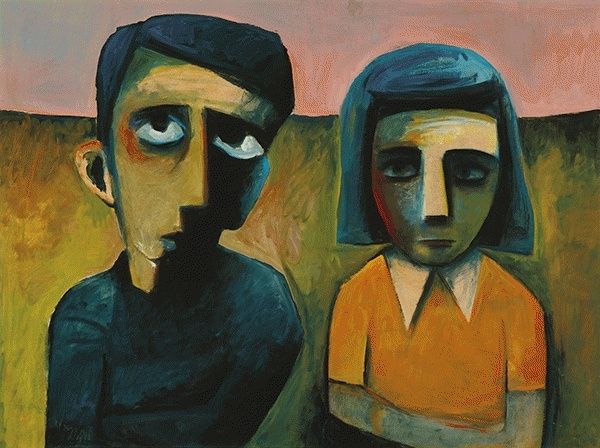
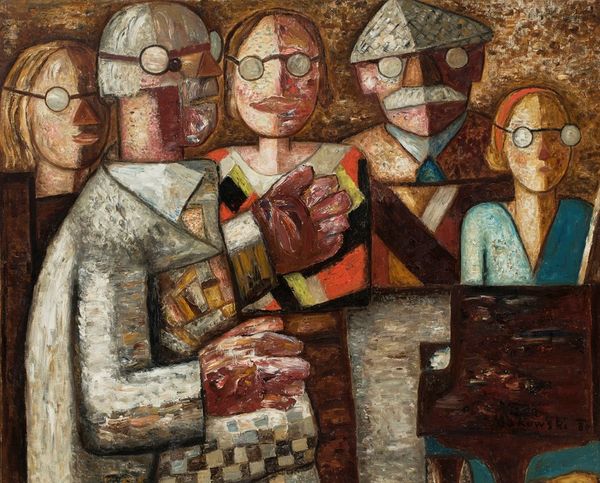
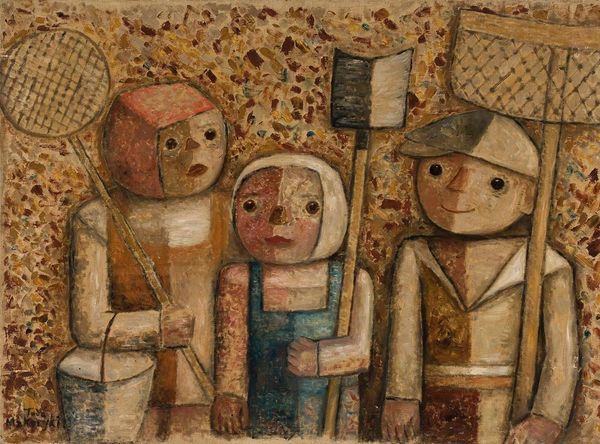
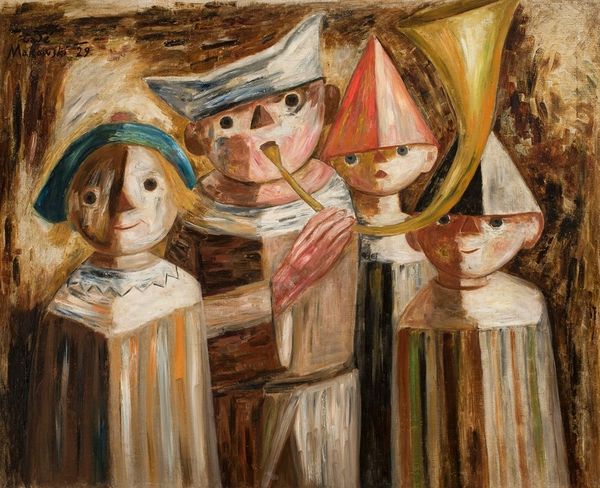
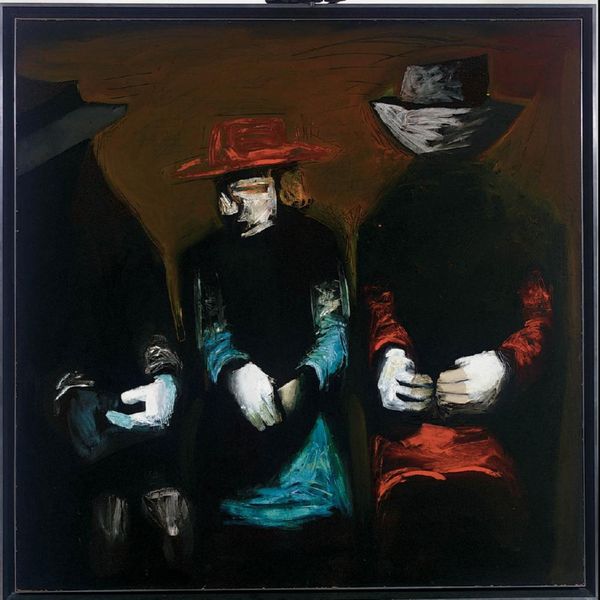
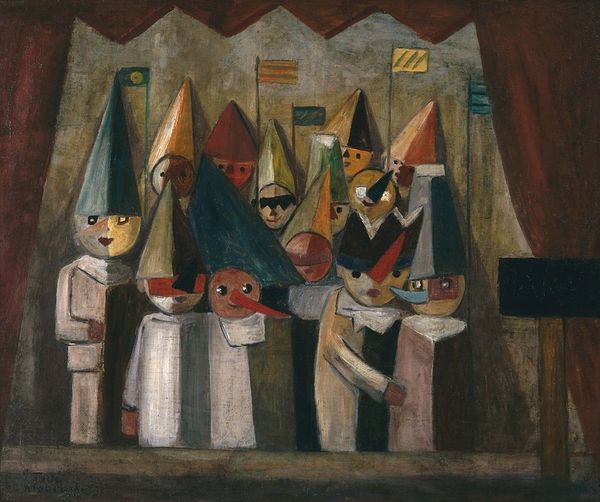
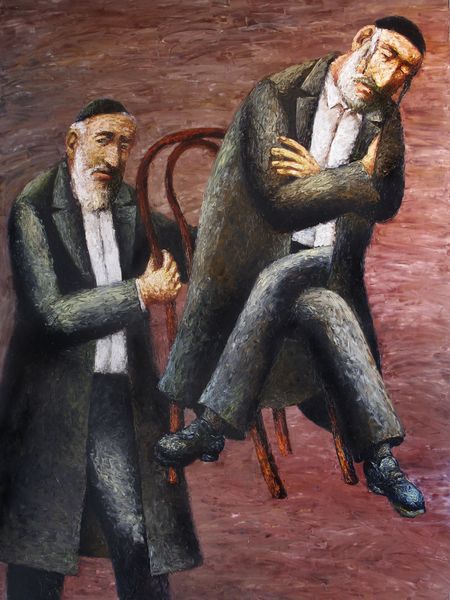
Editor: So this painting, titled “Untitled,” by Enrique Grau, made in 1960 with oil paint, is really striking. There's a quietness about it, even with the musicians, almost melancholic. What’s your take on this work? Curator: It’s a powerful image, especially when considering Grau’s broader practice. This piece strikes me as a commentary on cultural identity in post-colonial Colombia. Note the faces – their closed eyes, almost mask-like. Do you think this hints at a tension between visibility and forced invisibility? Editor: That's an interesting point, I hadn't considered that. Their expressions are ambiguous; I initially thought it showed concentration. Curator: Exactly! The ambiguity is crucial. Grau often explored the complex position of indigenous and Afro-Colombian populations. By presenting them in this way – actively making music, but with an almost ritualistic stillness – he's prompting us to consider the role of cultural expression in shaping national identity, and perhaps, even resistance. Who gets to represent "Colombia"? Editor: So, you're suggesting the painting engages with the politics of representation? Curator: Precisely. Look at the limited color palette – almost monochromatic – does this desaturation create an austere representation, perhaps symbolizing limitations, and a sense of constraint? Editor: It definitely adds to the overall serious mood of the piece. Seeing the context makes it more interesting! I was focused on just what they were playing. Curator: And that's valid, too. What have we learned? Maybe how something as seemingly straightforward as a genre scene can become a potent statement on socio-political realities. Editor: I agree! This artwork speaks volumes about how art functions as cultural commentary. It makes you question the surface and look at historical influences and cultural meaning!
Comments
No comments
Be the first to comment and join the conversation on the ultimate creative platform.
 Collect
 React
React Comment
More like this