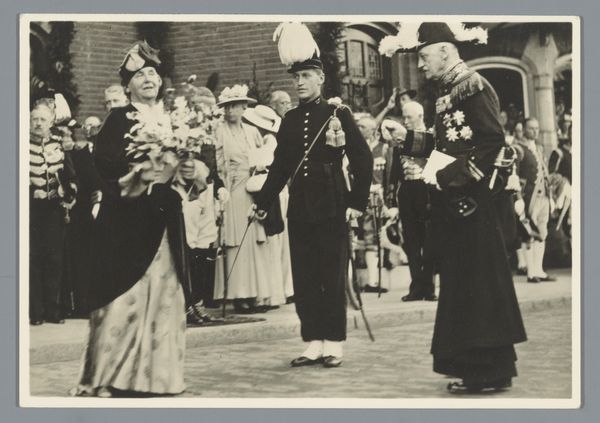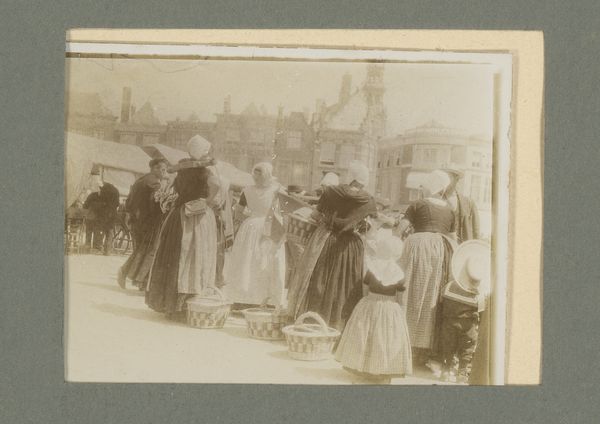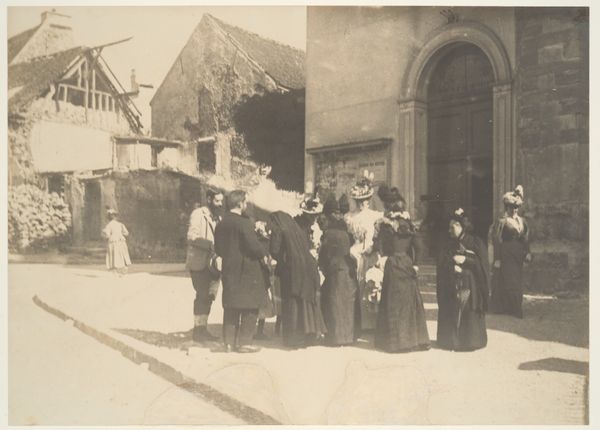
c. 1907 - 1915
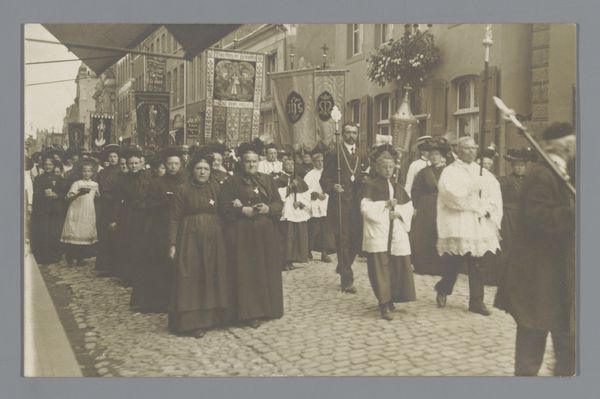
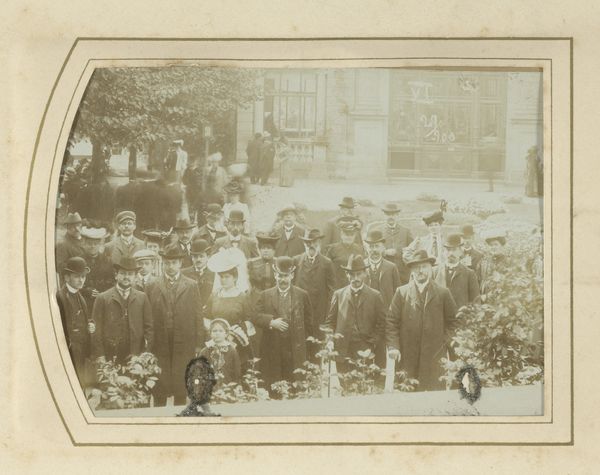
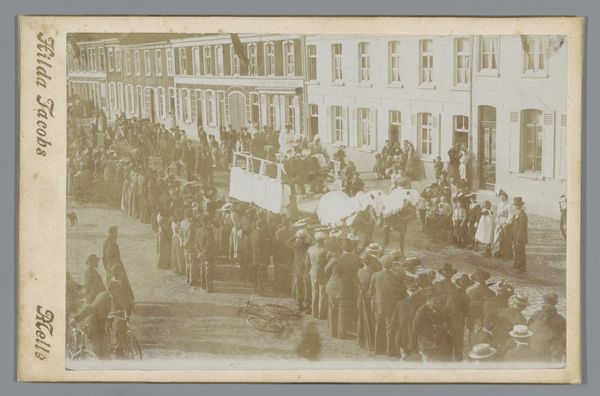
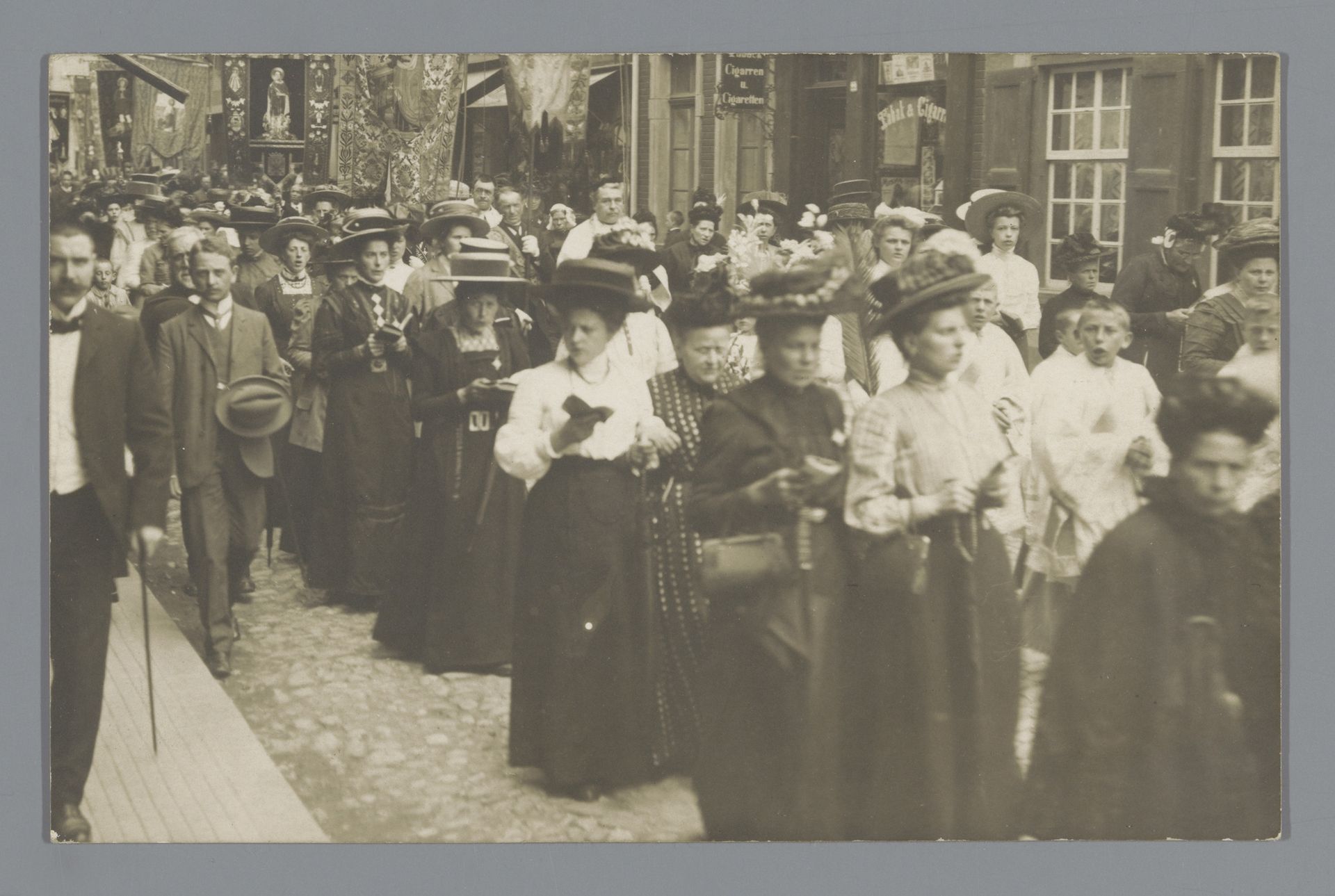
Katholieke processie te Kevelaer

Listen to curator's interpretation
Curatorial notes
Editor: Here we have Hubert Koch’s “Katholieke processie te Kevelaer,” or “Catholic Procession in Kevelaer,” a gelatin silver print made sometime between 1907 and 1915. It feels very staged, almost like a film still. What strikes you when you look at this image? Curator: Oh, staged or not, it feels deeply authentic, doesn’t it? Look at those faces—they’re not acting. I see devotion, quiet determination, maybe even a touch of apprehension. The photograph itself feels almost…dreamlike. Koch has captured a world caught between tradition and modernity. The banners, the hats, the cigarettes & liquor shop sign just over their shoulders! It's quite surreal. What do you think that juxtaposition suggests? Editor: Maybe that even during religious events, the everyday world doesn’t disappear. Everything continues, even faith. Does that contrast inform your reading of the piece? Curator: Absolutely! Think of it this way: faith exists within life, it's not separate from it. This photograph isn’t just documenting a procession; it's suggesting the integration of spiritual life into daily life, perhaps even hinting at a tension between the sacred and the mundane. Like a medieval morality play, maybe. And isn’t it amazing how Koch, using a rather ordinary medium, has managed to capture such depth? Almost like memory, faded and sharp all at once. What does it make you consider? Editor: I never thought about photography that way before – it really blurs the line between observation and interpretation. I was so caught up in the "realness" of photography that the emotional or artistic part flew over my head. Curator: It often does! But every artistic medium is only the threshold. Once crossed, you have access to an entirely new universe of thought!