Copyright: Public domain
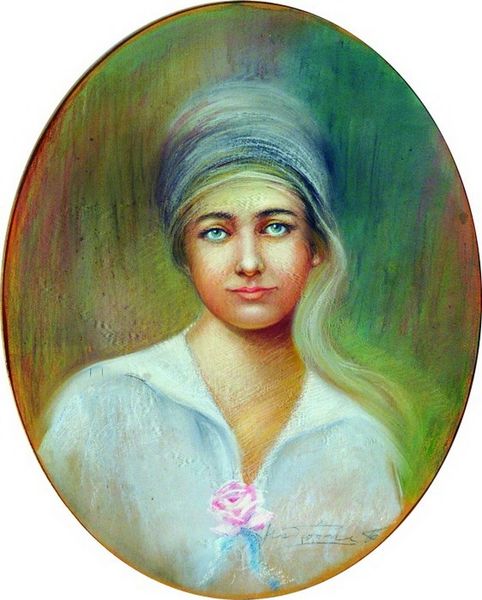
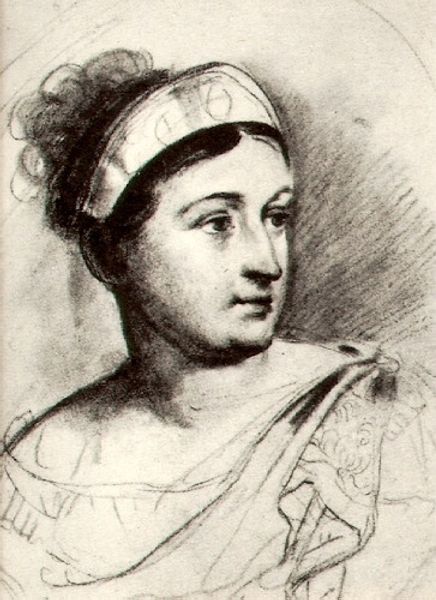
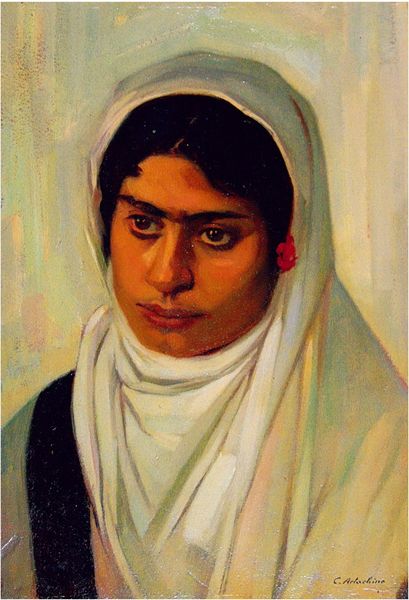
Editor: Here we have Boris Kustodiev’s "Portrait of A.K. Kashparova," a watercolor from 1911. It's mostly gentle creams and soft pinks and it feels…intimate somehow, almost like we're intruding on a private moment. What stands out to you about this piece? Curator: What strikes me is the power dynamics embedded within this seemingly quiet portrait. In early 20th century Russia, who had the means to commission or sit for a portrait? It immediately speaks to a certain level of societal privilege. Editor: So the very act of creating this portrait reflects power? Curator: Absolutely. Kustodiev was part of a wave of Russian artists seeking to define a national identity through art, but portraits often served to reinforce the established social order. Now, consider the subject's expression - is it one of contentment or something else? Editor: She looks a little… resigned, maybe? Not unhappy, but not joyful either. Curator: Precisely! This subtle complexity offers a crack in the surface, suggesting that even within a portrait meant to celebrate status, there might be a hint of underlying societal tensions or perhaps personal unease. Could it be commentary on the roles and expectations placed on women of her station? Editor: That's fascinating. I hadn't thought about the inherent politics of portraiture itself, or what it might be like for the sitter. I see a new layer of depth now. Curator: And that, perhaps, is the ongoing role of art – to make us question the stories we tell ourselves about history and power. Editor: It makes me want to research A.K. Kashparova and her place in society even more! Thanks for sharing your insights.
Comments
No comments
Be the first to comment and join the conversation on the ultimate creative platform.
 Collect
 React
React Comment
More like this