About this artwork
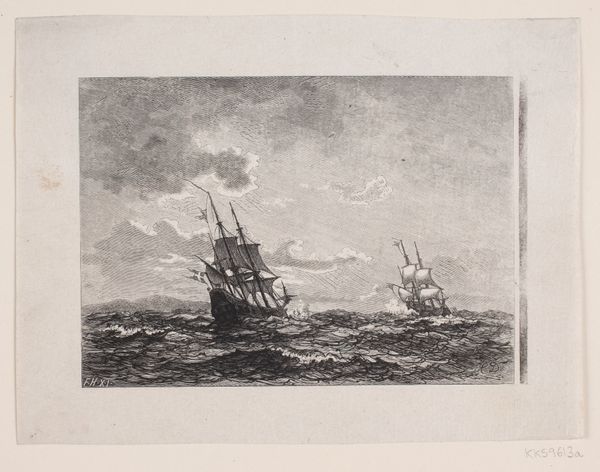
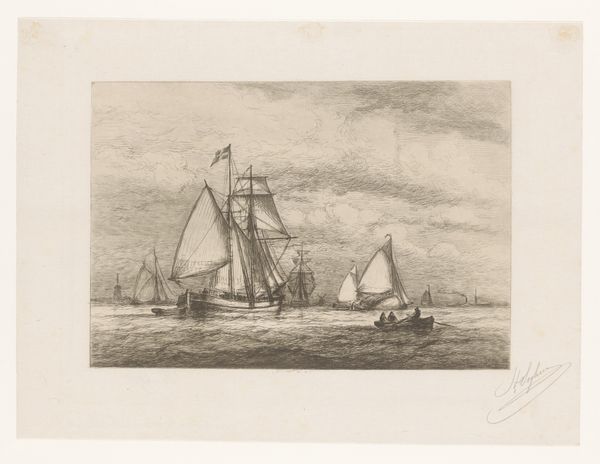
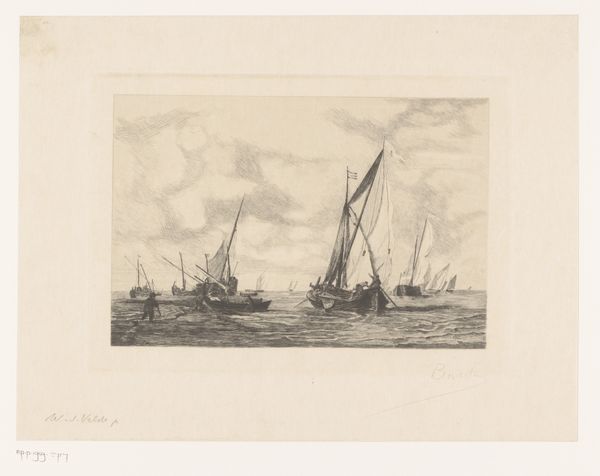
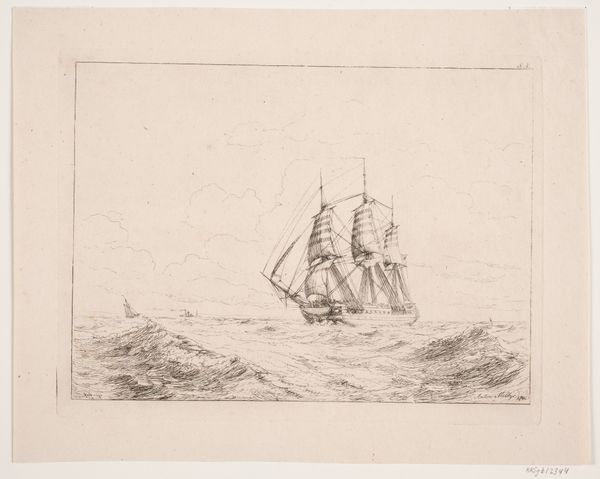
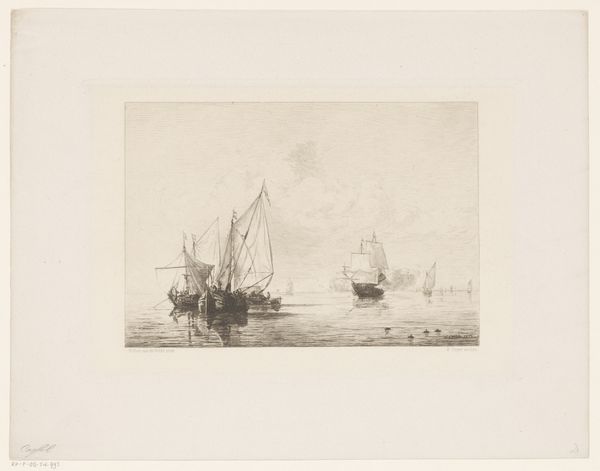
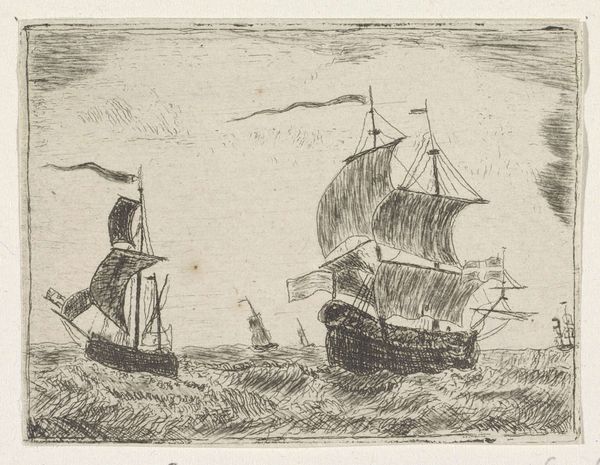
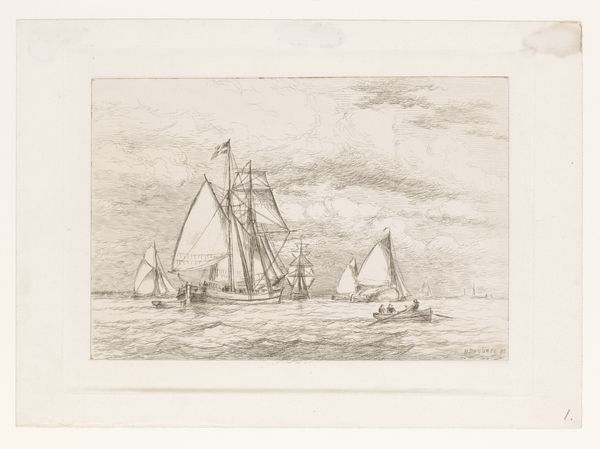
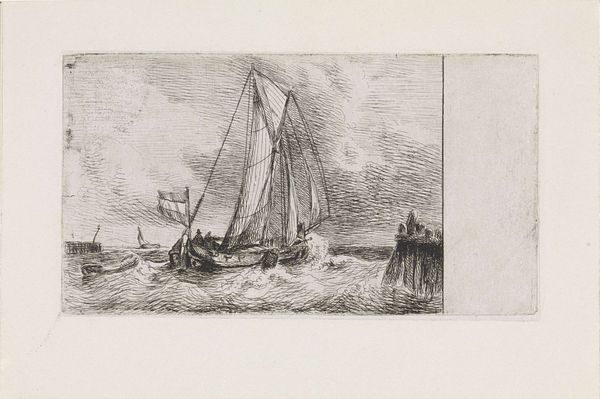
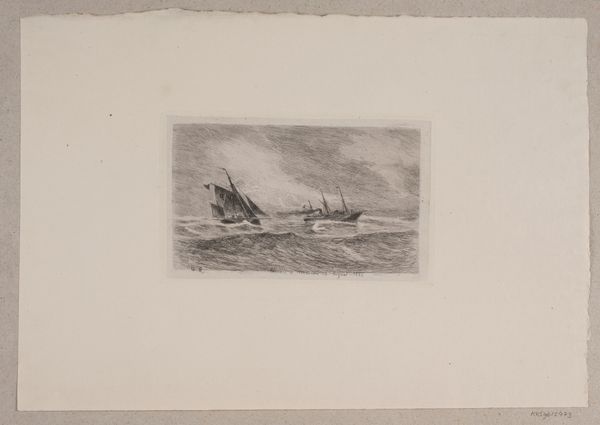
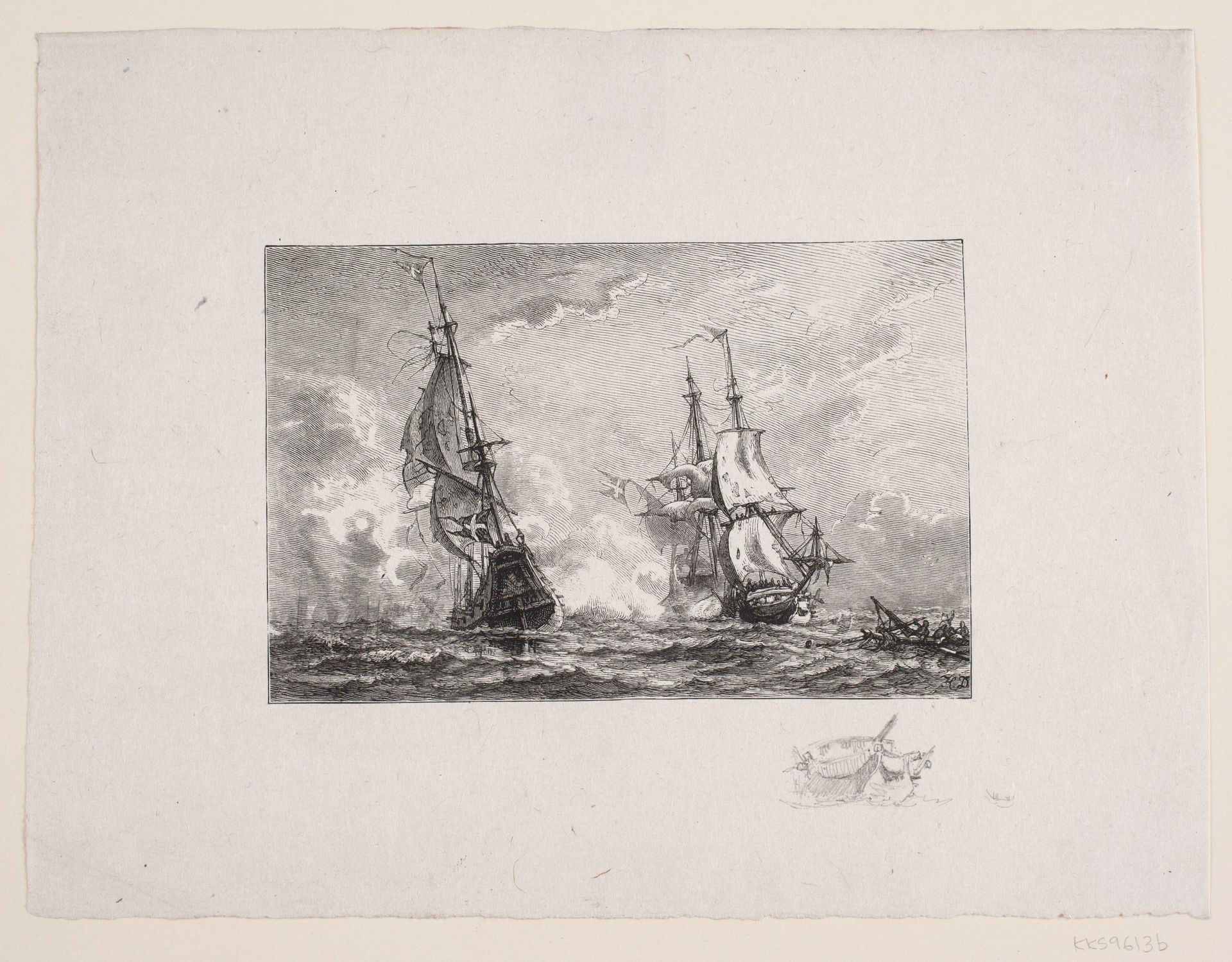
This is an illustration, likely a wood engraving, which served as the title image for H. Drachmann's book, "Peder Todenskjold." The image depicts a naval battle, reflecting the heroic narratives often associated with historical figures. Considering the context, this image likely comes from late 19th-century Denmark, a period of rising nationalism and a focus on establishing a Danish cultural identity. Drachmann's book would have contributed to this movement by glorifying a Danish naval hero. The visual codes here, the dramatic clash of ships, the billowing smoke, all reinforce a sense of national pride and military prowess. The image would have resonated with a public eager to embrace symbols of national strength. Understanding such an image requires diving into the cultural and political landscape of the time. Exploring the history of Danish nationalism, the role of literature in shaping public opinion, and the ways in which historical figures were mythologized can all give us a richer understanding of this artwork. It reminds us that art is always intertwined with the social and institutional forces that shape its creation and reception.
Titelbillede til H. Drachmann, "Peder Todenskjold"
1870 - 1883


Artwork details
- Medium
- print, engraving
- Dimensions
- 84 mm (height) x 129 mm (width) (billedmaal)
- Location
- SMK - Statens Museum for Kunst
Tags
Comments
Share your thoughts
About this artwork
This is an illustration, likely a wood engraving, which served as the title image for H. Drachmann's book, "Peder Todenskjold." The image depicts a naval battle, reflecting the heroic narratives often associated with historical figures. Considering the context, this image likely comes from late 19th-century Denmark, a period of rising nationalism and a focus on establishing a Danish cultural identity. Drachmann's book would have contributed to this movement by glorifying a Danish naval hero. The visual codes here, the dramatic clash of ships, the billowing smoke, all reinforce a sense of national pride and military prowess. The image would have resonated with a public eager to embrace symbols of national strength. Understanding such an image requires diving into the cultural and political landscape of the time. Exploring the history of Danish nationalism, the role of literature in shaping public opinion, and the ways in which historical figures were mythologized can all give us a richer understanding of this artwork. It reminds us that art is always intertwined with the social and institutional forces that shape its creation and reception.
Comments
Share your thoughts