print, paper, engraving
portrait
neoclacissism
aged paper
old engraving style
paper
history-painting
engraving
Dimensions: height mm, width mm
Copyright: Rijks Museum: Open Domain
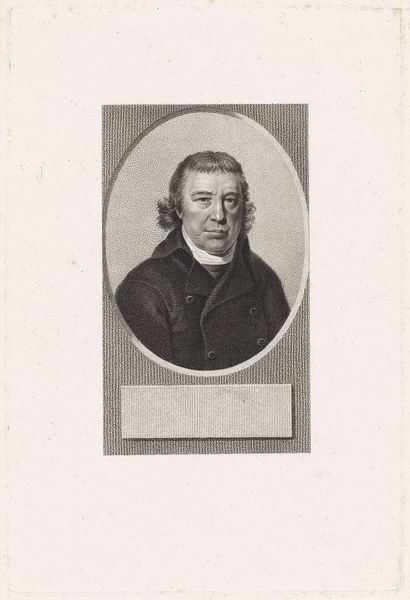
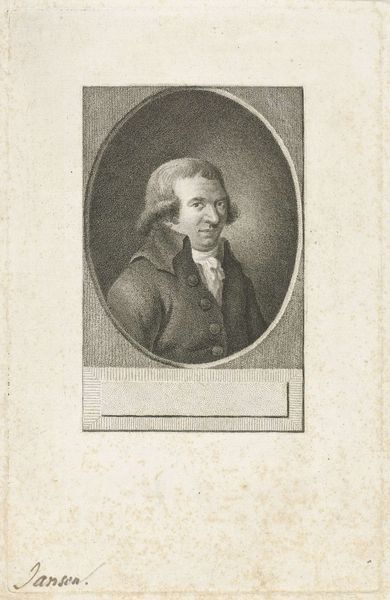
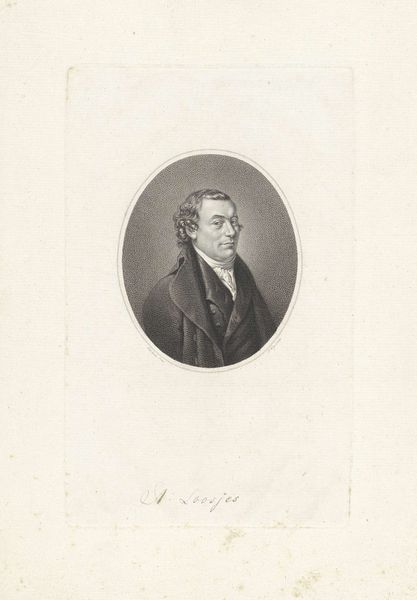
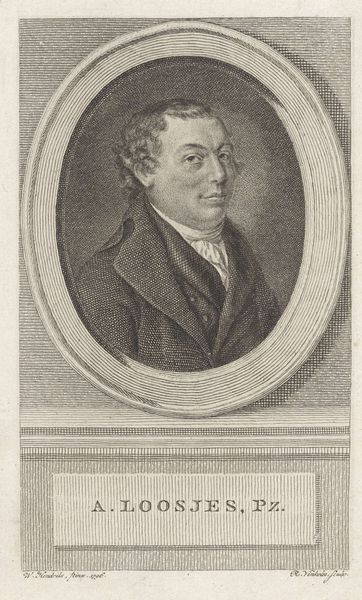
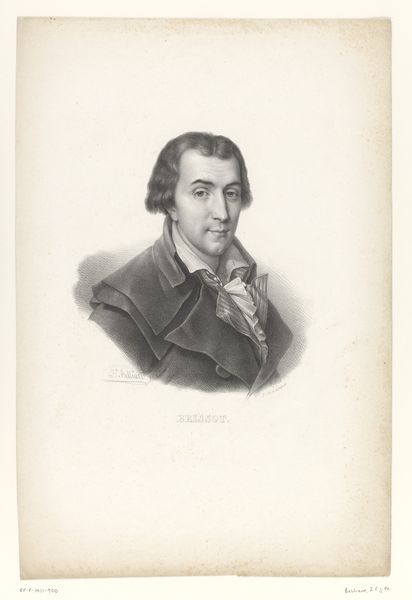
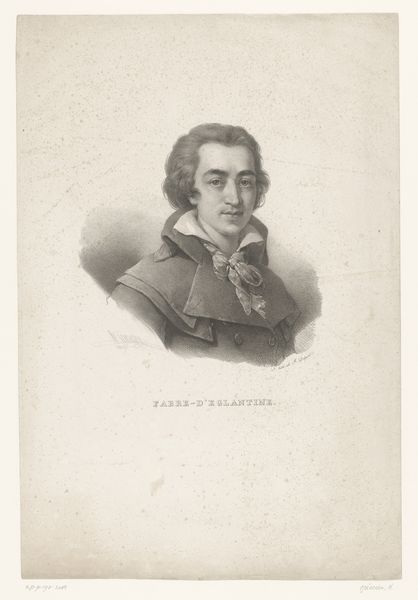
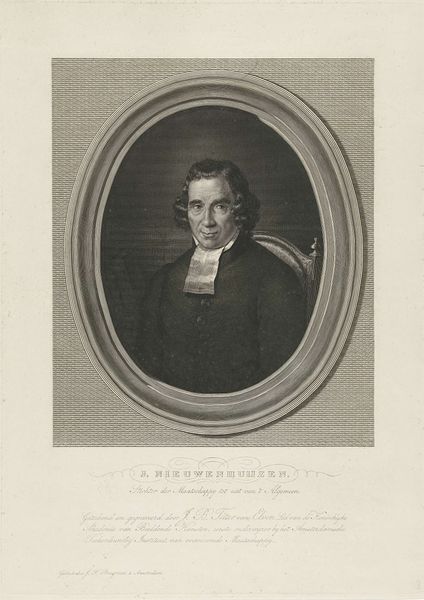
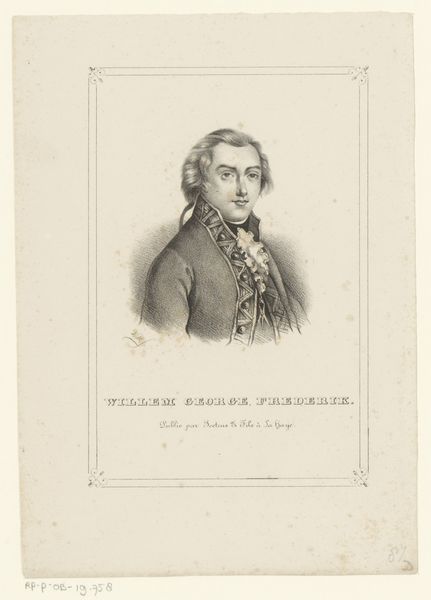
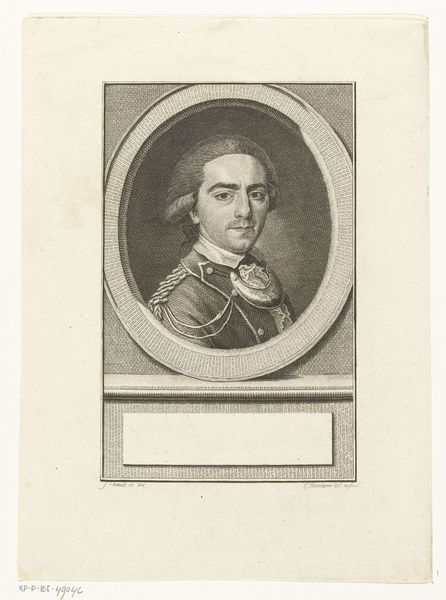
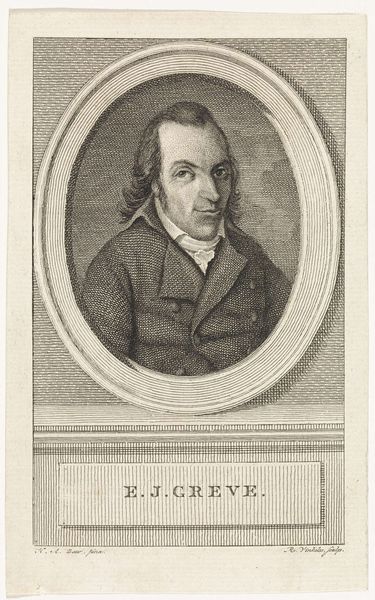
Curator: What a find! I’m really drawn to the delicate nature of the engraving, that sort of speckled tonality, even the somewhat neoclassical framework it's placed in. It’s this piece by Lambertus Antonius Claessens, "Portret van Jacques Pierre Brissot," believed to have been made sometime between 1792 and 1808. Editor: Hmmm. My immediate feeling? Melancholy. He seems... resigned. Though neatly framed, there’s a stark simplicity to it. The tight, almost cramped oval intensifies the subject’s focus, his rather vulnerable gaze directed right at us. Curator: It’s amazing what those tight, controlled lines can do. Claessens' skill really brings out the details - see how the folds of Brissot’s clothing are defined, and the subtle textures in his hair. And you are right— the framing, combined with the inscription "J. P. Brissot" gives him almost a tombstone effect, rather fateful for a man who was quite active in the French Revolution. Editor: Precisely! It isn't just a portrait, it becomes a document, a…memento mori even. Thinking about semiotics, that very conscious and contained framing speaks of that rigid order sought through neoclassicism, the same rigid order sought through his execution on the guillotine in 1793. What do you think the artist was attempting with this— posthumously memorializing a controversial figure or a cautionary representation of revolution's fate? Curator: Perhaps a bit of both? He certainly wasn't glorifying the man. It captures Brissot, yes, but the somber mood does imply reflection on his downfall. The texture of the aged paper and old engraving style certainly emphasizes the temporal distance between the image and its subject and, ultimately, his mortality. Editor: The artist seems less invested in the ‘likeness’ and more interested in making him…emblematic. Something timeless, if only as a historical sign. But how strange for the image to emerge possibly over a decade later when Neoclassicism gave way to Romanticism? Perhaps the artist remained emotionally stuck in a bygone aesthetic era? Curator: That’s an interesting point. Time can warp intent. So much like time, too, how artworks often evolve, morph, and acquire completely unexpected meanings of their own! Editor: Absolutely. Each of us ultimately leaves our own…engraving upon it.
Comments
No comments
Be the first to comment and join the conversation on the ultimate creative platform.
 React
React Comment