About this artwork
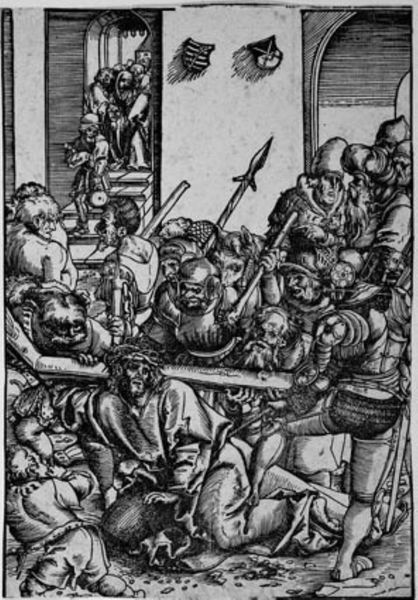
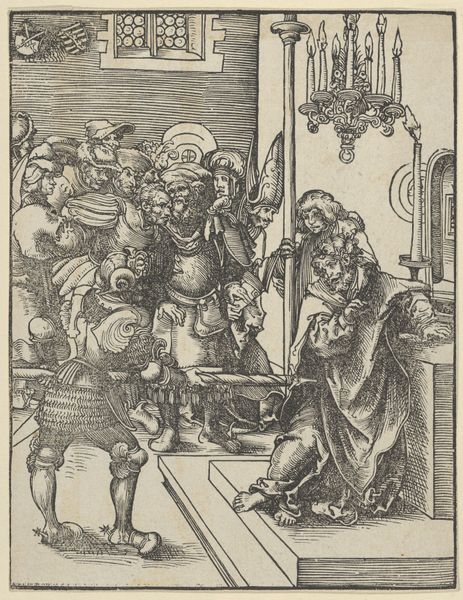
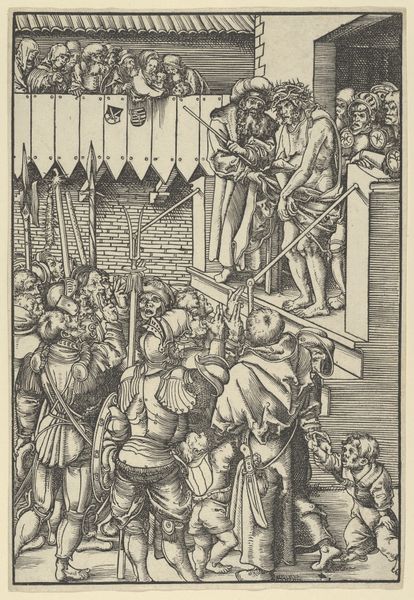
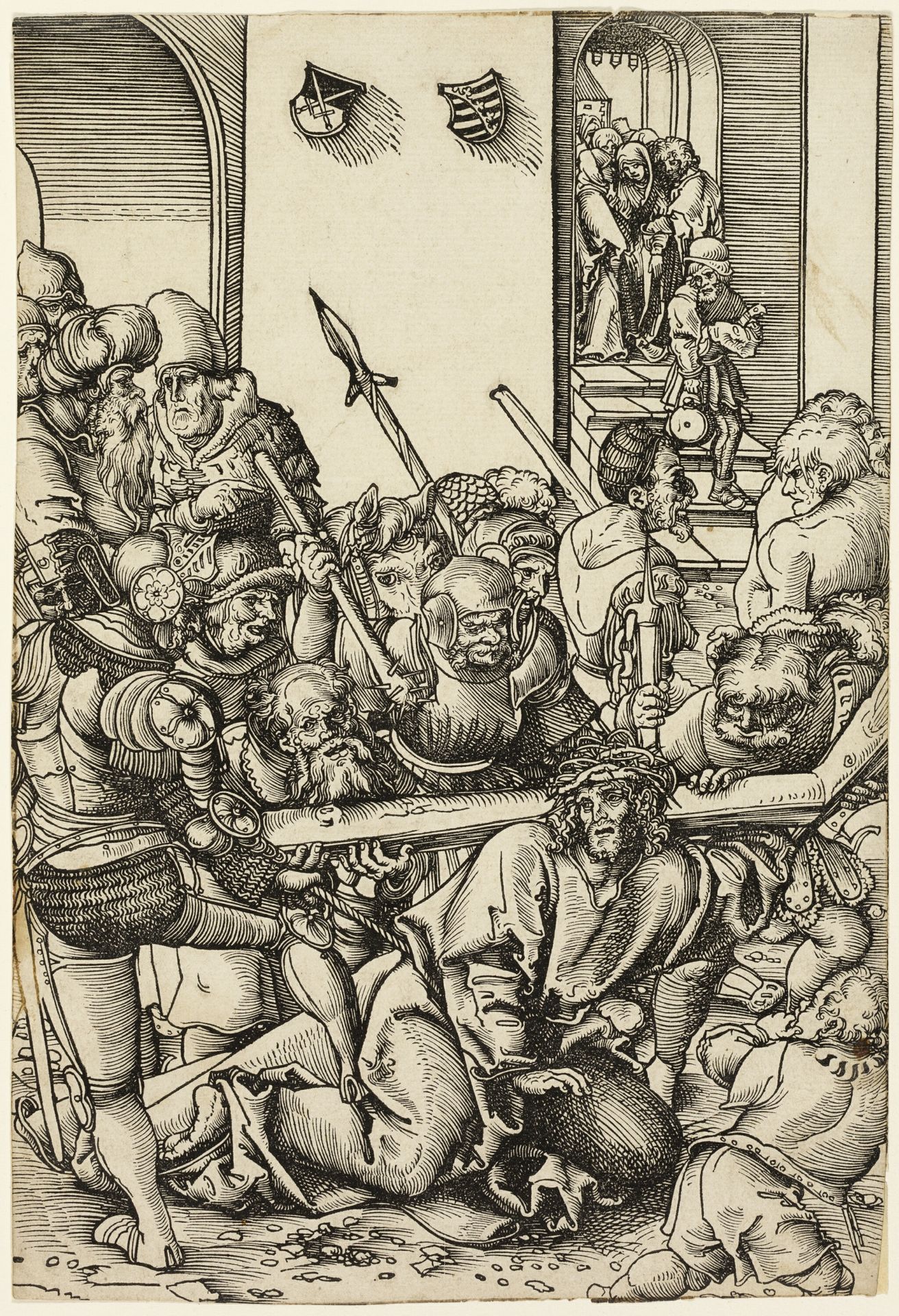
Lucas Cranach the Elder made this woodcut, "The Road to Calvary," as part of his "Passion" series. It shows Christ struggling under the weight of the cross, surrounded by a jeering crowd. Made in Germany during the early 16th century, the print reflects a time of significant religious and social upheaval. Note the two shields at the top left of the artwork. The shield on the left is the symbol of the Cranach family, a mark of the artist’s corporate identity. The shield on the right bears the wings and colors of the Duchy of Saxony. Cranach was the court painter for the Duke of Saxony, an Elector of the Holy Roman Empire, which gave him a powerful position in society. The Protestant reformation began during Cranach’s career, leading to a deep interrogation of religious institutions. By studying prints like this, we can uncover the complex social and political forces that shaped the artist and his work.
The Road to Calvary, from the Passion
1509


Artwork details
- Medium
- drawing, print, paper, woodcut
- Dimensions
- 245 × 167 mm (image/sheet trimmed within block)
- Location
- The Art Institute of Chicago
- Copyright
- Public Domain
Tags
drawing
narrative-art
figuration
paper
woodcut
line
history-painting
northern-renaissance
Comments
Be the first to share your thoughts about this work.
About this artwork
Lucas Cranach the Elder made this woodcut, "The Road to Calvary," as part of his "Passion" series. It shows Christ struggling under the weight of the cross, surrounded by a jeering crowd. Made in Germany during the early 16th century, the print reflects a time of significant religious and social upheaval. Note the two shields at the top left of the artwork. The shield on the left is the symbol of the Cranach family, a mark of the artist’s corporate identity. The shield on the right bears the wings and colors of the Duchy of Saxony. Cranach was the court painter for the Duke of Saxony, an Elector of the Holy Roman Empire, which gave him a powerful position in society. The Protestant reformation began during Cranach’s career, leading to a deep interrogation of religious institutions. By studying prints like this, we can uncover the complex social and political forces that shaped the artist and his work.
Comments
Be the first to share your thoughts about this work.