1860
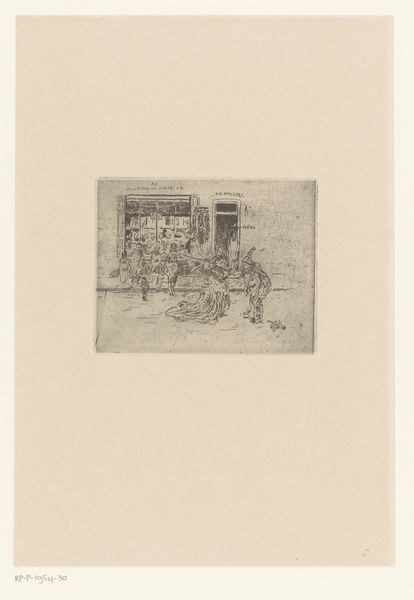
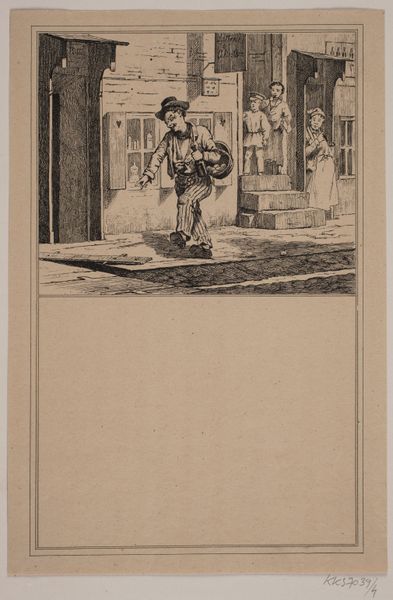
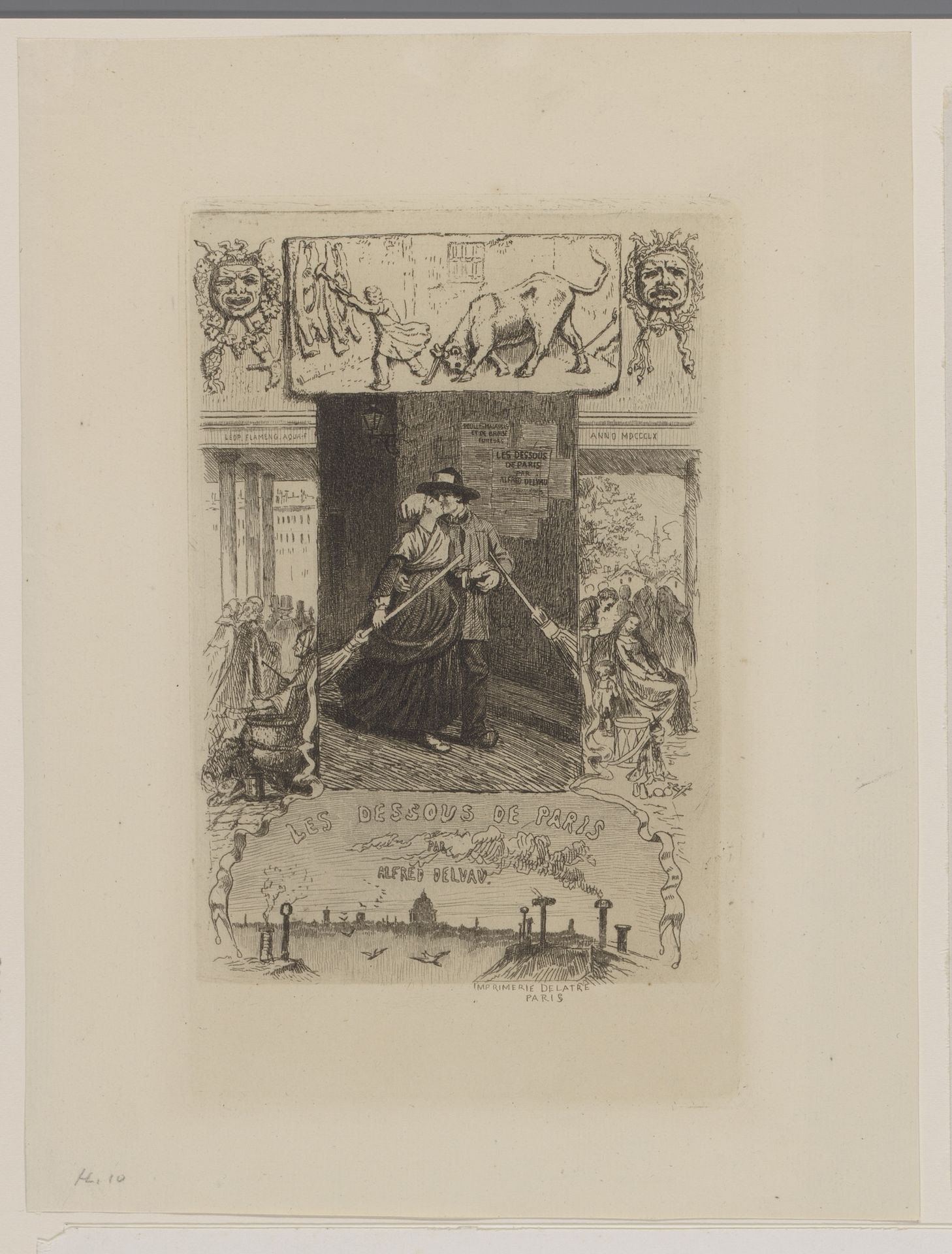
Koppel met bezems kust elkaar op straat

Listen to curator's interpretation
Curatorial notes
Editor: Here we have Léopold Flameng’s 1860 etching, "Couple with Brooms Kissing in the Street." It's really intricate; the details of the city feel almost overwhelming, and there's a curious sense of theatricality in the design. What strikes you most when you look at it? Curator: The prominent brooms are impossible to ignore. Let's consider their role. In 1860 Paris, sanitation was a brutal necessity managed by an underclass. Flameng subtly foregrounds this labor. How does that influence our interpretation of the kiss itself? Is it a moment of tenderness snatched from the harsh realities of work? Editor: That's fascinating! I hadn't really considered the brooms themselves as central to the artwork's message, but I suppose that does change things. It could mean it isn't just a romantic depiction of Parisian life, but maybe one with a more complicated and critical take on the working class experience? Curator: Precisely. Consider also the etched medium. It's reproducible, designed for circulation amongst a wide audience, potentially fostering dialogue and critique of societal structures. The choice of graphic art over a more traditionally ‘fine art’ medium reinforces this focus on accessibility and dissemination of a particular social commentary. It challenges traditional ideas of high art versus craft. Editor: So, it's less about celebrating romance, and more about shining a light on labor, the act of artistic production, and social class, all intertwined in a visually striking, almost tongue-in-cheek manner. It certainly has changed how I view the art and the artmaking itself! Curator: Exactly! This piece reminds us that art is not divorced from its mode of production. Material considerations reveal the power structures and cultural narratives interwoven in seemingly simple scenes.