1857
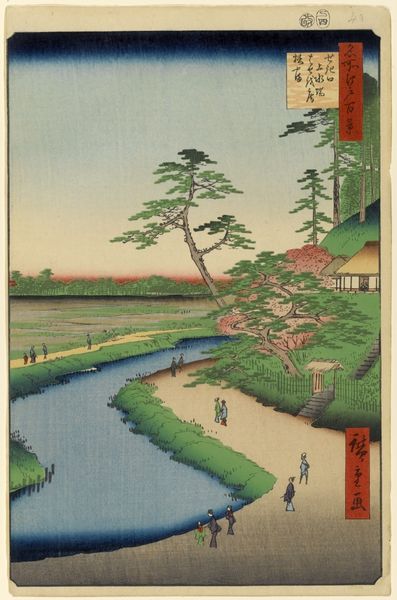
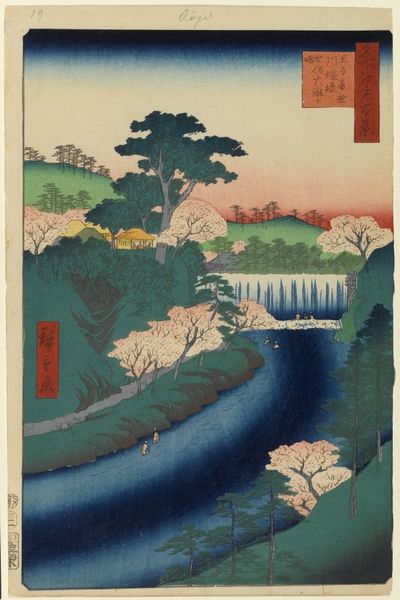
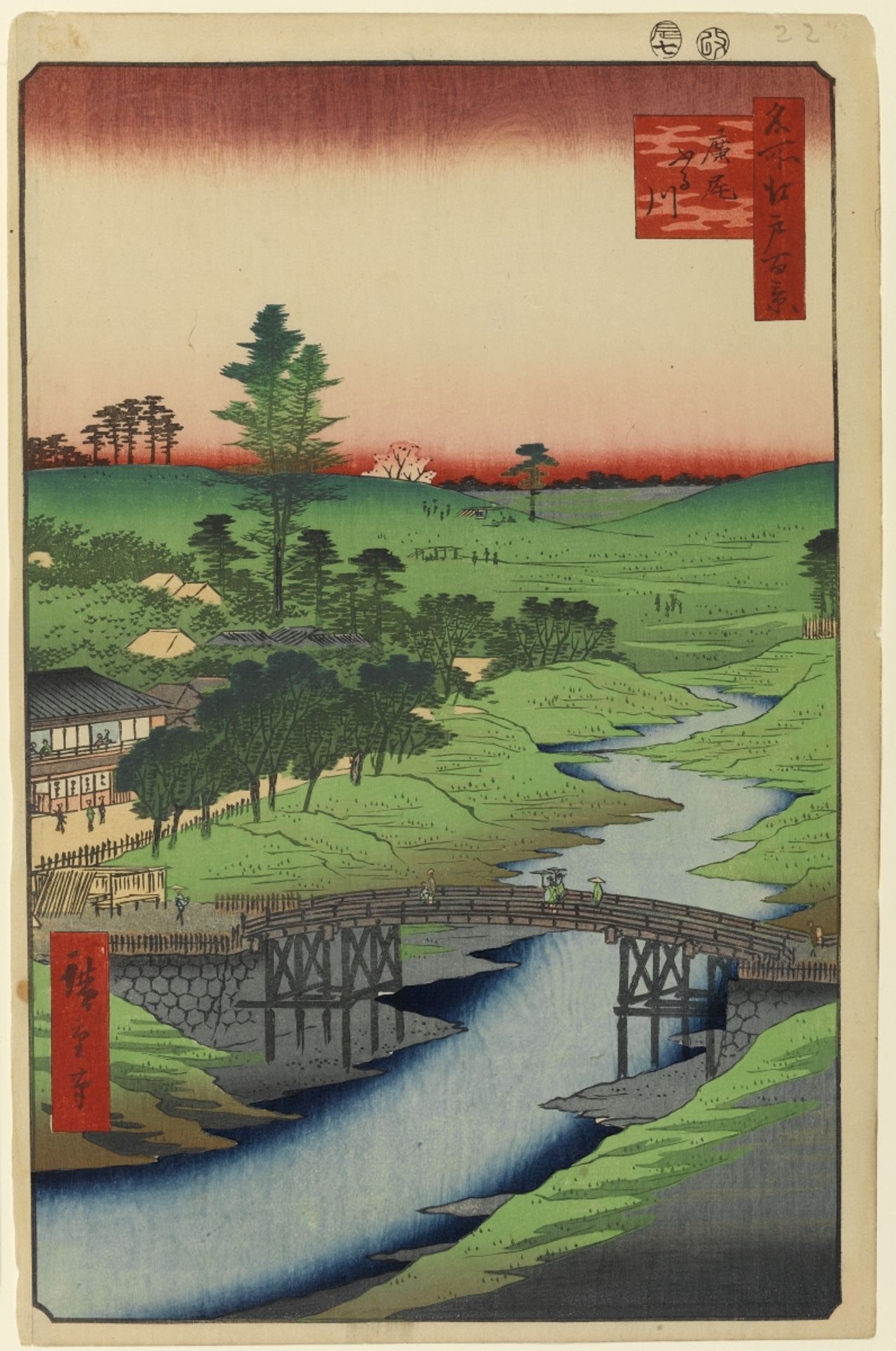
22. Hiroo on Furukawa River

Listen to curator's interpretation
Curatorial notes
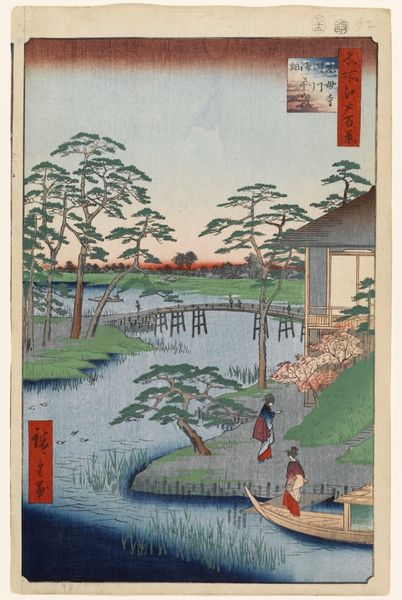
Curator: Take a moment to consider this vibrant woodblock print by Utagawa Hiroshige, titled "22. Hiroo on Furukawa River," created around 1857. Editor: It’s incredibly tranquil. The gradient in the sky is eye-catching; the vivid reds melting into softer tones provide this view of the river a dramatic yet gentle ambiance. Curator: Hiroshige's Ukiyo-e prints significantly shaped how 19th-century Japanese landscapes were seen and circulated. Think about how these images entered global markets and influenced Western perceptions of Japan. Editor: It’s amazing how he's translated something organic using woodblocks, a very deliberate medium, right? The printmaking process allows for such vivid color, and its reproducibility democratized access to this scene for a wide audience. You know, labor informs the beauty, each carving being so important. Curator: Indeed, and this particular print captures a scene along the Furukawa River during a time of great social and economic change in Japan. It serves not only as aesthetic enjoyment but historical documentation too, especially showing life right before the Meiji Restoration. Editor: Consider the bridge; its form suggests both connection and transition. The reflection is cleverly done, adding complexity. I wonder about the artisans who would have carved these blocks— their labor essentially forming our vision of a ‘floating world.’ Curator: The choice of such serene scenes definitely presents a particular, and probably constructed view, of life, which we could reflect on further. Hiroshige presented a vision intended for consumption, shaping global perceptions of Japanese harmony even in the face of internal turmoil. Editor: Yes, that interplay of process, material, and cultural narrative is very interesting to unpack. Curator: Absolutely. It offers a profound example of how a seemingly straightforward landscape is in fact deeply imbued with cultural meaning and historical context. Editor: Indeed, a worthy point to consider next time you look at Hiroshige's world, both material and message intertwine to engage the eye.