1514
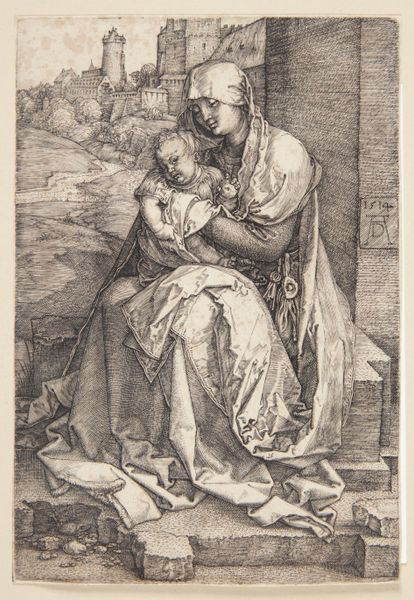
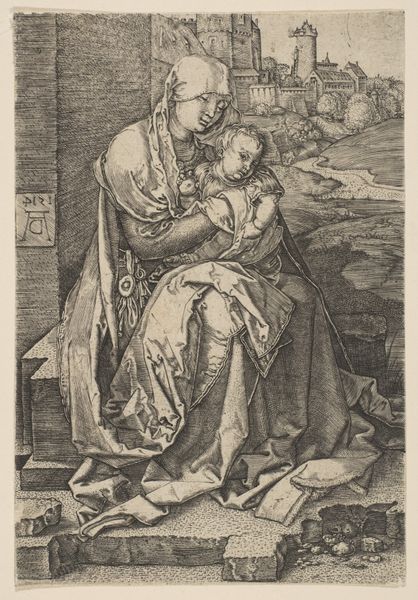
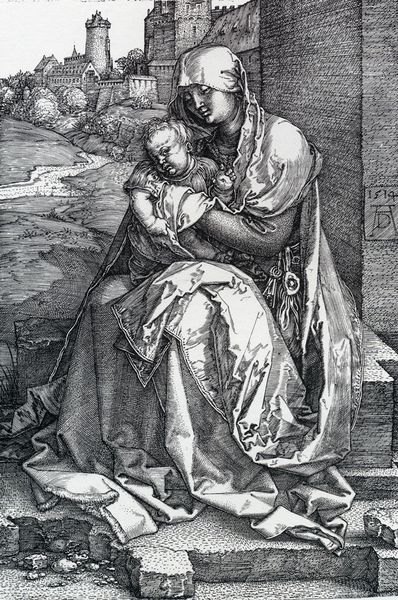
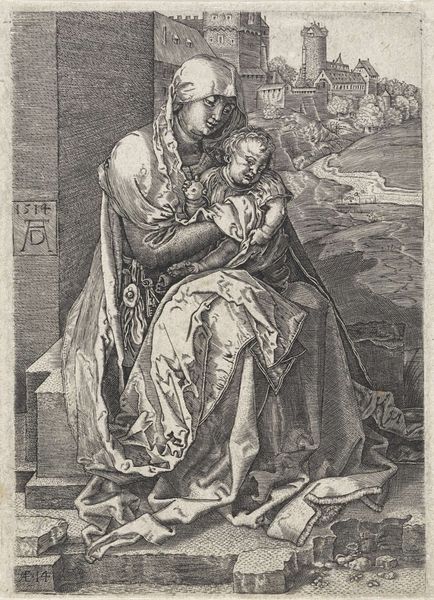
Virgin and Child Seated by the Wall


Listen to curator's interpretation
Curatorial notes
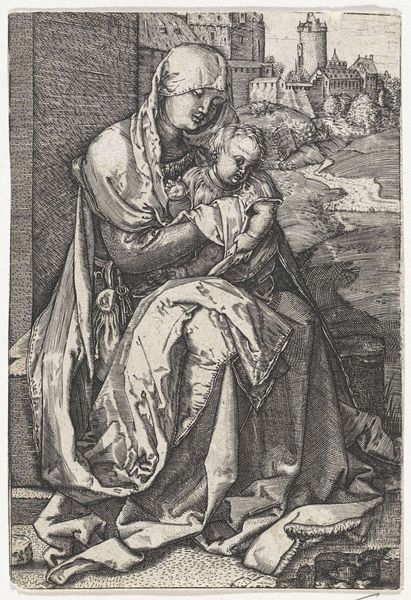
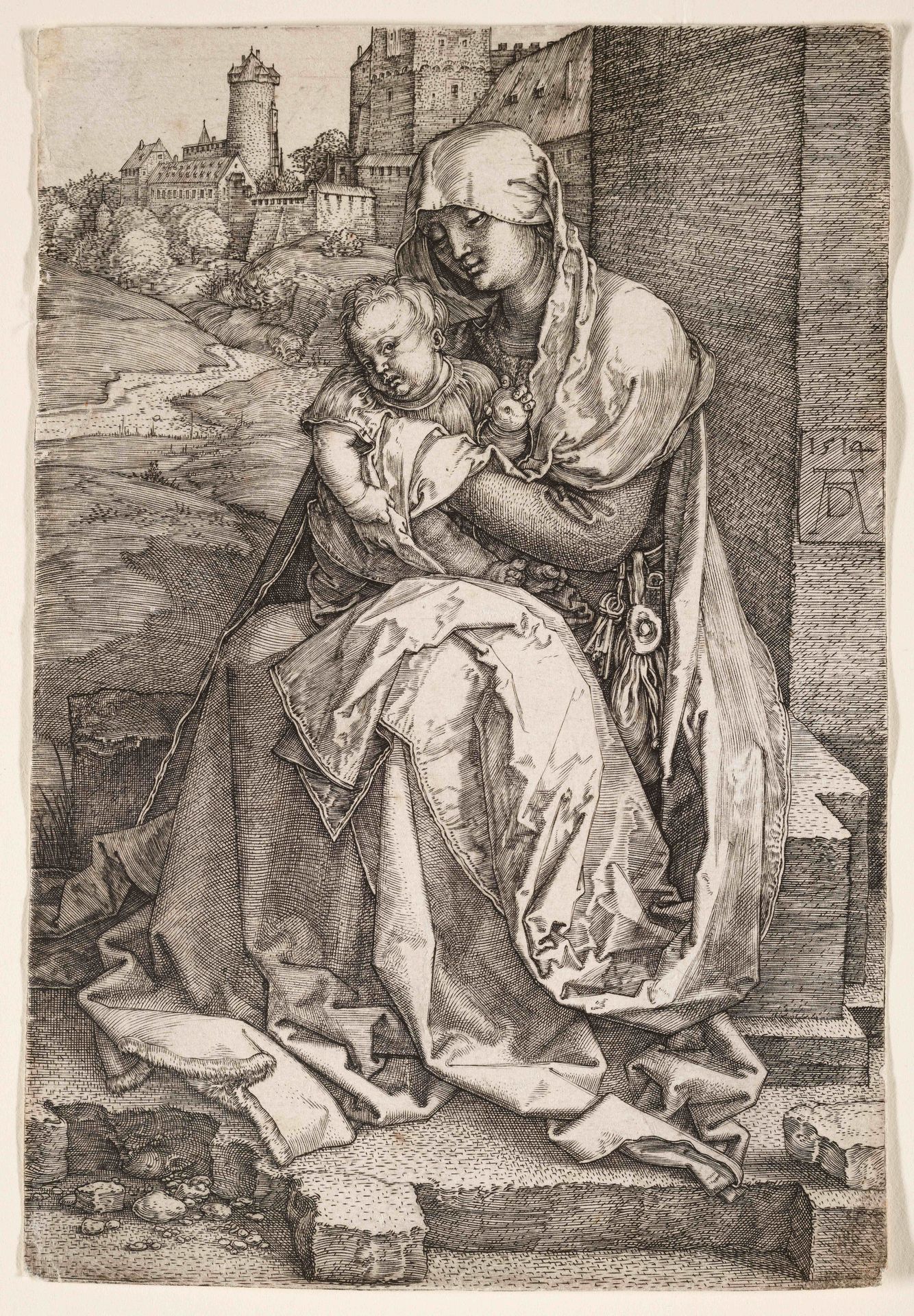
Albrecht Dürer created this engraving, Virgin and Child Seated by the Wall, in 1514, during a period of immense religious and social change in Europe. Dürer situates the Virgin Mary and her child in a humble, human context. She sits wearily, and the Christ child seems almost to slumber in her arms. This intimacy suggests the profound emotional bond between mother and child. But Dürer also weaves in symbols of wealth and status. The Madonna’s garments fall in voluminous folds, and her belt and the Christ child’s coral necklace draw the eye. The setting, dominated by the looming architecture of a grand fortress, provides a visual narrative about power, security, and the roles of religious figures within society. How does this depiction contrast with the traditional portrayals of the Virgin Mary during the Renaissance? What does it convey about the complex intersections of faith, motherhood, and social status during Dürer's time?