1604
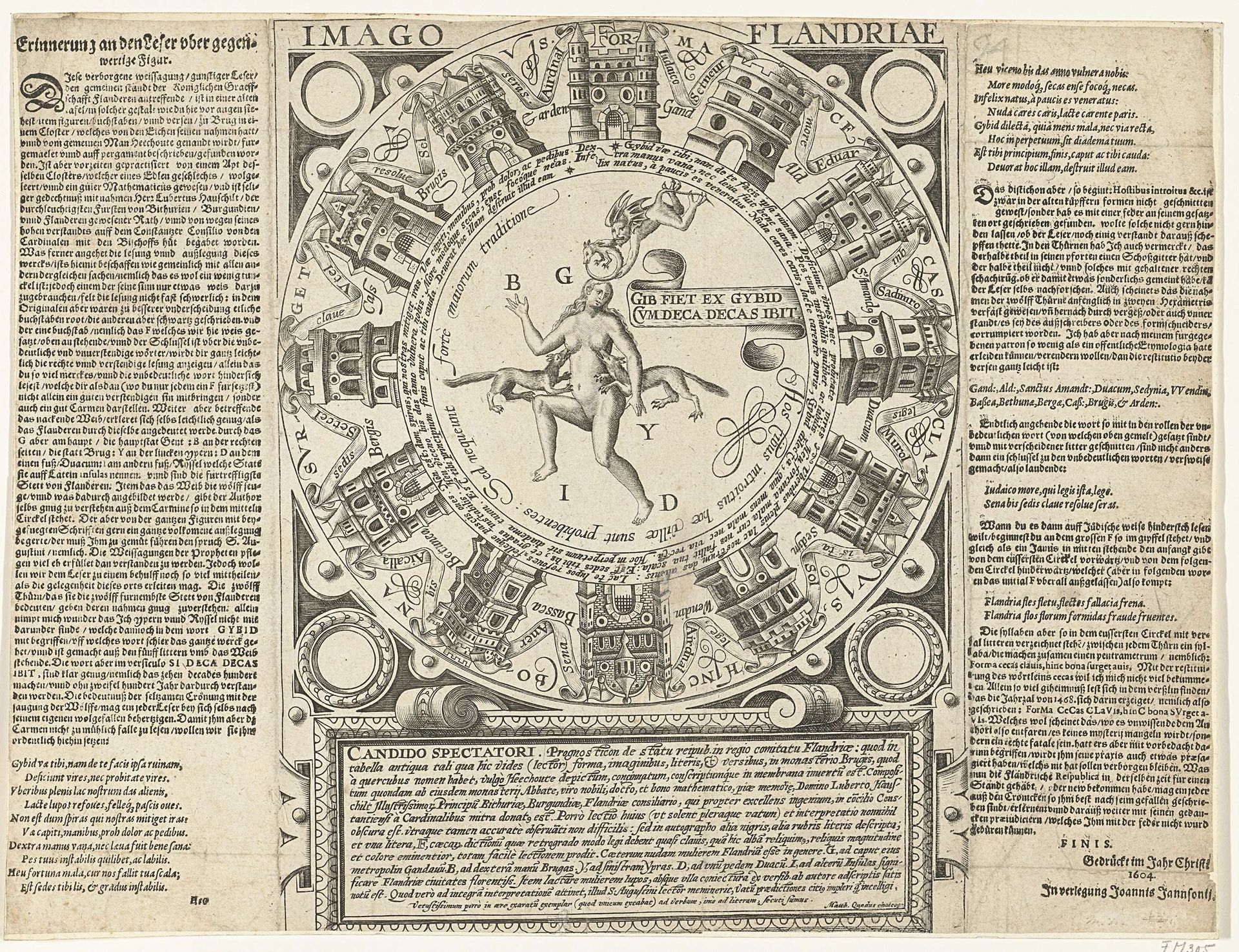
Allegorie op de staat van Vlaanderen, 1604

Matthias von Kinkelbach Quad
1557 - 1613Location
RijksmuseumListen to curator's interpretation
Curatorial notes
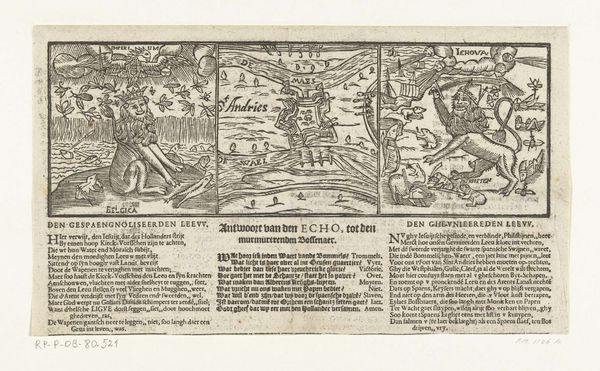
Editor: This engraving, titled "Allegory on the State of Flanders, 1604," is striking, isn’t it? It looks like a symbolic representation of the region. What do you see in this piece, particularly in how it speaks to the historical context? Curator: What jumps out to me is how this print layers geographical representation with political and gendered allegory, typical of Baroque visual strategies. We need to remember that 1604 was smack-dab in the Eighty Years' War. This image, with its damaged, nude female figure symbolizing Flanders encircled by fortifications, performs a specific kind of propaganda. What kind of narrative do you think it pushes regarding Flemish identity? Editor: Well, with her vulnerability so apparent, maybe it's an attempt to elicit sympathy and support for Flanders, showing it as a victim of war and political strife? Curator: Precisely. And think about how gender functions here. The allegorical female body, a conventional stand-in for the nation, is subjected to damage, reflecting Flanders’ suffering. How does framing national identity through a female figure affect our interpretation of the conflict and power dynamics at play? Consider whose stories are validated, and whose voices are systematically excluded. Editor: I see your point. The vulnerable female figure casts Flanders as a passive entity needing rescue, possibly reinforcing gender roles while also appealing to a protector figure, like a king. Curator: Exactly. Considering this, what assumptions might contemporaries have held about Flemish identity, and how might this image reinforce or challenge them, knowing its specific circulation during wartime? Editor: That’s fascinating, considering how the layers of political, social, and gendered meanings are so intertwined within the imagery. Thank you for pointing that out. Curator: Of course. Thinking about whose voices are represented and whose are silenced makes these historical images deeply relevant for our moment today.