About this artwork
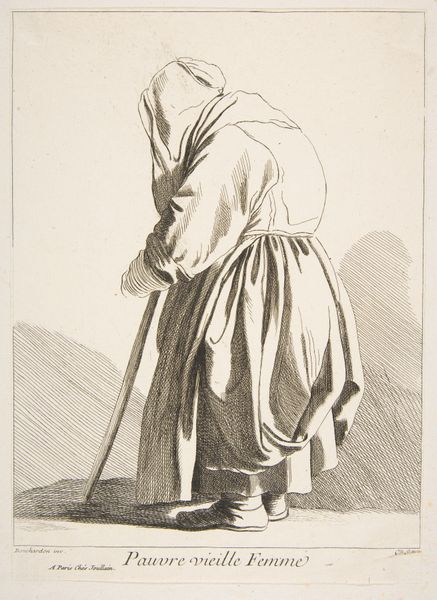
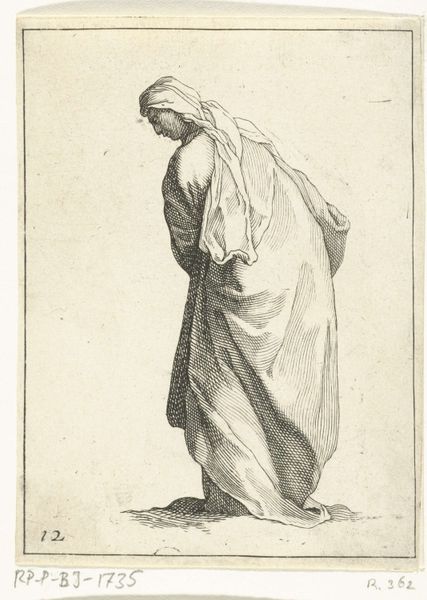
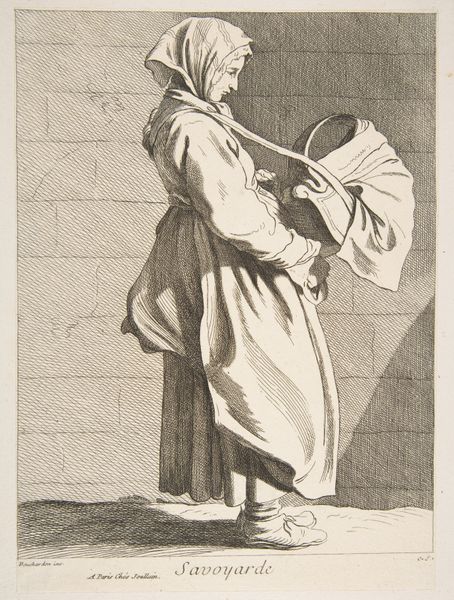
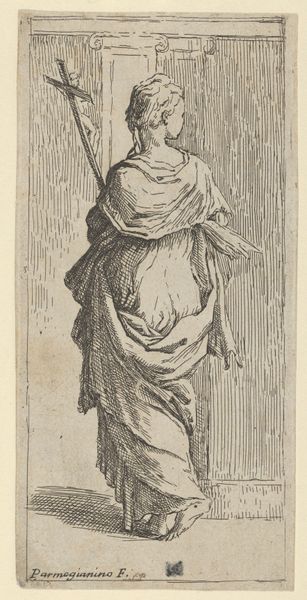
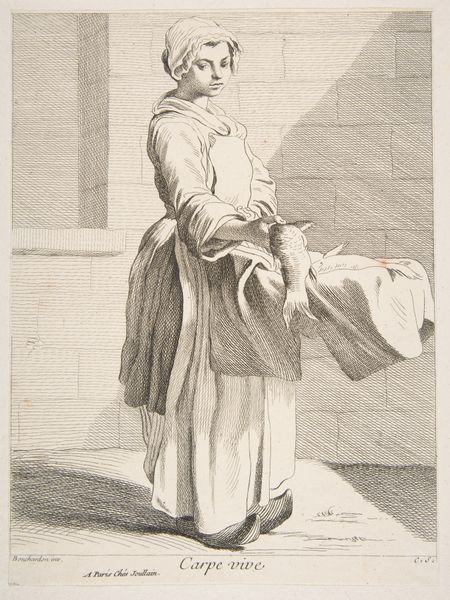
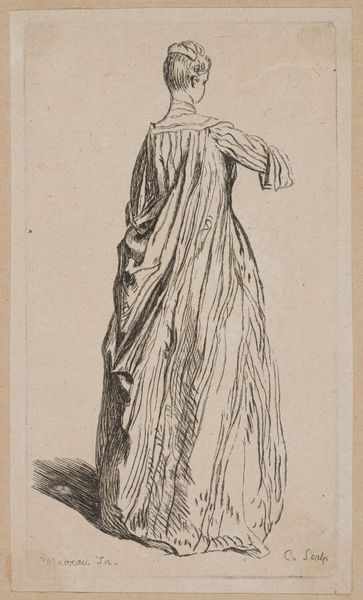
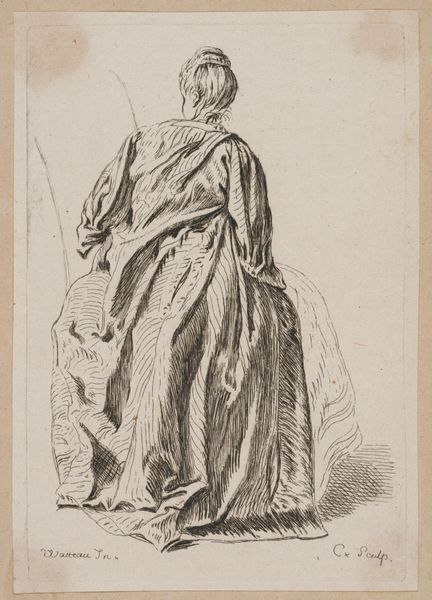
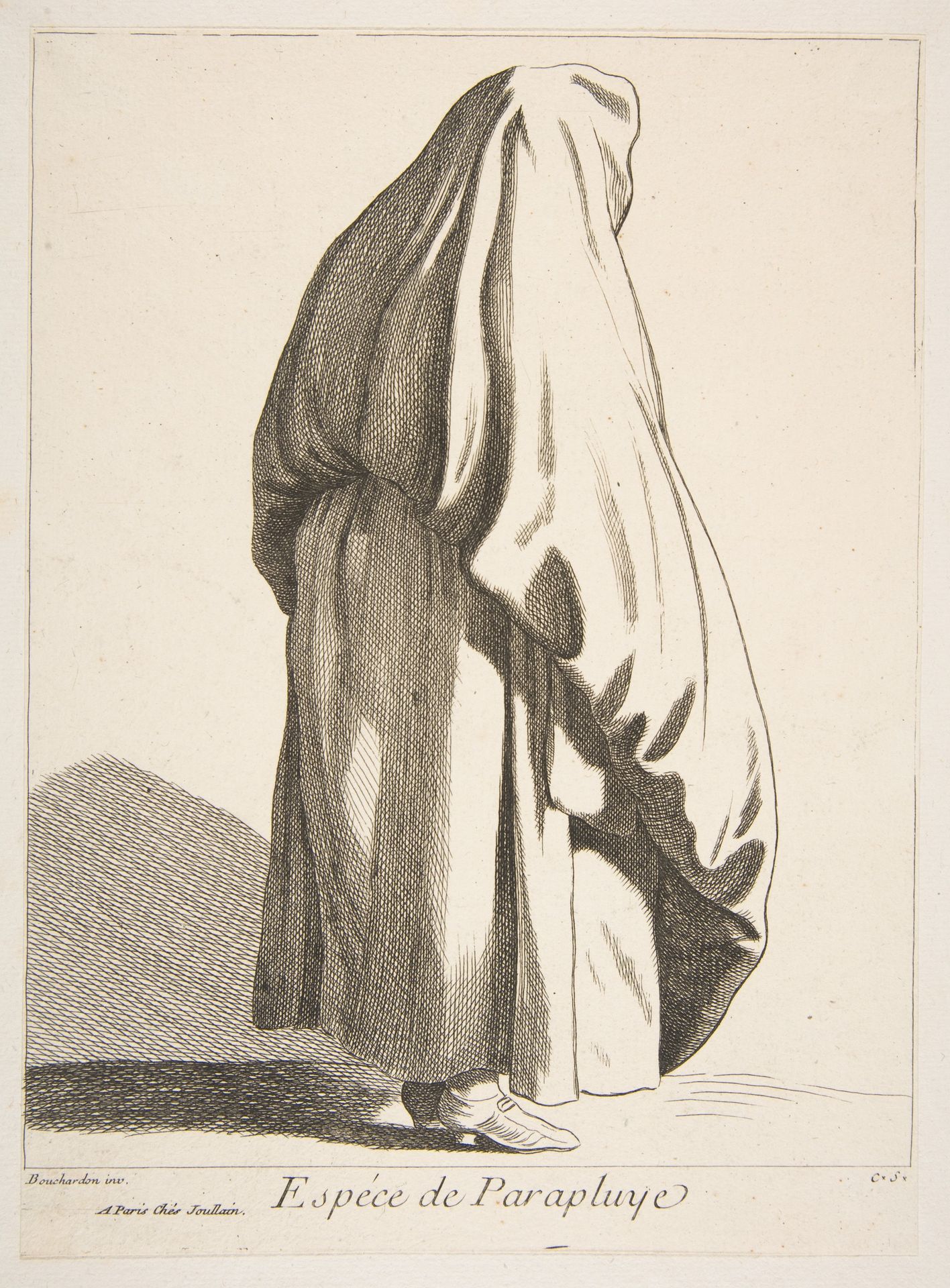
This etching, titled *A Sort of Umbrella*, was made by Anne Claude Philippe Caylus in the 18th century. The printmaking process is crucial to understanding the image. Caylus would have used a sharp needle to draw through a waxy ground on a copper plate. That plate was then submerged in acid, which bit away the exposed lines. Ink was then pressed into these lines, and the image transferred to paper. The resulting image captures a figure completely enveloped in fabric, a walking shelter against the elements. The lines of the etching emphasize the drape and volume of the cloth. The hatching technique gives depth and shadow, conveying the tactile nature of the garment. Printmaking in this era was closely linked to the rise of a consumer society. Etchings like this one circulated widely, making images and ideas accessible to a broad public. The relatively low cost of production allowed for mass distribution, influencing fashion, design, and social trends. By understanding the materials and processes behind this image, we can appreciate its role in shaping 18th-century visual culture.
A Sort of Umbrella
1746

Anne Claude Philippe Caylus
1692 - 1765
The Metropolitan Museum of Art
Metropolitan Museum of Art, New York, NYArtwork details
- Medium
- drawing, print, engraving
- Dimensions
- Sheet: 9 1/4 x 6 13/16 in. (23.5 x 17.3 cm) Image: 8 9/16 x 6 3/4 in. (21.8 x 17.1 cm)
- Location
- Metropolitan Museum of Art, New York, NY
- Copyright
- Public Domain
Tags
Comments
Share your thoughts
About this artwork
This etching, titled *A Sort of Umbrella*, was made by Anne Claude Philippe Caylus in the 18th century. The printmaking process is crucial to understanding the image. Caylus would have used a sharp needle to draw through a waxy ground on a copper plate. That plate was then submerged in acid, which bit away the exposed lines. Ink was then pressed into these lines, and the image transferred to paper. The resulting image captures a figure completely enveloped in fabric, a walking shelter against the elements. The lines of the etching emphasize the drape and volume of the cloth. The hatching technique gives depth and shadow, conveying the tactile nature of the garment. Printmaking in this era was closely linked to the rise of a consumer society. Etchings like this one circulated widely, making images and ideas accessible to a broad public. The relatively low cost of production allowed for mass distribution, influencing fashion, design, and social trends. By understanding the materials and processes behind this image, we can appreciate its role in shaping 18th-century visual culture.
Comments
Share your thoughts