1814
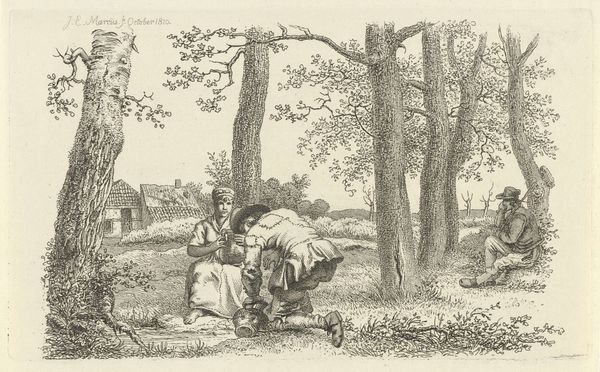
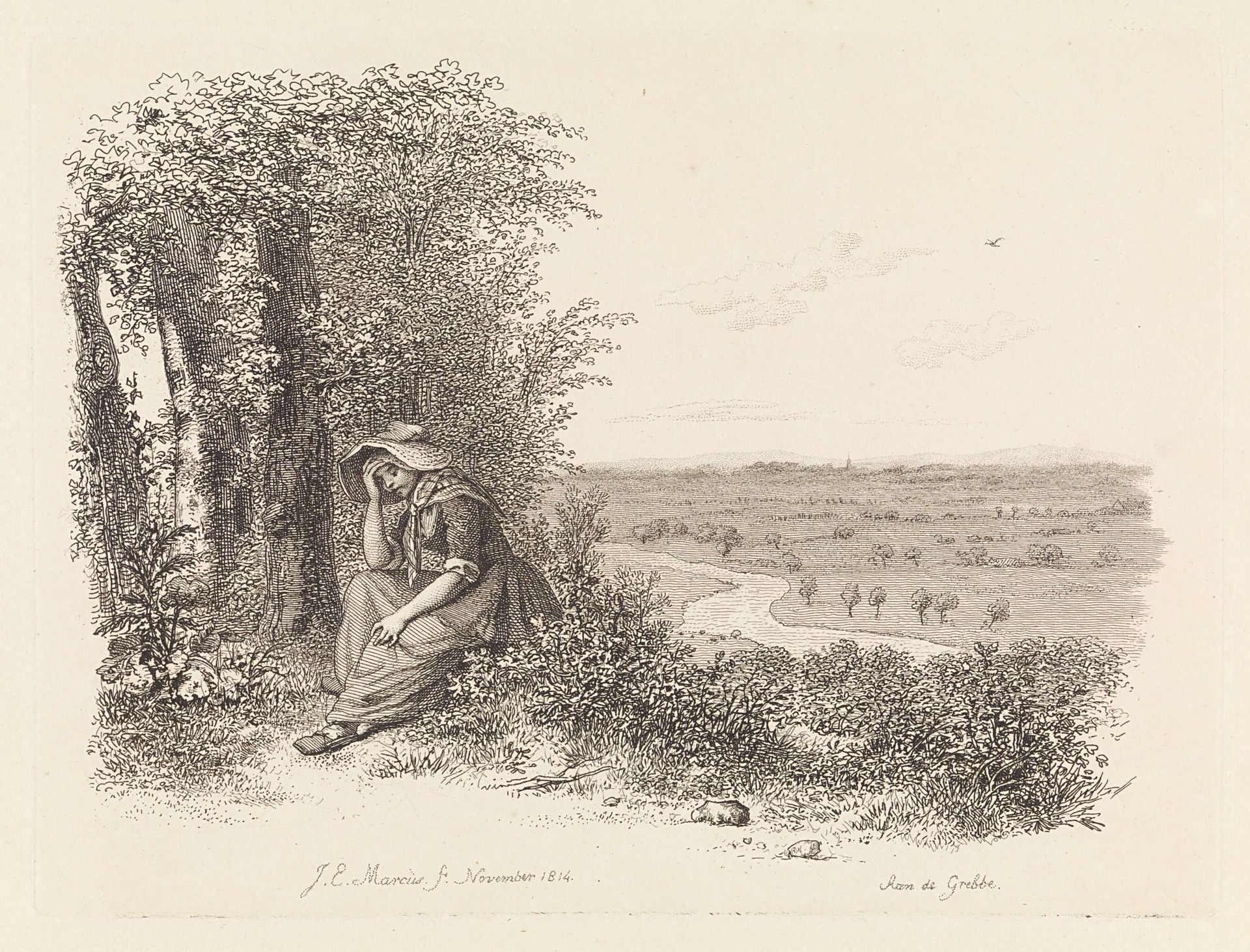
Zittende vrouw in een landschap

Jacob Ernst Marcus
1774 - 1826Location
RijksmuseumListen to curator's interpretation
Curatorial notes
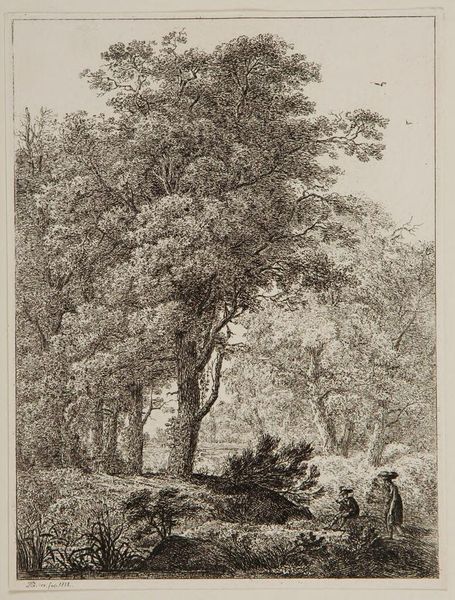
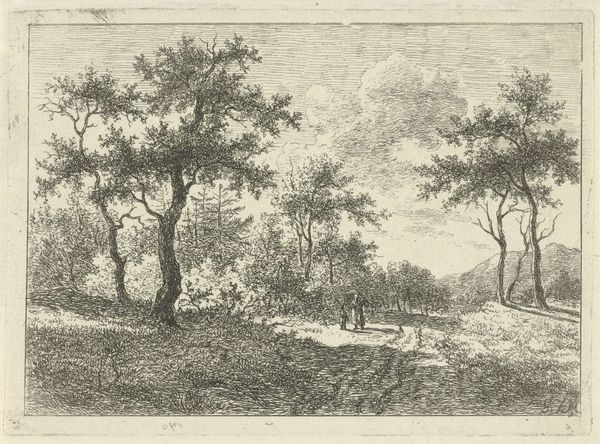
Jacob Ernst Marcus created this print of a seated woman in a landscape in November 1814. Marcus was working within a well-established printmaking tradition, using etching and engraving techniques to create this delicate scene. The print is made through an intricate process: first, the artist would cover a metal plate with a waxy ground, then scratch an image into the ground with a needle. Next, the plate would be submerged in acid, which bites into the exposed metal, creating the lines that hold ink. This is etching. Engraving would be done by cutting lines directly into the plate with a tool called a burin. Look closely, and you can see the variations of line that Marcus uses to create a sense of light and shadow, bringing the figure and landscape to life. The contrast in tones is carefully controlled, resulting in a complex interplay between figure and ground, between the intimate and the expansive. The printmaking process allowed for the reproduction and distribution of images, making art accessible to a wider audience. In understanding the labor and skill involved in creating this print, we can appreciate the depth of meaning it holds.