About this artwork
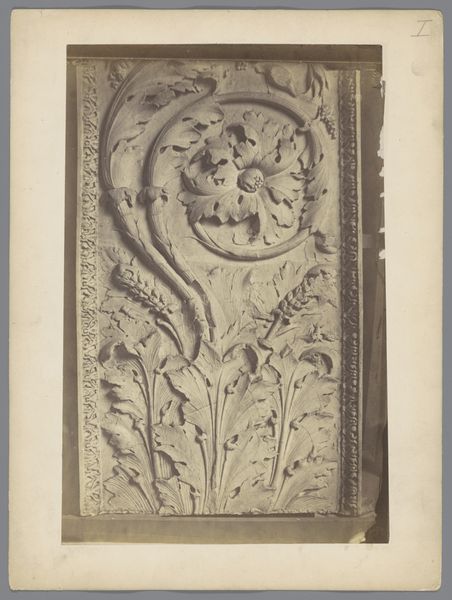
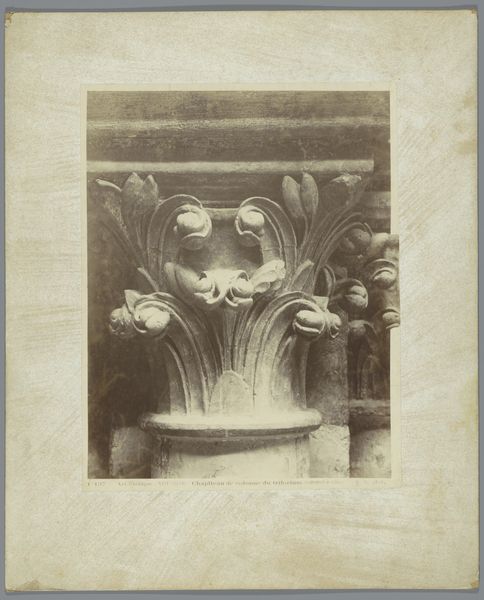
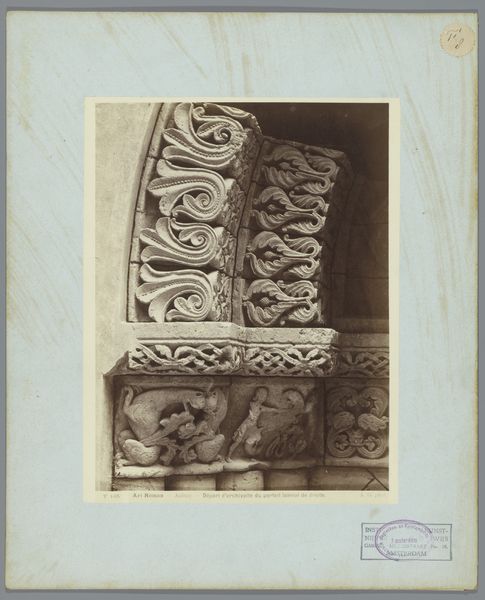
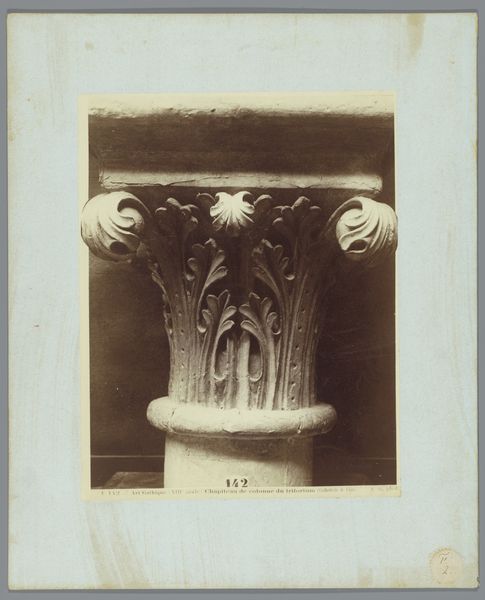
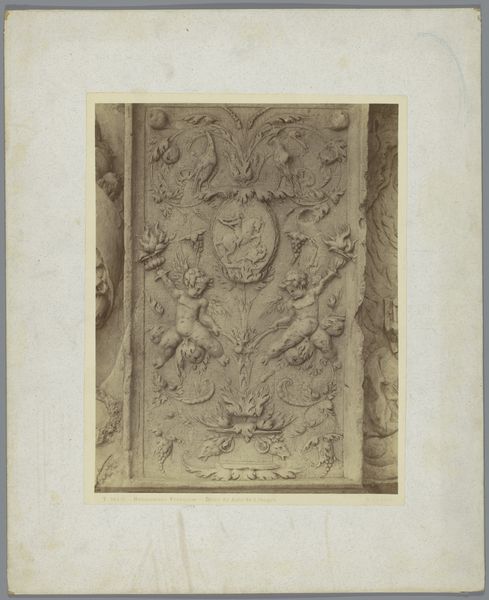
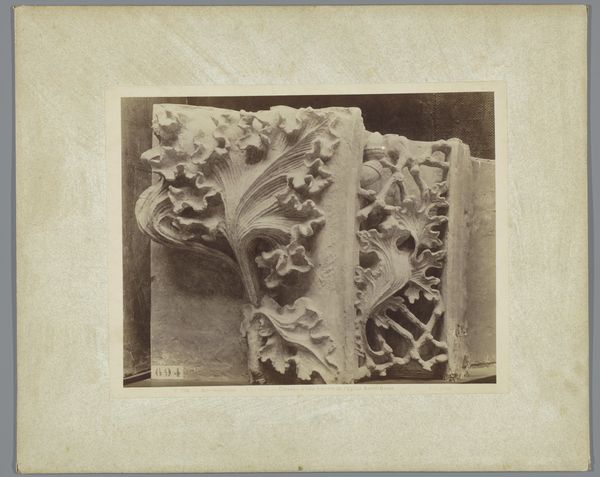
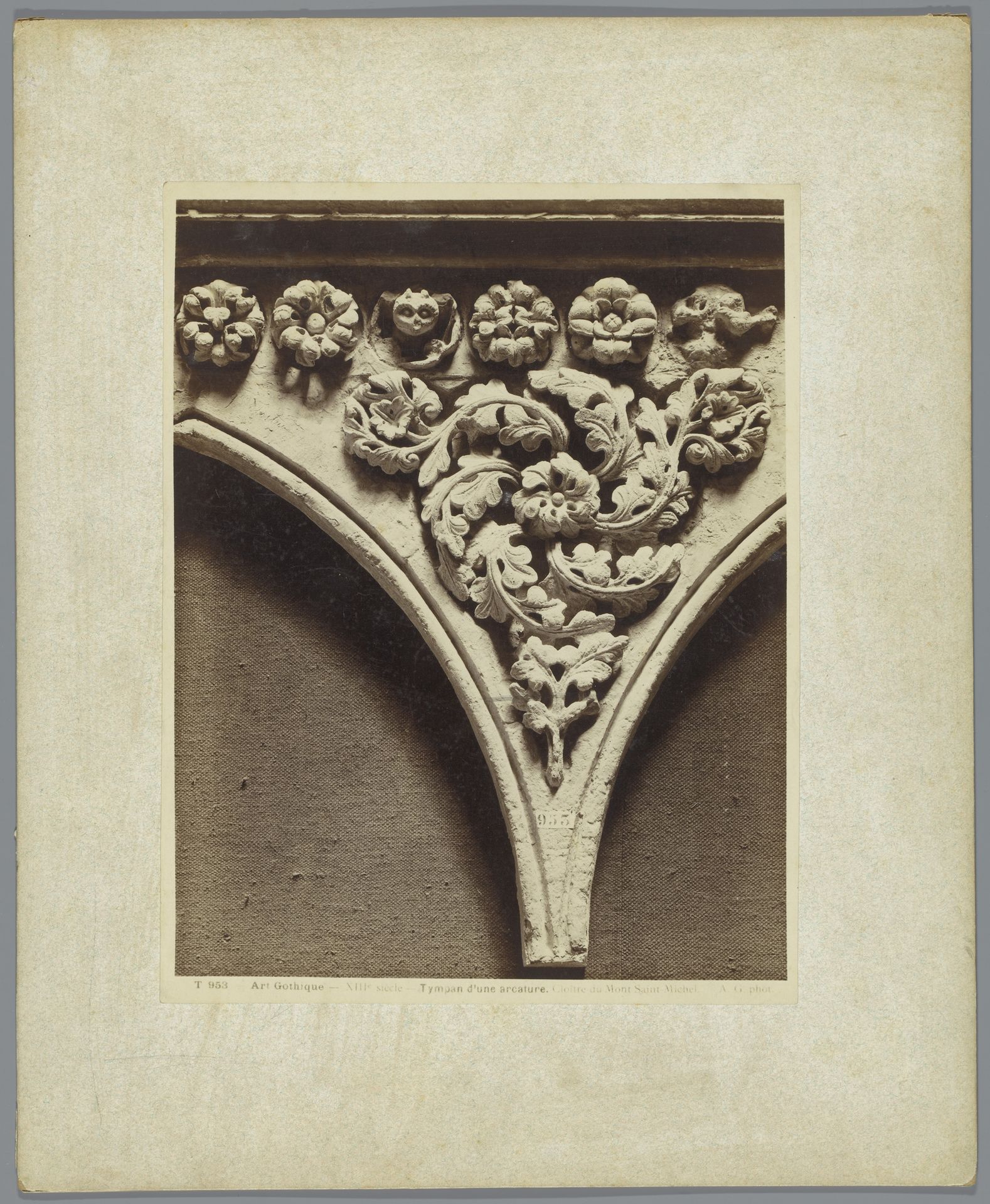
This is a photograph of a cast of a tympanum, a sculpted panel above a doorway, made by Adolphe Giraudon. The original tympanum was likely carved from limestone, a material favored for its relative softness when quarried, allowing for intricate detail. Look closely, and you can imagine the sculptor’s hand guiding the chisel, coaxing forth these delicate floral motifs. The photograph flattens the three-dimensional form, obscuring the immense labor involved in the original carving. Stonemasonry in the medieval period was more than just craft, it was a collective endeavor that combined the artistic skills of designers and the physical work of laborers who quarried, transported and positioned the heavy stones. Photographs such as this one were produced in large quantities during the nineteenth century, and were often bought by architects and designers as inspiration. So, in a way, this image is a reminder that all creative endeavor builds on what came before.
Afgietsel van een timpaan met bloemmotief van het Klooster van Mont Saint-Michel
c. 1875 - 1900

Adolphe Giraudon
1849 - 1929Location
RijksmuseumArtwork details
- Dimensions
- height 260 mm, width 202 mm
- Location
- Rijksmuseum
- Copyright
- Rijks Museum: Open Domain
Comments
Share your thoughts
About this artwork
This is a photograph of a cast of a tympanum, a sculpted panel above a doorway, made by Adolphe Giraudon. The original tympanum was likely carved from limestone, a material favored for its relative softness when quarried, allowing for intricate detail. Look closely, and you can imagine the sculptor’s hand guiding the chisel, coaxing forth these delicate floral motifs. The photograph flattens the three-dimensional form, obscuring the immense labor involved in the original carving. Stonemasonry in the medieval period was more than just craft, it was a collective endeavor that combined the artistic skills of designers and the physical work of laborers who quarried, transported and positioned the heavy stones. Photographs such as this one were produced in large quantities during the nineteenth century, and were often bought by architects and designers as inspiration. So, in a way, this image is a reminder that all creative endeavor builds on what came before.
Comments
Share your thoughts