engraving
#
portrait
#
baroque
#
vanitas
#
history-painting
#
engraving
Dimensions: height 99 mm, width 70 mm
Copyright: Rijks Museum: Open Domain
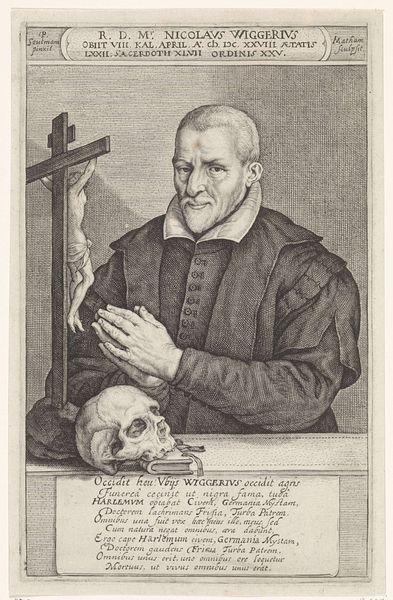
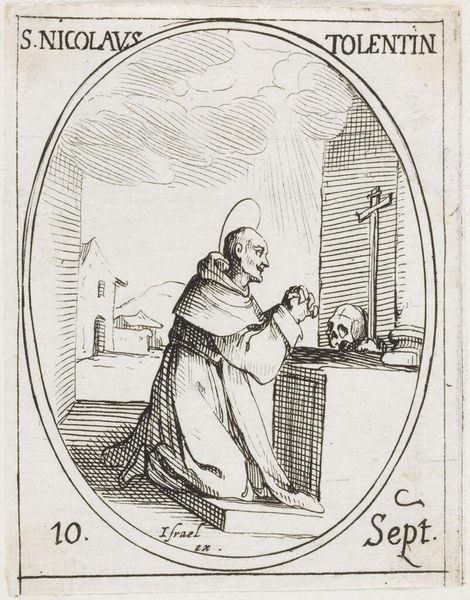
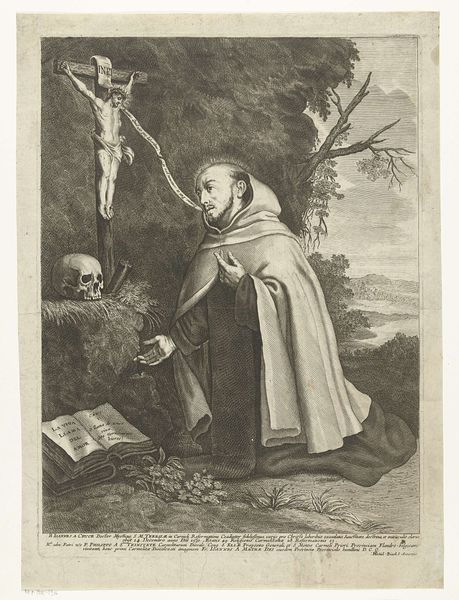
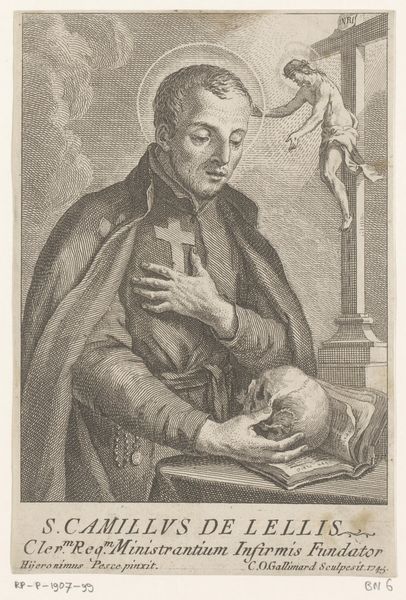
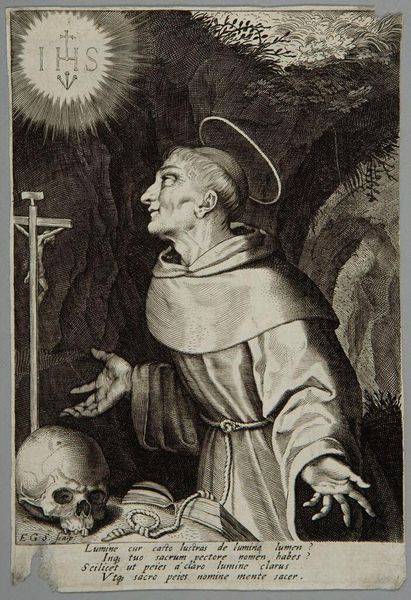
Curator: This is “De heilige Franciscus,” or “The Holy Francis,” an engraving by Antonio Baratta, dating roughly from 1734 to 1787. Editor: My first thought is starkness. The image's monochromatic palette creates an intensely somber mood, which is amplified by the presence of the skull. Curator: Yes, it’s a very characteristic piece of Baroque art, especially in its concern with mortality. Consider the symbolic weight placed on Francis’s relationship to death, underscored through the vanitas theme, which gained momentum particularly through popular engravings and prints such as this one. Editor: Exactly. And that relationship is literally inscribed on his hands—those are the stigmata. The level of detail that Baratta manages to coax from this process is amazing. The dense cross-hatching almost transforms into woven cloth. Curator: Precisely. And the production of prints like these was deeply connected to religious orders such as the Franciscans, which helped popularize and disseminate certain images and devotions across Europe. The print served a key public function in circulating and reinforcing particular imagery. Editor: It also highlights the democratization of art. Here we have an artist grappling with complex spiritual themes, translating them into an accessible medium for a wide audience. The work's effectiveness rests not only on symbolic content, but on the artist's handling of technique and its efficient mass production. It begs questions about authorship. Luigi Pianton is also credited below, what exactly did he contribute? Curator: A point well taken; prints have a unique history of collaboration that highlights this crucial exchange of ideas at the time. The circulation of devotional images became entangled with broader social trends concerning religious belief, morality, and individual experience. Editor: Right, looking closely at how Baratta layers the lines to sculpt Francis’s features or create the texture of his coarse robe, reveals a conscious attention to making what might be high religious themes materially accessible. It emphasizes an idea of ascetic labor itself. Curator: A labor visualized and circulated widely, shaping perceptions of sanctity and artistic ingenuity for the devout public. Editor: Definitely gives a lot to reflect upon considering its intricate artistry and accessible social function. Curator: Absolutely, a fine instance where faith and art form dialogue through process.
Comments
No comments
Be the first to comment and join the conversation on the ultimate creative platform.
 Collect
 React
React Comment
More like this