

after 1638
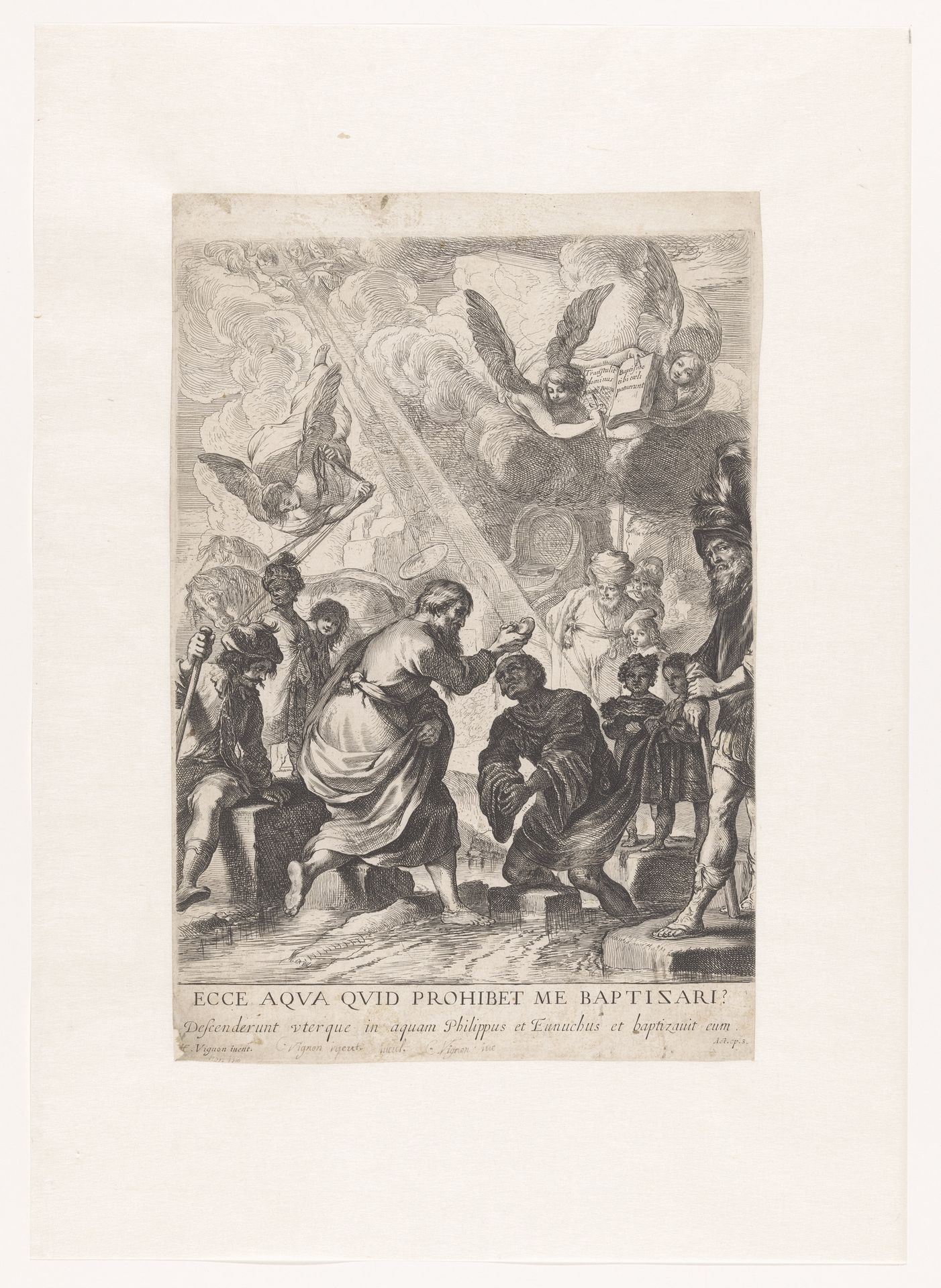
Doop van de kamerling

Claude Vignon
1593 - 1670Location
RijksmuseumListen to curator's interpretation
Curatorial notes
This print of the Baptism of the Eunuch was made by Claude Vignon in the 17th century. It depicts a biblical scene from the Acts of the Apostles, where Philip baptizes an Ethiopian eunuch. Made in France, the print demonstrates the cultural and religious milieu of the time. The visual codes such as the ethereal beam of light and the presence of angels reflect the strong influence of religion. Vignon has represented the figures in contemporary clothing, making the narrative relevant to his contemporary audience. France, during the 17th century, was marked by religious conflicts between Catholics and Protestants, so the image could be a message about inclusion. To understand this artwork better, we can look at the socio-political context of 17th-century France, including the role of the church, and the representation of non-European figures in art. This piece acts as a reminder that the meaning of art evolves within its social and institutional environment.