1816 - 1855
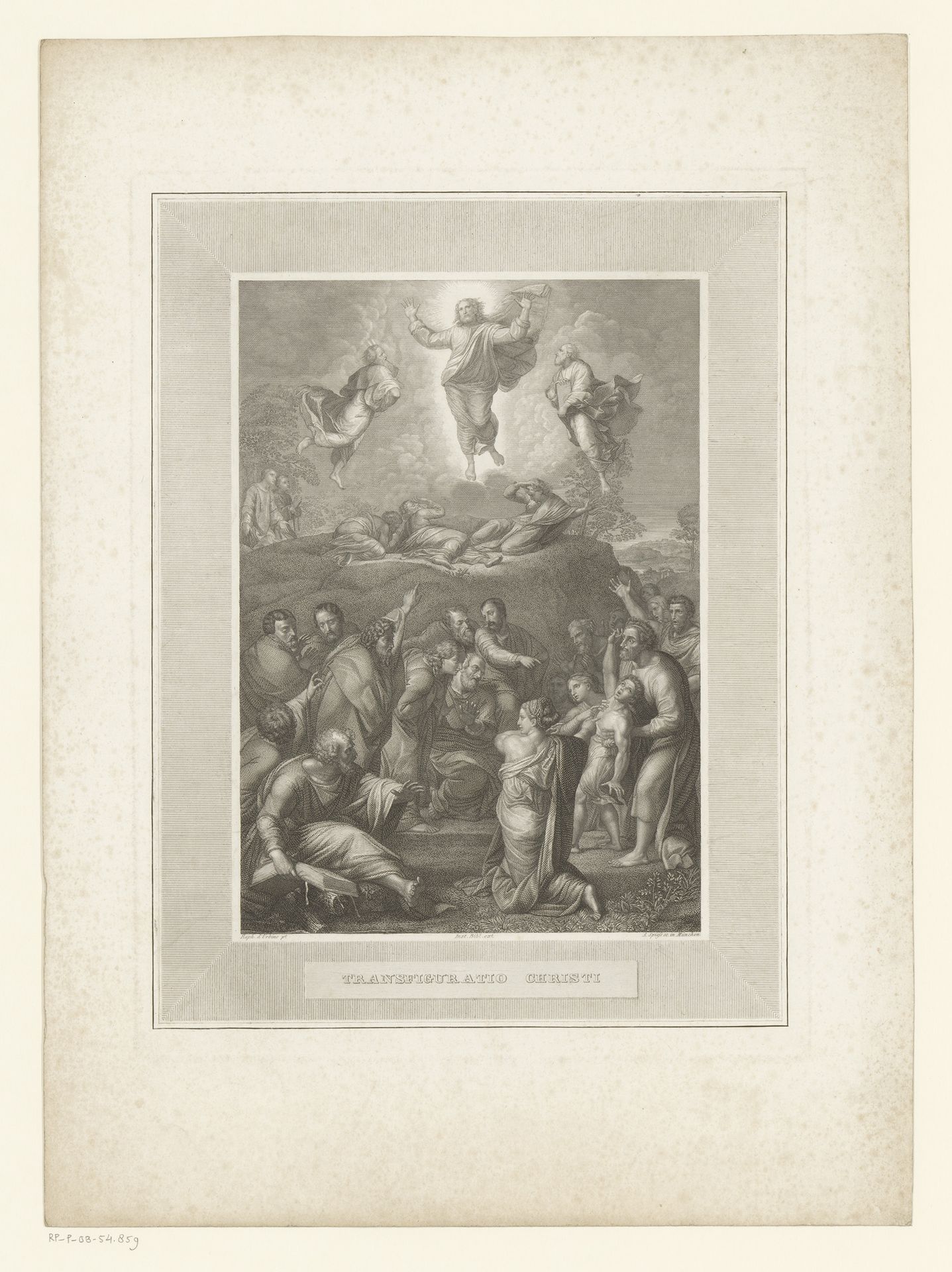
Transfiguratie

Listen to curator's interpretation
Curatorial notes
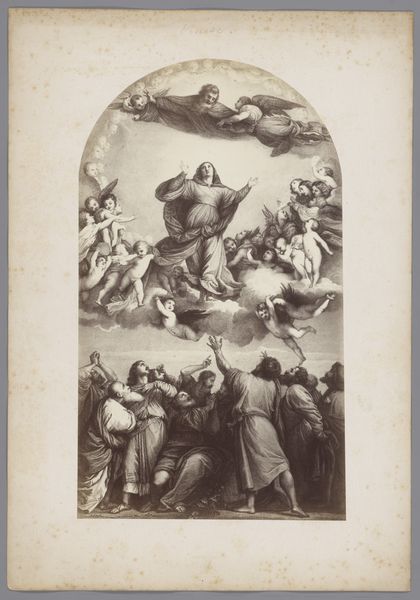
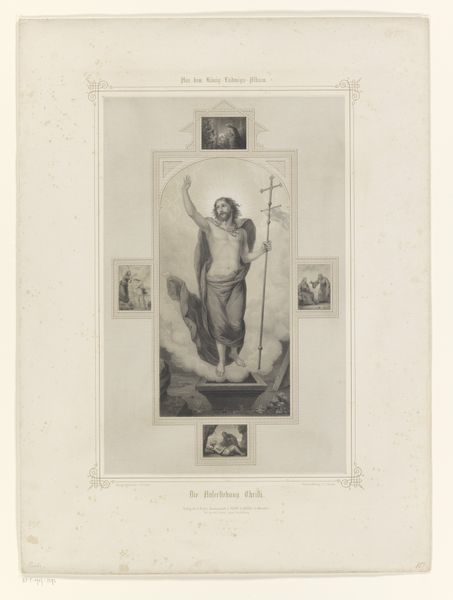
August Friedrich Spieß’s ‘Transfiguratie’, captures a pivotal biblical moment using engraving. Here, the dominant visual symbols are Christ's radiant figure, Moses and Elijah flanking him, and the awestruck disciples below. These elements, steeped in religious meaning, signify divine revelation and the bridge between the Old and New Testaments. Consider the gesture of upward reaching. It appears throughout art history, from antiquity’s depictions of ecstatic maenads to Renaissance portrayals of saints in divine communion. This persistent motif speaks to humanity's enduring quest for transcendence. The composition evokes a psychological response, inviting us to ponder our relationship with the divine, and the profound mysteries of faith. Such symbols are not static. They evolve, adapt, and resurface, their meanings shaped by cultural shifts and artistic interpretation. The Transfiguration, as Spieß presents it, becomes a link in this chain, a moment of intense spiritual emotion captured and passed down through time.