About this artwork
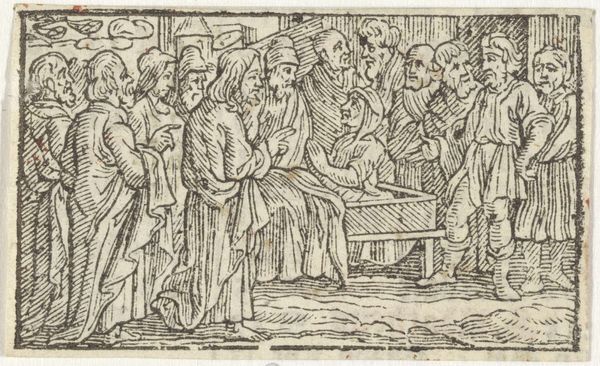
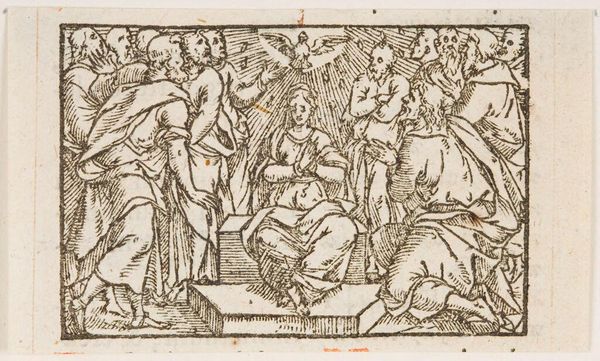
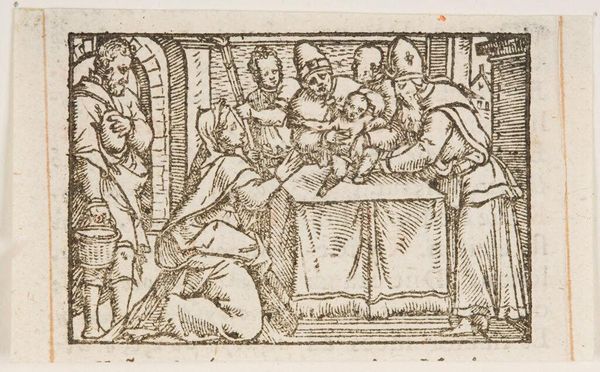
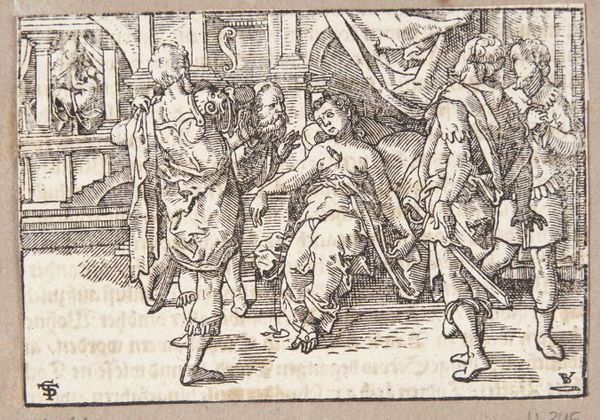
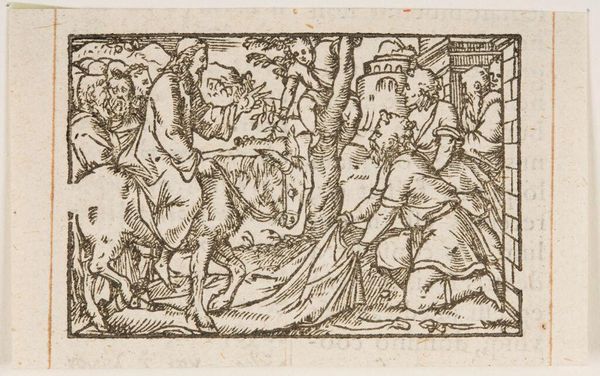
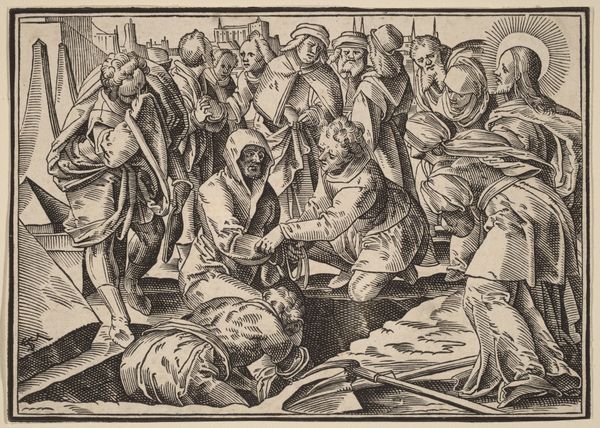
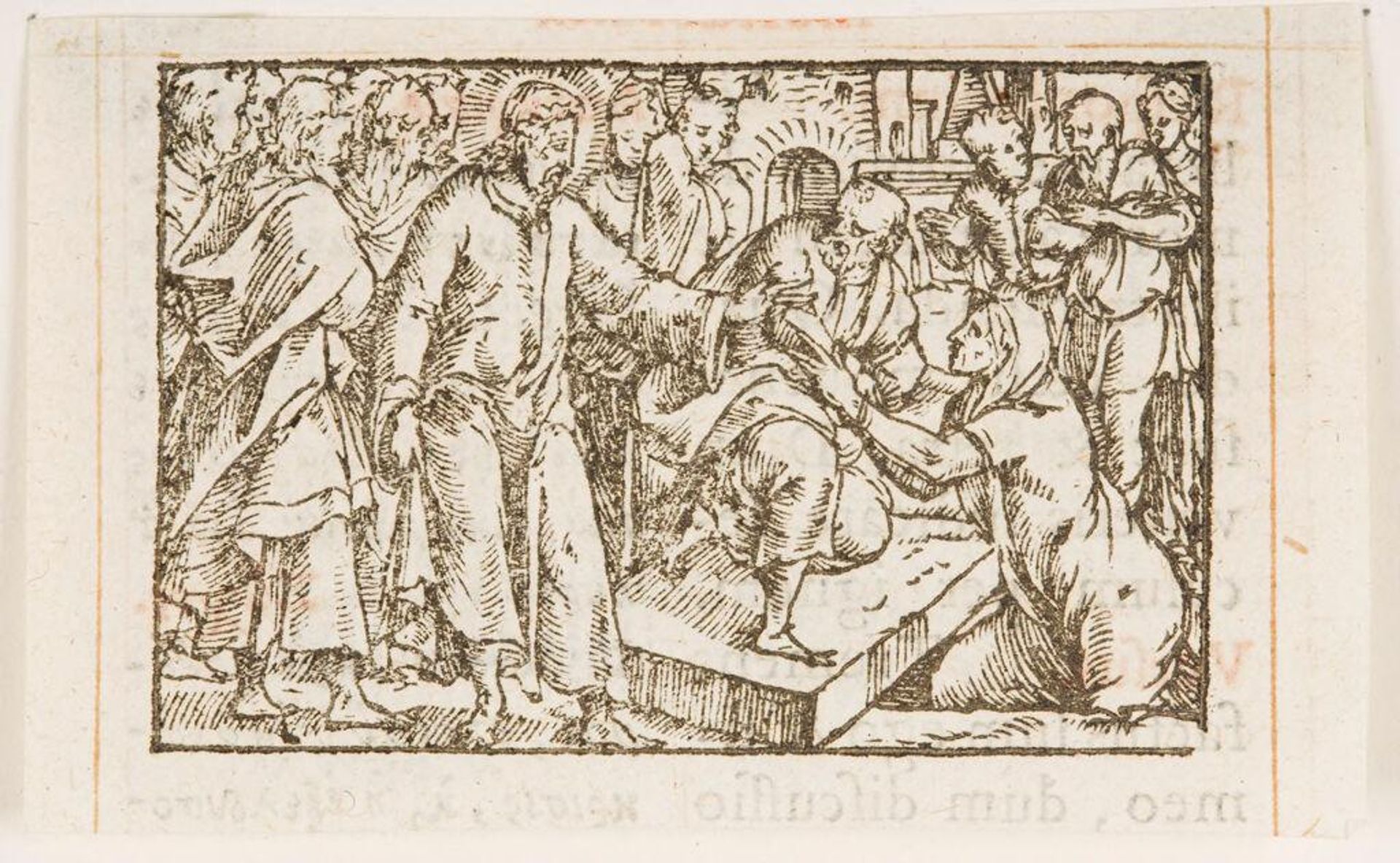
Curator: This is an image of Holy Women at the Sepulchre, an anonymous work currently residing here at the Harvard Art Museums. Editor: The stark contrast creates a sense of drama, like a stage set. It’s intriguing how the figures, though crowded, seem isolated in their own emotional worlds. Curator: Indeed. The composition speaks to the social roles prescribed to women in religious narratives, often as witnesses and mourners. Their grief and resilience take center stage. Editor: The sepulchre itself, that central stone block, is fascinating. It grounds the scene, giving a tangible form to abstract concepts of death, hope, and resurrection. It's almost a character itself. Curator: And looking closer, we see a matrix of gazes—who is looking at whom—which influences the narrative's power dynamics. Consider the implications of the haloed figure at the edge of the scene. Editor: It’s a powerful scene rendered with remarkable economy of line. The image lingers in the mind. Curator: This anonymous work offers us a moment to reflect on the historical weight carried by these figures, and how their stories intersect with our own.
Holy Women at the Sepulchre
c. 16th century


Artwork details
- Location
- Harvard Art Museums
- Copyright
- CC0 1.0
Comments
Share your thoughts
About this artwork
Curator: This is an image of Holy Women at the Sepulchre, an anonymous work currently residing here at the Harvard Art Museums. Editor: The stark contrast creates a sense of drama, like a stage set. It’s intriguing how the figures, though crowded, seem isolated in their own emotional worlds. Curator: Indeed. The composition speaks to the social roles prescribed to women in religious narratives, often as witnesses and mourners. Their grief and resilience take center stage. Editor: The sepulchre itself, that central stone block, is fascinating. It grounds the scene, giving a tangible form to abstract concepts of death, hope, and resurrection. It's almost a character itself. Curator: And looking closer, we see a matrix of gazes—who is looking at whom—which influences the narrative's power dynamics. Consider the implications of the haloed figure at the edge of the scene. Editor: It’s a powerful scene rendered with remarkable economy of line. The image lingers in the mind. Curator: This anonymous work offers us a moment to reflect on the historical weight carried by these figures, and how their stories intersect with our own.
Comments
Share your thoughts