About this artwork
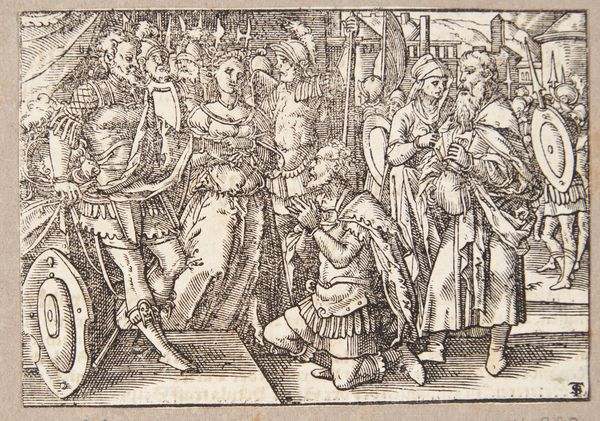
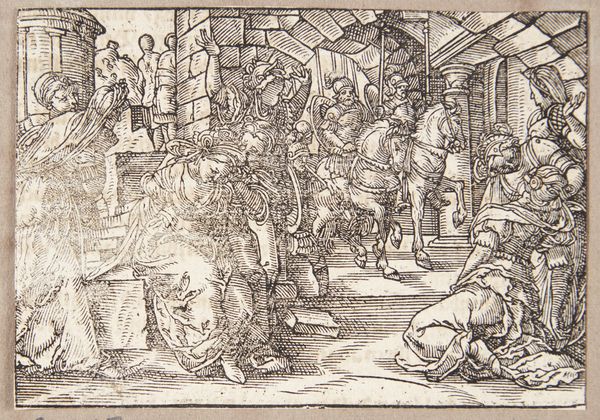
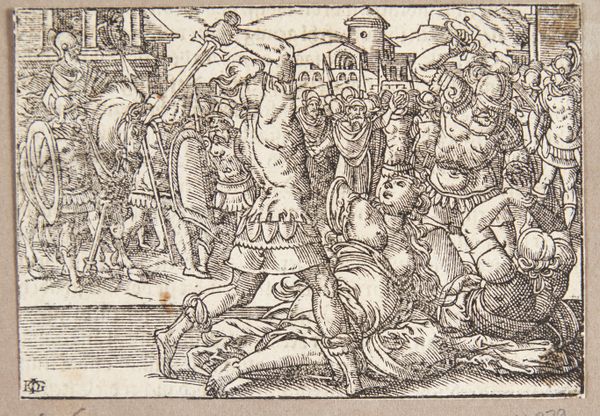
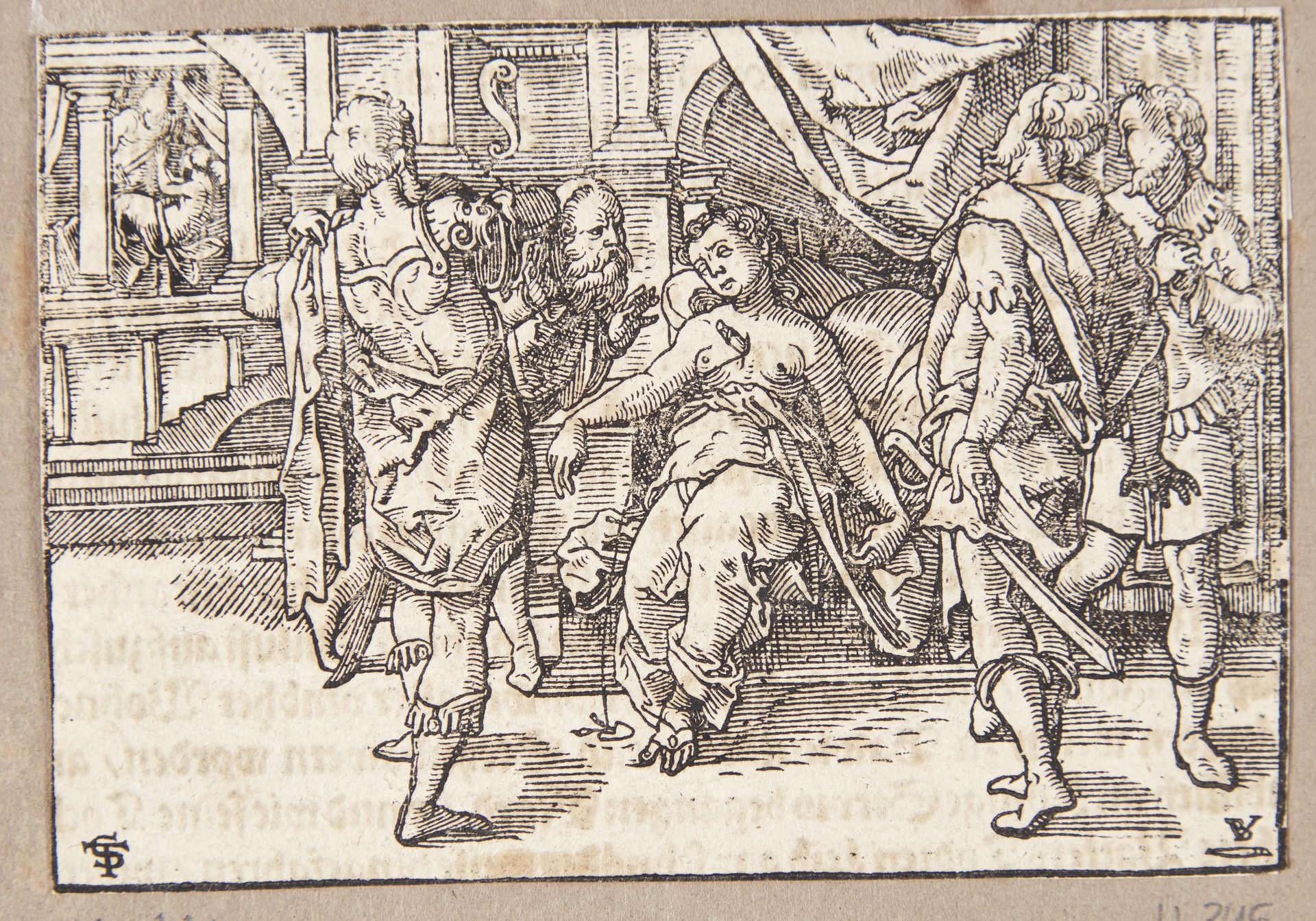
Tobias Stimmer’s woodcut, "Lucretia's Death," presents a dramatic scene rendered through the stark contrast of black lines on a white field. The composition is carefully structured, with the lifeless Lucretia at the center, surrounded by figures whose gestures emphasize the emotional weight of the moment. The artist employs hatching and cross-hatching to create depth and shadow. The linear quality of the medium, combined with the dynamic arrangement of the figures, draws attention to the narrative's intense emotionality. Here, line functions not just descriptively, but also expressively, guiding the viewer's eye and underscoring the tragedy. This aesthetic choice reflects the broader artistic concerns of the period, where printmaking served as a vital medium for disseminating stories. Stimmer’s work exemplifies how formal qualities of line, composition, and texture work together to communicate complex ideas about virtue, sacrifice, and the power of narrative. By focusing on the formal elements, we gain a deeper understanding of the cultural and philosophical implications of the work.
Lucretias død
1574


Artwork details
- Medium
- drawing, print, ink, woodcut, engraving
- Dimensions
- 75 mm (height) x 105 mm (width) (bladmaal)
- Location
- SMK - Statens Museum for Kunst
Tags
drawing
narrative-art
figuration
ink
woodcut
history-painting
northern-renaissance
engraving
Comments
Be the first to share your thoughts about this work.
About this artwork
Tobias Stimmer’s woodcut, "Lucretia's Death," presents a dramatic scene rendered through the stark contrast of black lines on a white field. The composition is carefully structured, with the lifeless Lucretia at the center, surrounded by figures whose gestures emphasize the emotional weight of the moment. The artist employs hatching and cross-hatching to create depth and shadow. The linear quality of the medium, combined with the dynamic arrangement of the figures, draws attention to the narrative's intense emotionality. Here, line functions not just descriptively, but also expressively, guiding the viewer's eye and underscoring the tragedy. This aesthetic choice reflects the broader artistic concerns of the period, where printmaking served as a vital medium for disseminating stories. Stimmer’s work exemplifies how formal qualities of line, composition, and texture work together to communicate complex ideas about virtue, sacrifice, and the power of narrative. By focusing on the formal elements, we gain a deeper understanding of the cultural and philosophical implications of the work.
Comments
Be the first to share your thoughts about this work.