

c. 1660 - 1680
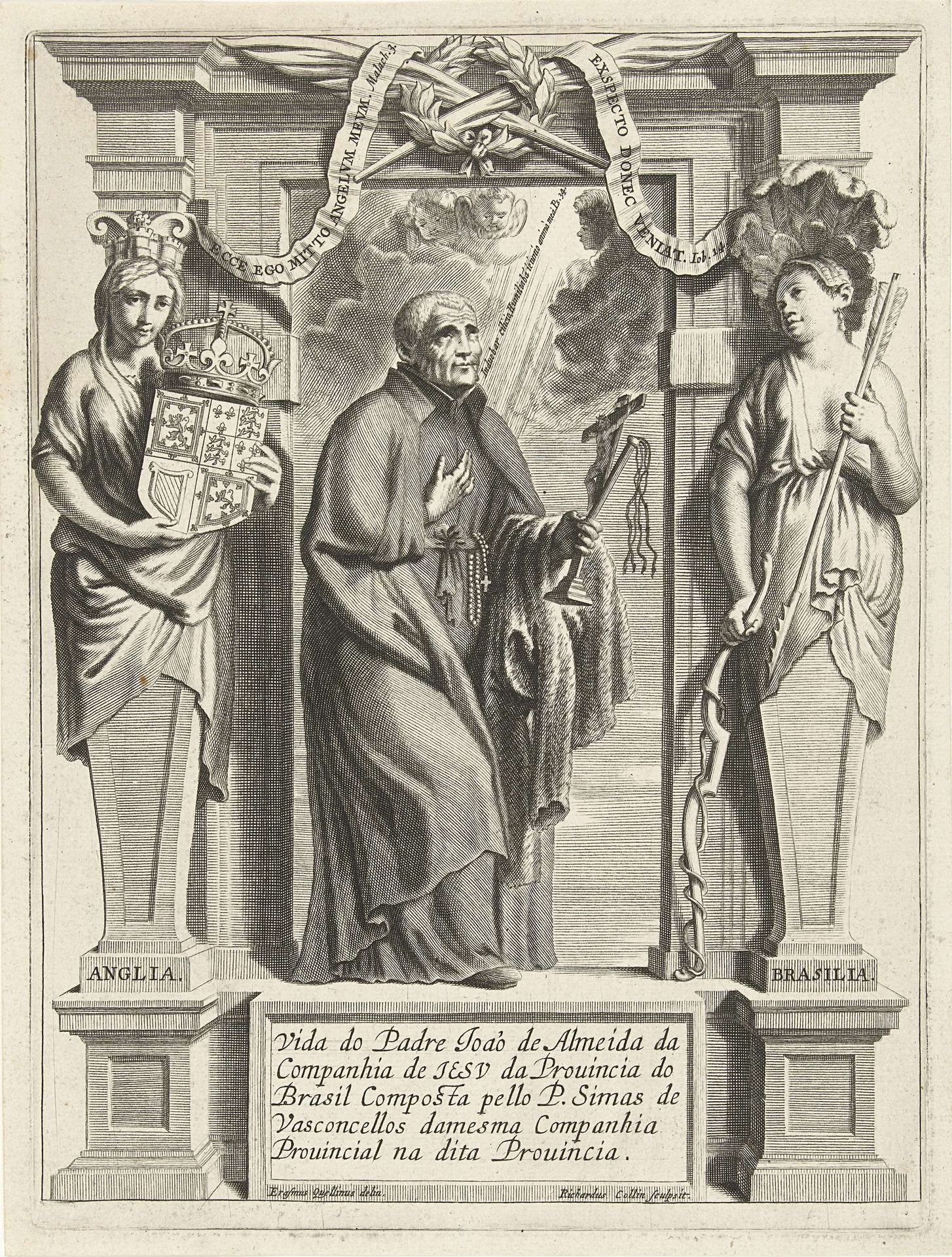
Portret van de jezuïet João de Almeida

Richard Collin
1627 - 1697Location
RijksmuseumListen to curator's interpretation
Curatorial notes
This engraving of João de Almeida was created in the 17th century by Richard Collin. It captures the Jesuit priest flanked by allegorical figures representing England and Brazil. Consider the era in which this portrait was made. Europe was in the throes of colonial expansion, with religious orders like the Jesuits playing a crucial role in these ventures. Almeida himself was part of this project, a figure caught between spiritual devotion and the realities of colonial power. The idealized figures of "Anglia" and "Brasilia" on either side offer a symbolic framing of Almeida’s identity. Notice the symbolism: England with its coat of arms, and Brazil, bearing arrows—emblems of both promise and the subjugation of indigenous peoples. These visual cues prompt us to reflect on the complexities of identity. How did Almeida perceive his role in this cultural and religious exchange? How did his actions impact the lives of those he encountered? This portrait invites us to contemplate the intertwined legacies of faith, colonialism, and cultural identity, set against the backdrop of global exchange.