1928
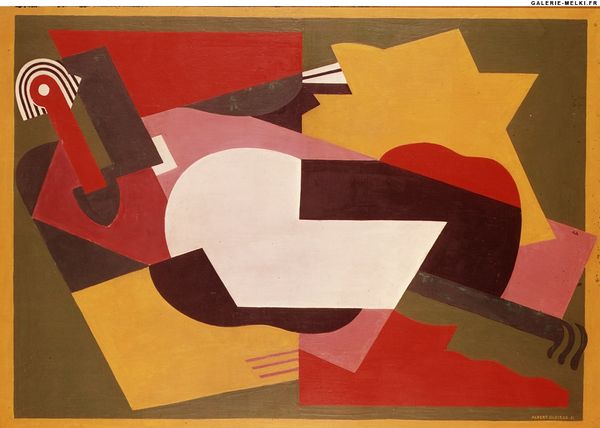
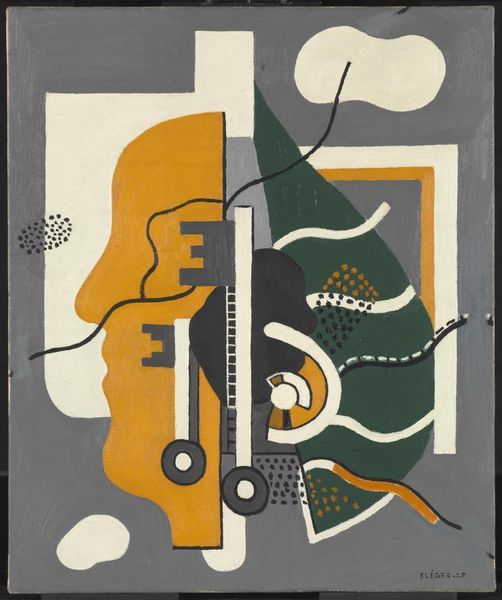
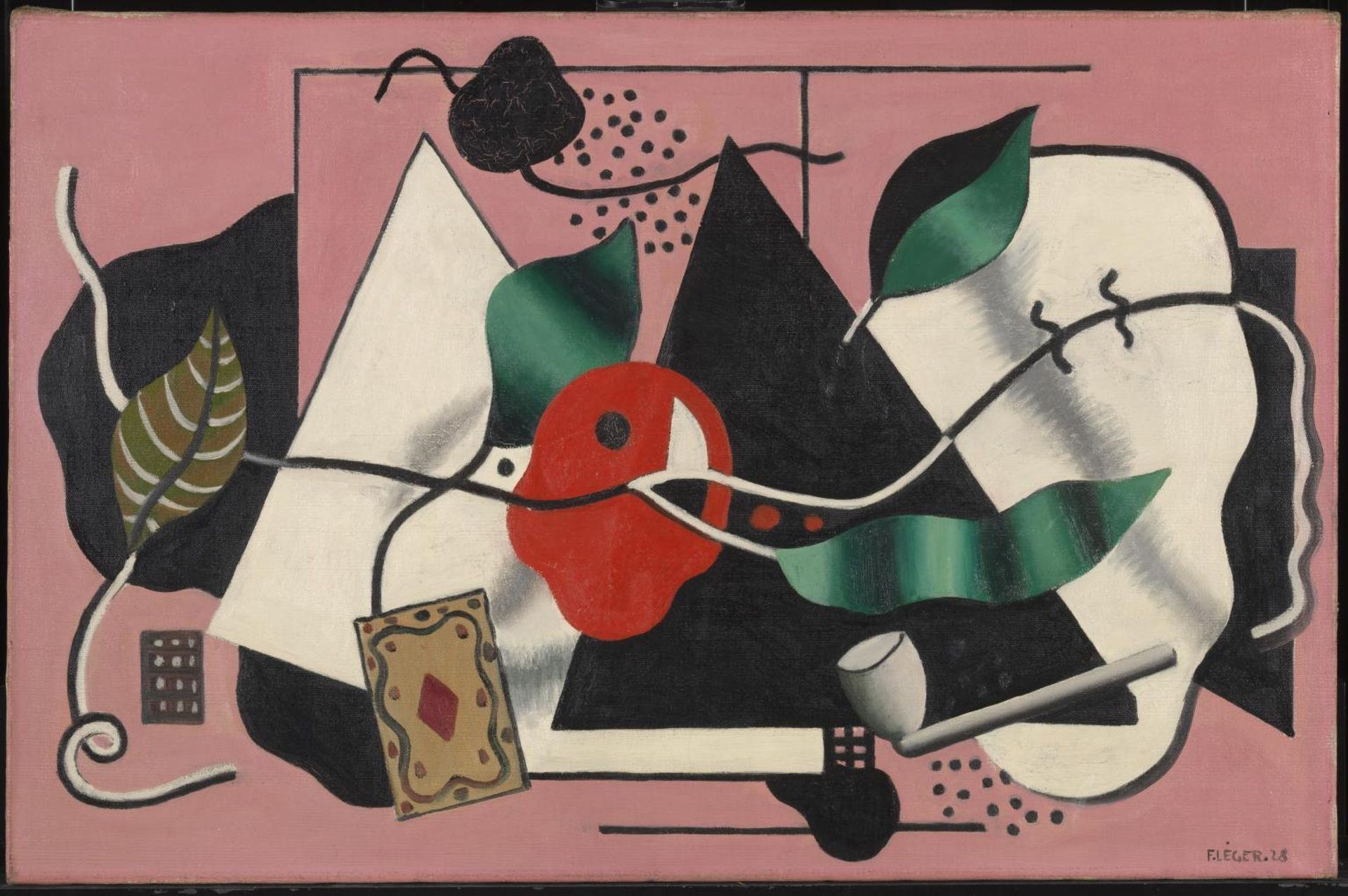
Playing Card and Pipe


Listen to curator's interpretation
Curatorial notes
Editor: Fernand Léger’s "Playing Card and Pipe," held at the Tate, presents a collection of geometric forms and everyday objects. I'm struck by its playful composition and the contrast of organic and inorganic shapes. What do you see in this piece in terms of its cultural significance? Curator: It's fascinating to consider Léger's work within the context of early 20th-century industrialization. How do you think the painting reflects the changing relationship between humans and machines in that era? Notice how the simplified forms and bold colors celebrate the beauty of the modern machine age, rejecting traditional artistic conventions. Editor: That's interesting, I hadn't thought of it in terms of the machine age, so this work is a commentary on the period? Curator: Indeed, Léger saw the potential for art to engage with and reflect the new industrial landscape. Do you see any echoes of this in contemporary art? Editor: I think I have a better understanding now of how art reflects its time. Thanks.