drawing, paper, ink
#
drawing
#
narrative-art
#
asian-art
#
paper
#
ink
#
calligraphy
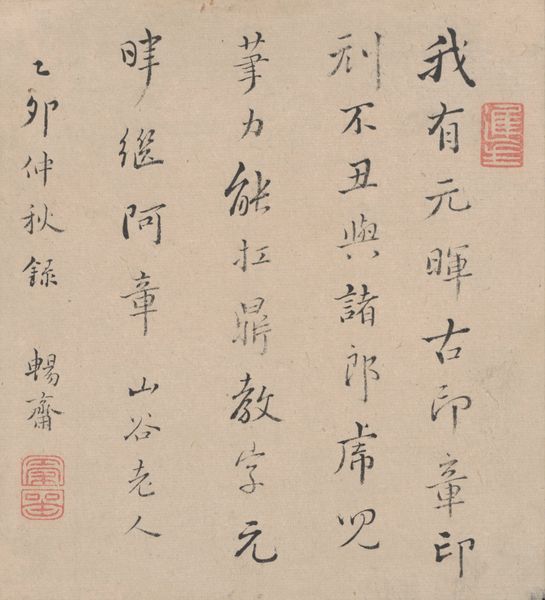
Dimensions: 9 1/8 × 9 1/16 in. (23.18 × 23.02 cm) (image)
Copyright: Public Domain
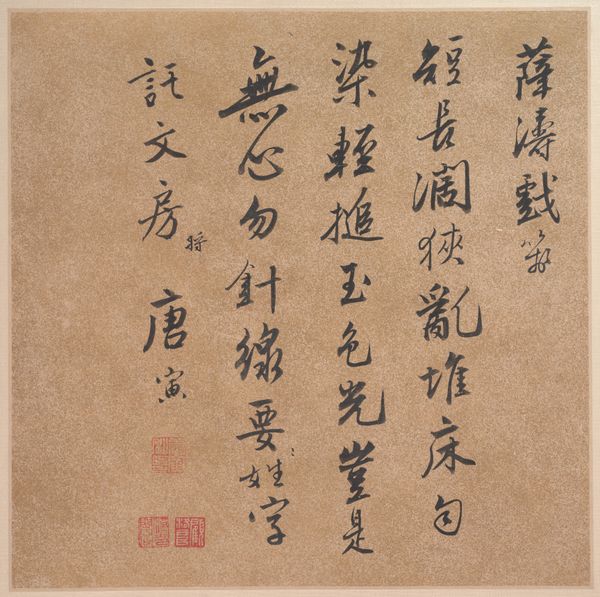
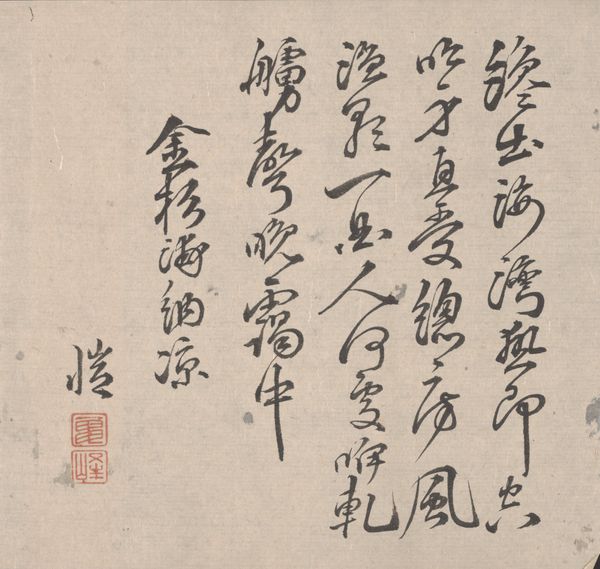
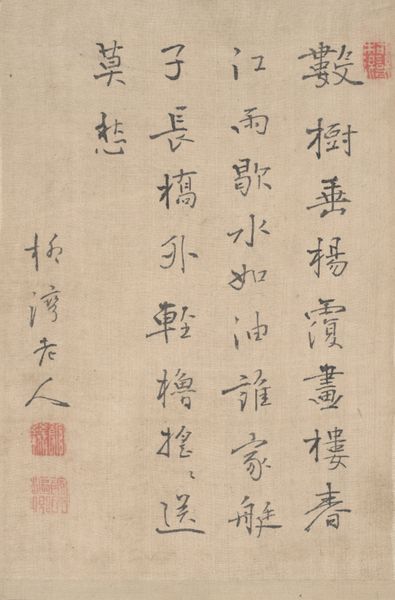
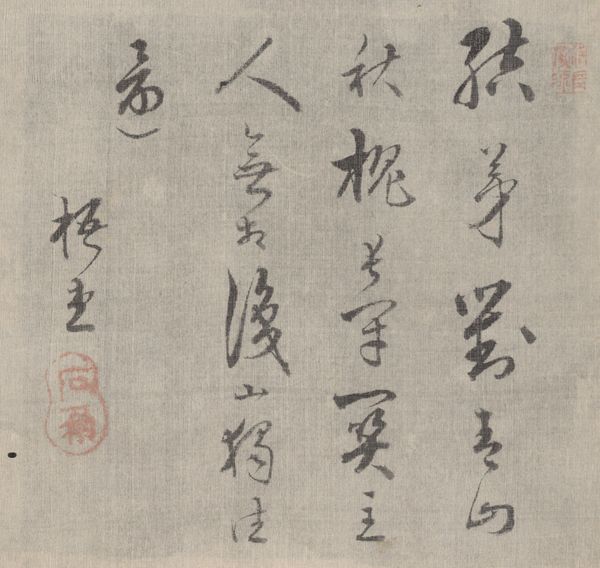
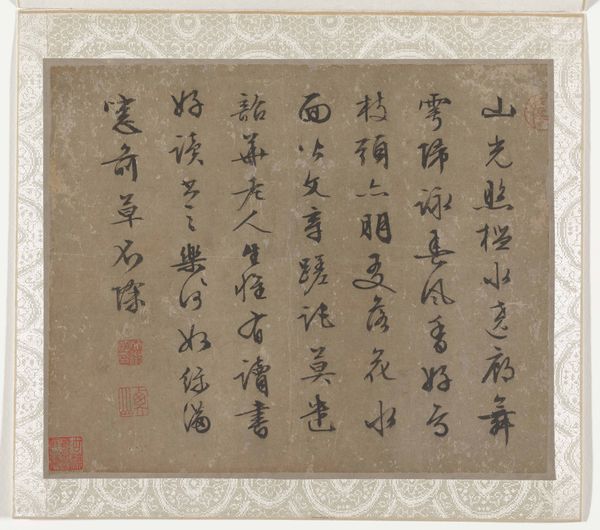
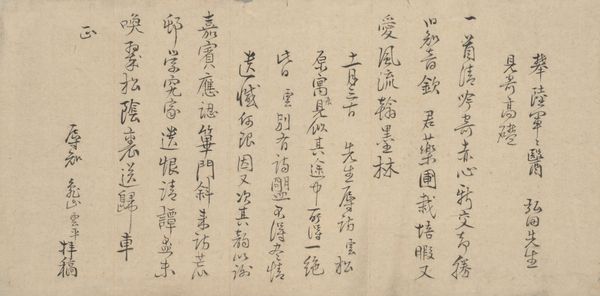
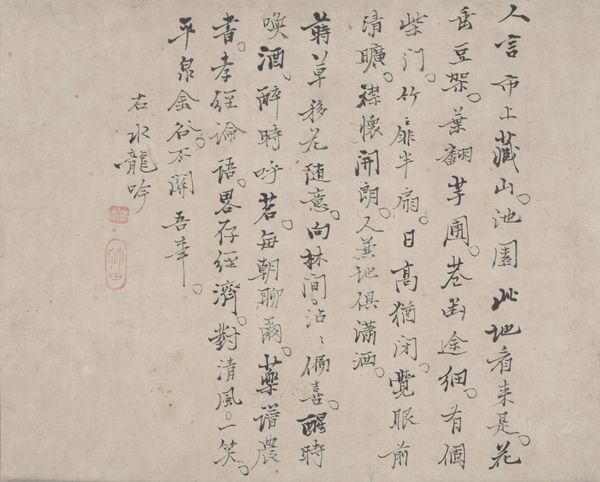
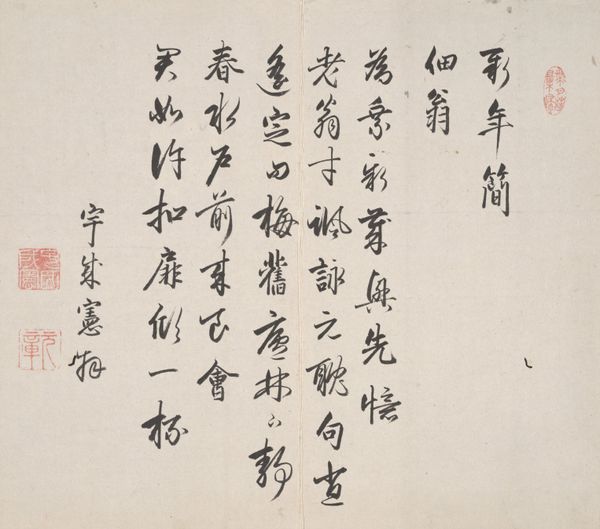
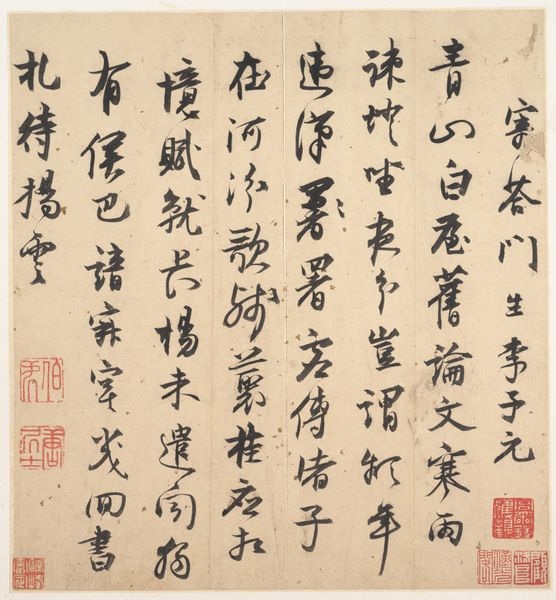
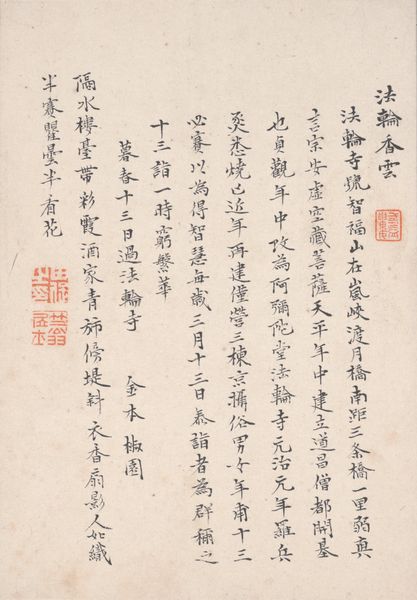
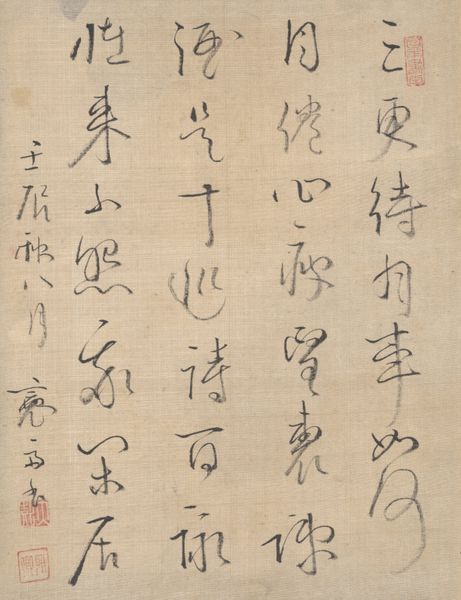
Curator: At first glance, the arrangement of the script gives it a very balanced feel, almost musical in its rhythm, doesn’t it? Editor: Indeed. Let's take a closer look. The Minneapolis Institute of Art holds this intriguing piece titled "Spring in Kitano," attributed to Uno Meika from around the 19th century. Curator: You can see the ink’s texture on the paper, almost rough, and yet the lines of calligraphy possess such delicate precision. The scale emphasizes the paper itself, suggesting the artist values the craft and labour behind creating this object, this material, as much as the calligraphy. It makes you think about the availability of quality materials and the training involved. Editor: Yes, and formally, the composition directs your eye in a unique flow. See how Meika juxtaposes the strokes to establish contrasts—thick versus thin, fluid versus angular—playing with the white space to articulate distinct yet integrated registers. Curator: It seems more than just calligraphy; it is an entire social practice encompassing labor and consumption in the Edo period, the product reflecting societal values. We're presented with a clear picture of how these cultural and economic contexts influenced the art's production and, consequently, its meaning. Editor: Precisely. Looking more deeply at how it uses language structurally through calligraphy, the narrative creates an atmosphere—an early spring day. I'm curious, what is the social status conveyed by the materials employed here? Curator: This points to the availability and importance of those materials for art production. Moreover, that text also implies specific consumption and aesthetic tastes, revealing more than just manual skill, and a wider class dynamic from which art like this came. Editor: In short, the poem interacts structurally with the page, thus invoking not just observation but participation, leading us into experiencing the sensory, almost tactile elements. A spring landscape. Curator: Absolutely. Considering materiality opens into production networks, class status, and shared values, thereby broadening its interpretation well beyond aesthetic appeal and refined skill alone. Editor: And focusing closely on calligraphy allows you to perceive art at many interwoven planes that echo throughout culture! Curator: Thank you. What initially seemed only art becomes a window onto Edo society itself!
Comments

minneapolisinstituteofart over 2 years ago
⋮
Small-scale standard script is often neglected, but it is in fact surprisingly difficult to write with real distinction. Each character is extraordinarily delicate, seeming to float and move while demonstrating structural firmness and balance. “Again Respectfully Echoing the Rhymes of the Poem "New Year’s Morn" by the Monk of the Segai-inCapital country weather, spring comes to Kitano!Enlightened times, undeservedly shared with this “man-with-can-at-court!”White clouds naturally tinted with blue-cloud colors:Yearly festival—mingling in the dust, mingling in celebrating the new!”


Join the conversation
Join millions of artists and users on Artera today and experience the ultimate creative platform.
 Collect
More like this