1675 - 1680
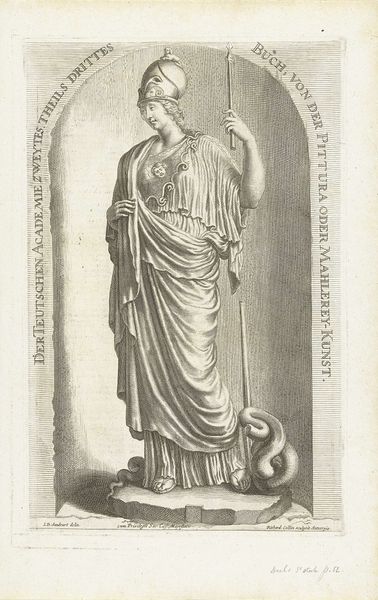
Minerva

Richard Collin
1627 - 1697Location
RijksmuseumListen to curator's interpretation
Curatorial notes
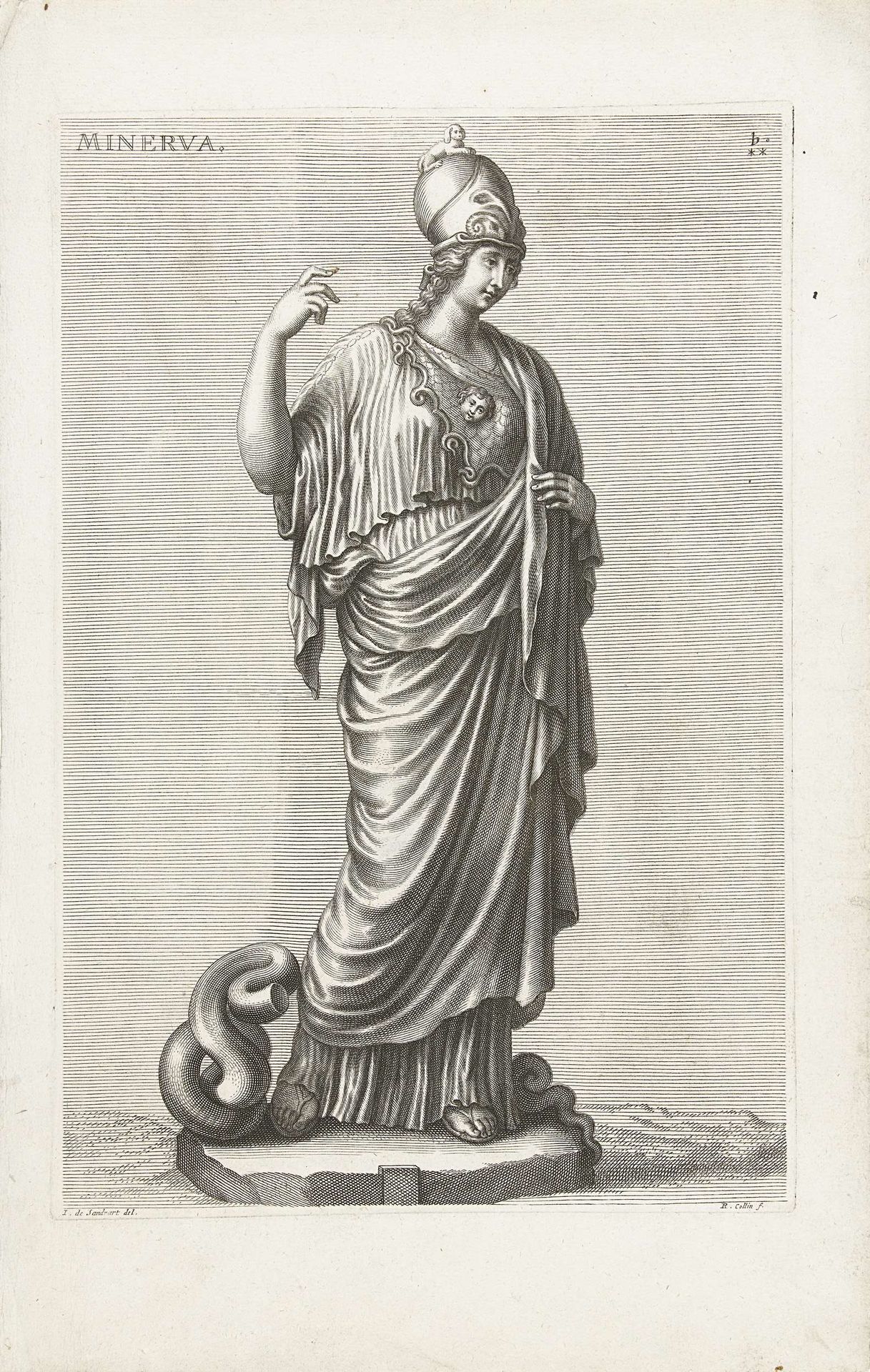
Richard Collin created this print of Minerva in the 17th century using engraving. The artist cut lines into a copper plate, which were then filled with ink and printed onto paper. This method allowed for the relatively easy reproduction of images, playing a crucial role in the dissemination of knowledge and artistic ideas. Minerva, the Roman goddess of wisdom and strategic warfare, stands in classical contrapposto, draped and helmeted, with a serpent at her feet. Notice how Collin’s skilled use of line creates a sense of depth and texture, mimicking the appearance of a three-dimensional sculpture. Engraving was a highly skilled craft, demanding precision and control. The resulting prints, like this Minerva, were often collected as objects of both artistic and intellectual value, reflecting a growing interest in classical antiquity and the power of reproducible imagery in society. We can recognize the work, skill and time involved in the production process.