About this artwork
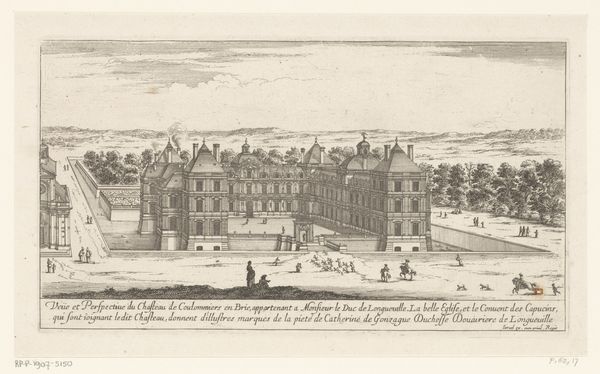
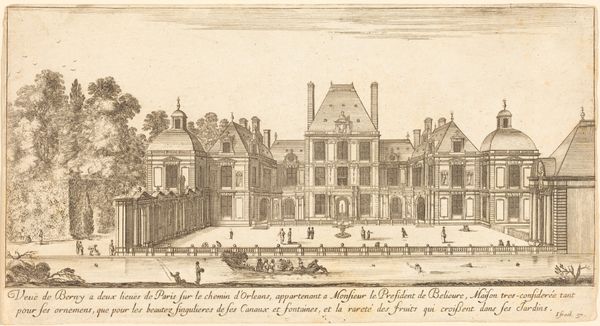
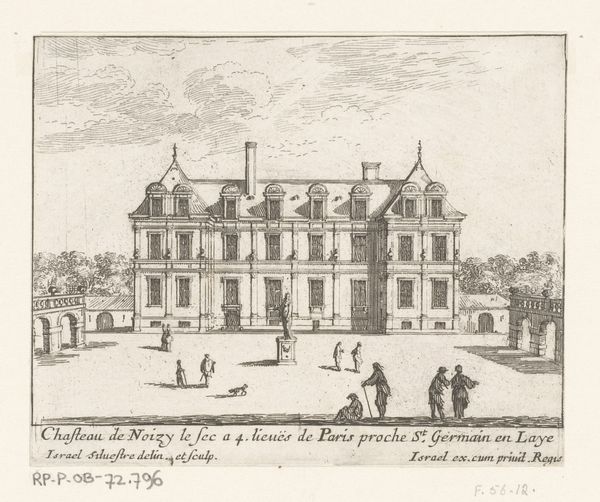
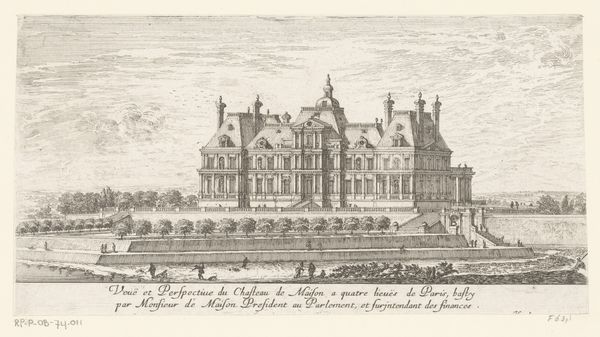
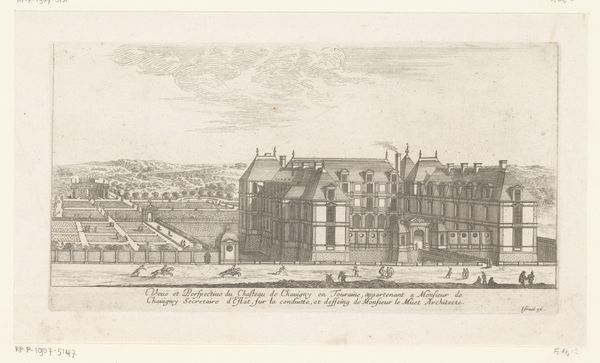
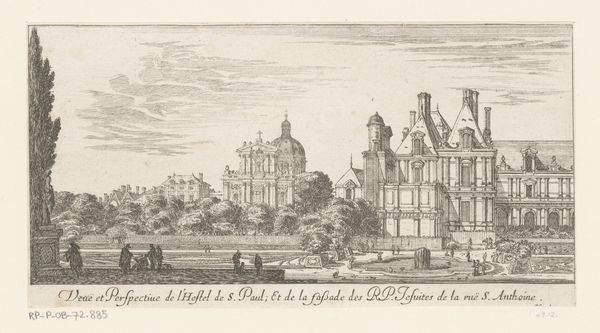
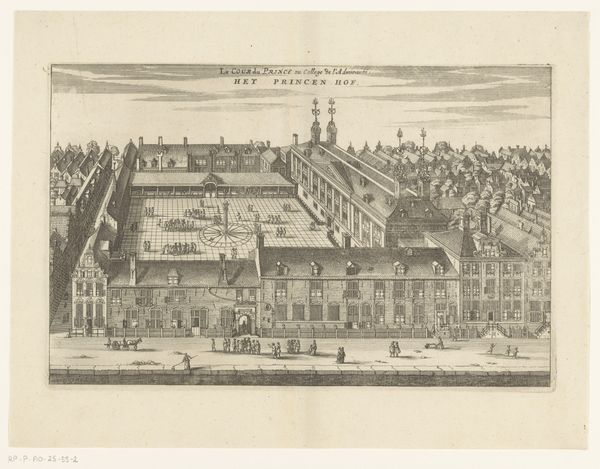
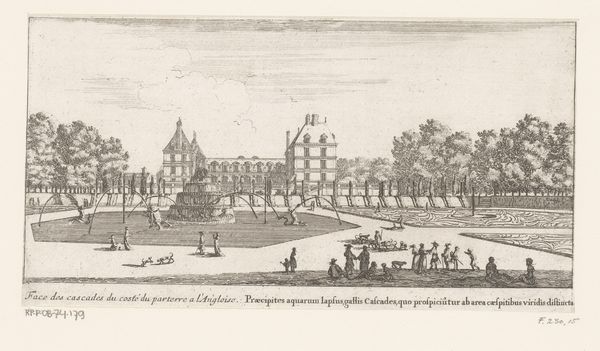
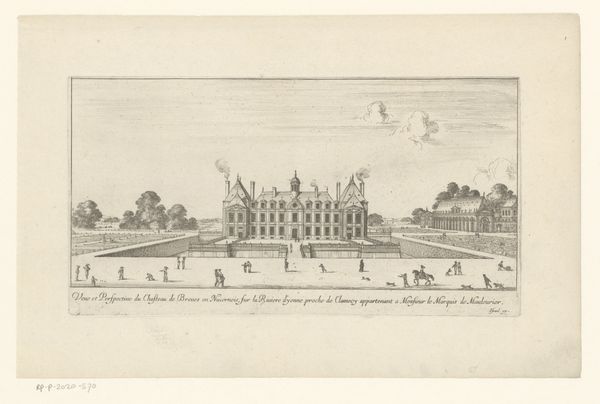
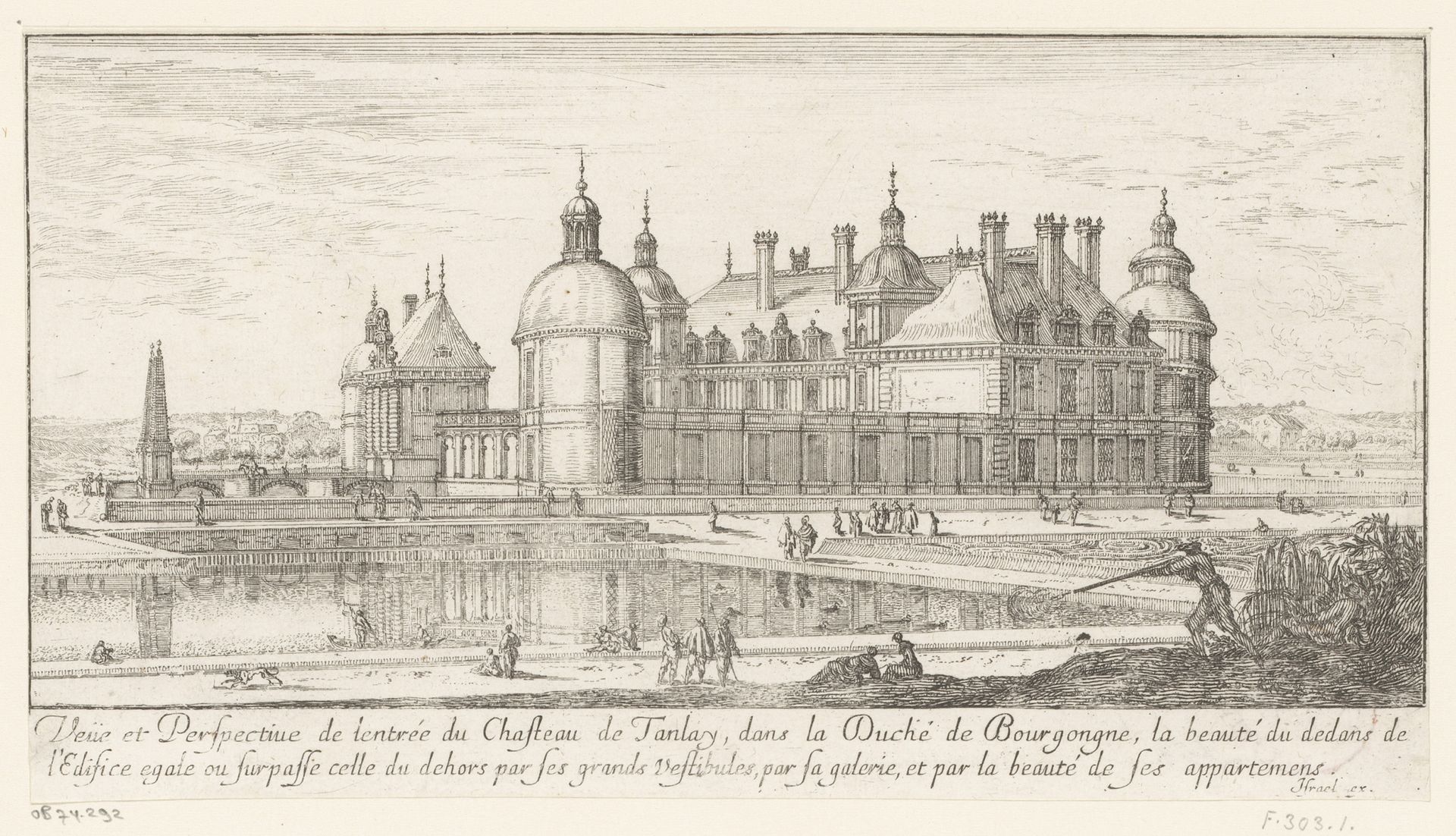
This print, made by Israel Silvestre in the 17th century, presents a view of the Château de Tanlay and its surrounding water features. Silvestre was known for his detailed etchings of landscapes and architecture, a process involving coating a metal plate with wax, drawing through the wax to expose the metal, and then immersing the plate in acid, which bites into the exposed lines. The resulting incised lines hold ink, allowing the image to be printed. Look closely, and you'll notice how the varying thickness and density of lines create depth, shadow, and texture, giving form to the stone, water, and foliage. Beyond the aesthetics, the print also speaks to the burgeoning print market of the time, where images of grand estates became commodities, circulated amongst the aristocratic class. Silvestre's skill in etching not only captured the likeness of the château, but also contributed to its circulation as a symbol of power and prestige. It serves as a reminder that what we consider 'art' is often deeply embedded in social and economic structures.
Gezicht op het kasteel van Tanlay met ervoor een waterpartij
1631 - 1661

Israel Silvestre
1621 - 1691Location
RijksmuseumArtwork details
- Medium
- print, engraving, architecture
- Dimensions
- height 129 mm, width 235 mm
- Location
- Rijksmuseum
- Copyright
- Rijks Museum: Open Domain
Tags
Comments
Share your thoughts
About this artwork
This print, made by Israel Silvestre in the 17th century, presents a view of the Château de Tanlay and its surrounding water features. Silvestre was known for his detailed etchings of landscapes and architecture, a process involving coating a metal plate with wax, drawing through the wax to expose the metal, and then immersing the plate in acid, which bites into the exposed lines. The resulting incised lines hold ink, allowing the image to be printed. Look closely, and you'll notice how the varying thickness and density of lines create depth, shadow, and texture, giving form to the stone, water, and foliage. Beyond the aesthetics, the print also speaks to the burgeoning print market of the time, where images of grand estates became commodities, circulated amongst the aristocratic class. Silvestre's skill in etching not only captured the likeness of the château, but also contributed to its circulation as a symbol of power and prestige. It serves as a reminder that what we consider 'art' is often deeply embedded in social and economic structures.
Comments
Share your thoughts