About this artwork
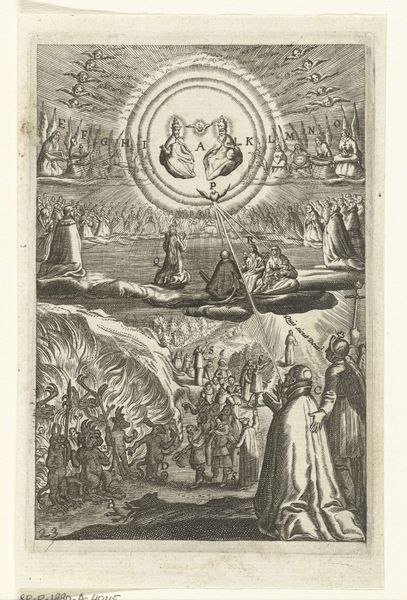
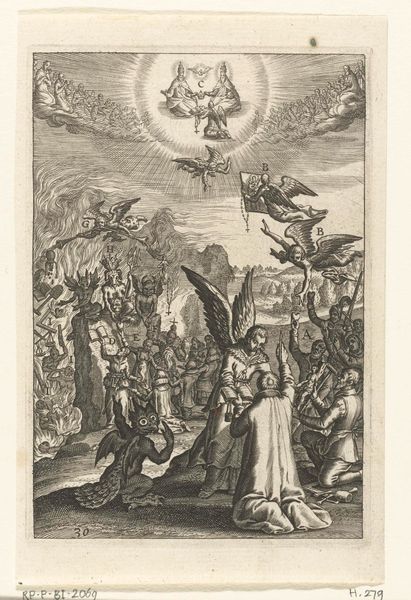
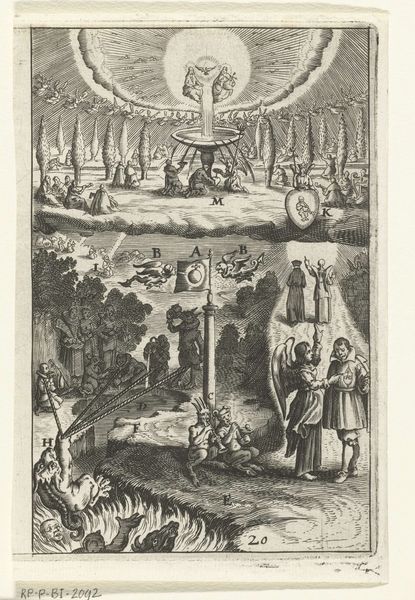
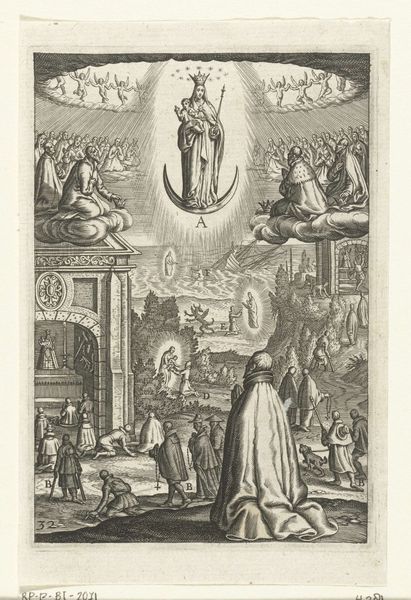
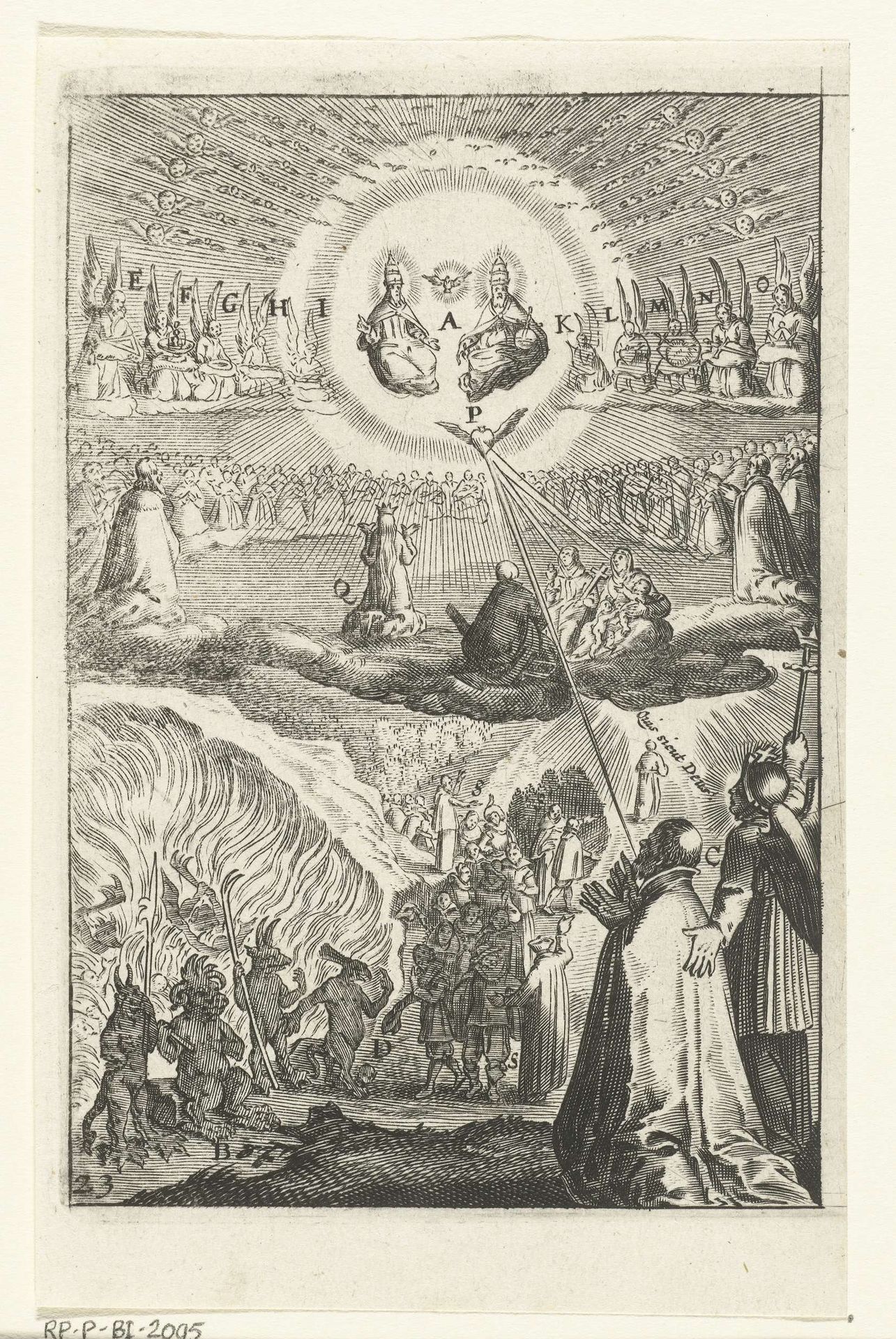
This small emblem, made with etching by an anonymous artist, presents a man at a crossroads, forced to decide whether he will serve God or the Devil. These kinds of didactic images were common in the Netherlands, a region once deeply divided by religious conflict. Looking closely, we see the artist uses established visual codes to create meaning. God and the saints reside in a well-lit, orderly heaven, while below, devils cavort in a chaotic, fiery hell. The man must choose his destiny. But what social conditions shaped the production of this image? The Northern Netherlands endured a long struggle for independence from Spain, fueled in part by religious differences, in the 16th and 17th centuries. Printmaking flourished as a means of spreading ideas and propaganda. This emblem likely reflects the intense religious debates of that era, a visual call to piety in a society wrestling with its spiritual identity. Further research into the history of Dutch printmaking and religious movements of the time would help us understand the full social and institutional context of this compelling image.
Embleem met man die moet kiezen of hij God of de duivel zal dienen
1620 - 1649

Anonymous
@anonymousLocation
RijksmuseumArtwork details
- Medium
- print, engraving
- Dimensions
- height 151 mm, width 95 mm
- Location
- Rijksmuseum
- Copyright
- Rijks Museum: Open Domain
Tags
Comments
Share your thoughts
About this artwork
This small emblem, made with etching by an anonymous artist, presents a man at a crossroads, forced to decide whether he will serve God or the Devil. These kinds of didactic images were common in the Netherlands, a region once deeply divided by religious conflict. Looking closely, we see the artist uses established visual codes to create meaning. God and the saints reside in a well-lit, orderly heaven, while below, devils cavort in a chaotic, fiery hell. The man must choose his destiny. But what social conditions shaped the production of this image? The Northern Netherlands endured a long struggle for independence from Spain, fueled in part by religious differences, in the 16th and 17th centuries. Printmaking flourished as a means of spreading ideas and propaganda. This emblem likely reflects the intense religious debates of that era, a visual call to piety in a society wrestling with its spiritual identity. Further research into the history of Dutch printmaking and religious movements of the time would help us understand the full social and institutional context of this compelling image.
Comments
Share your thoughts