About this artwork
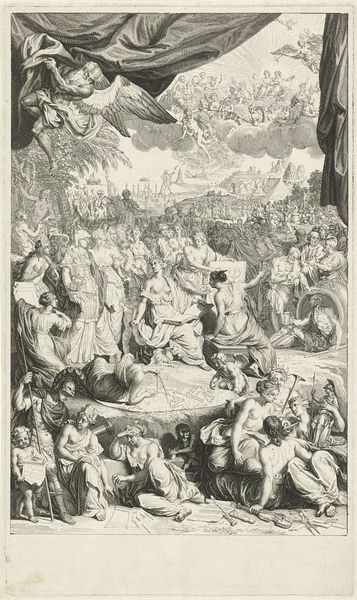
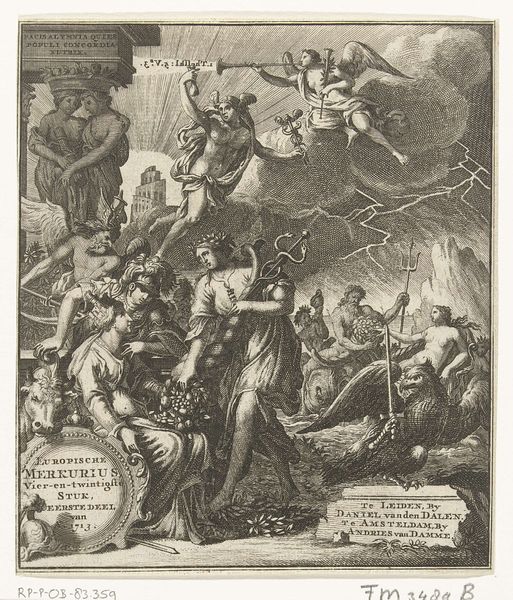
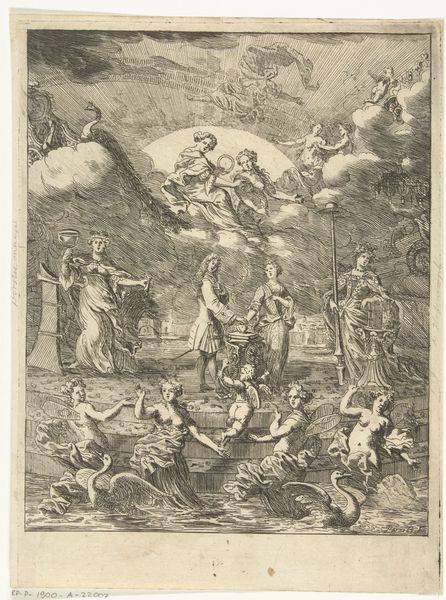
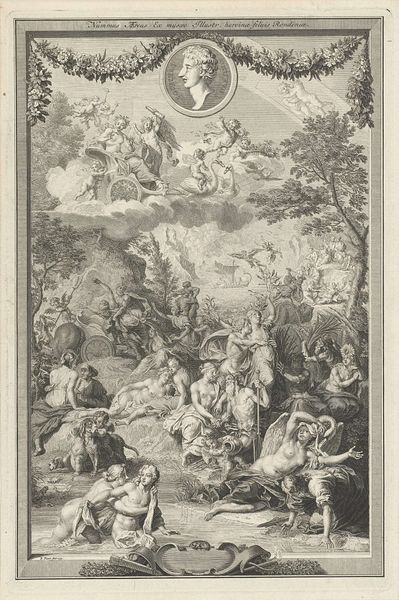
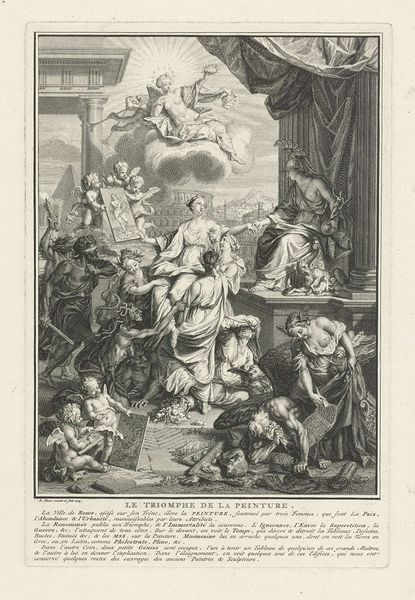
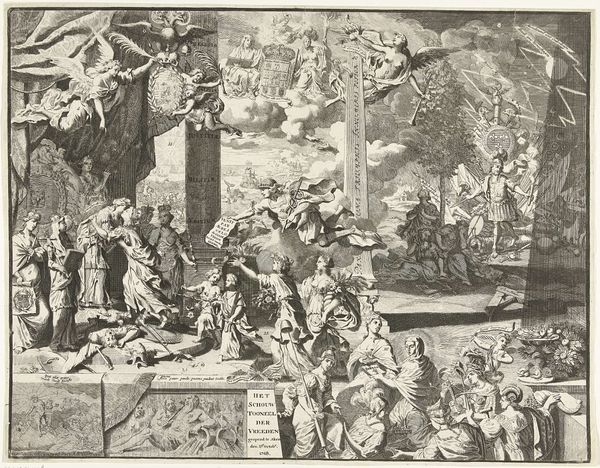
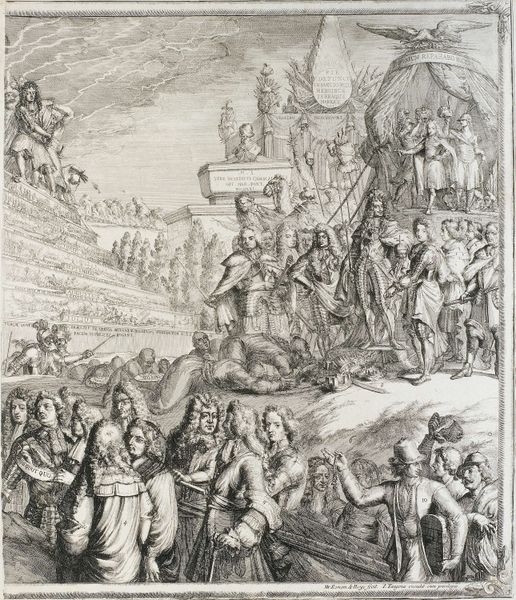
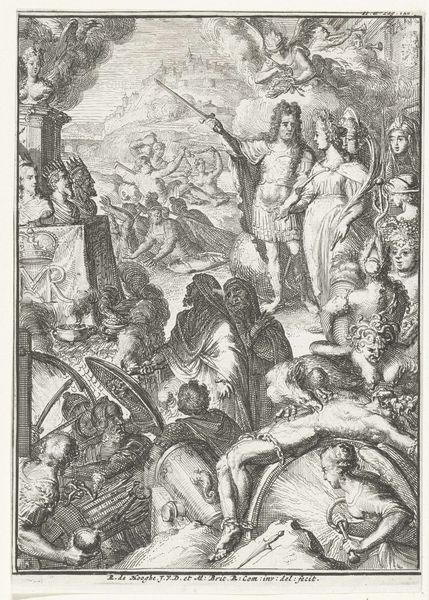
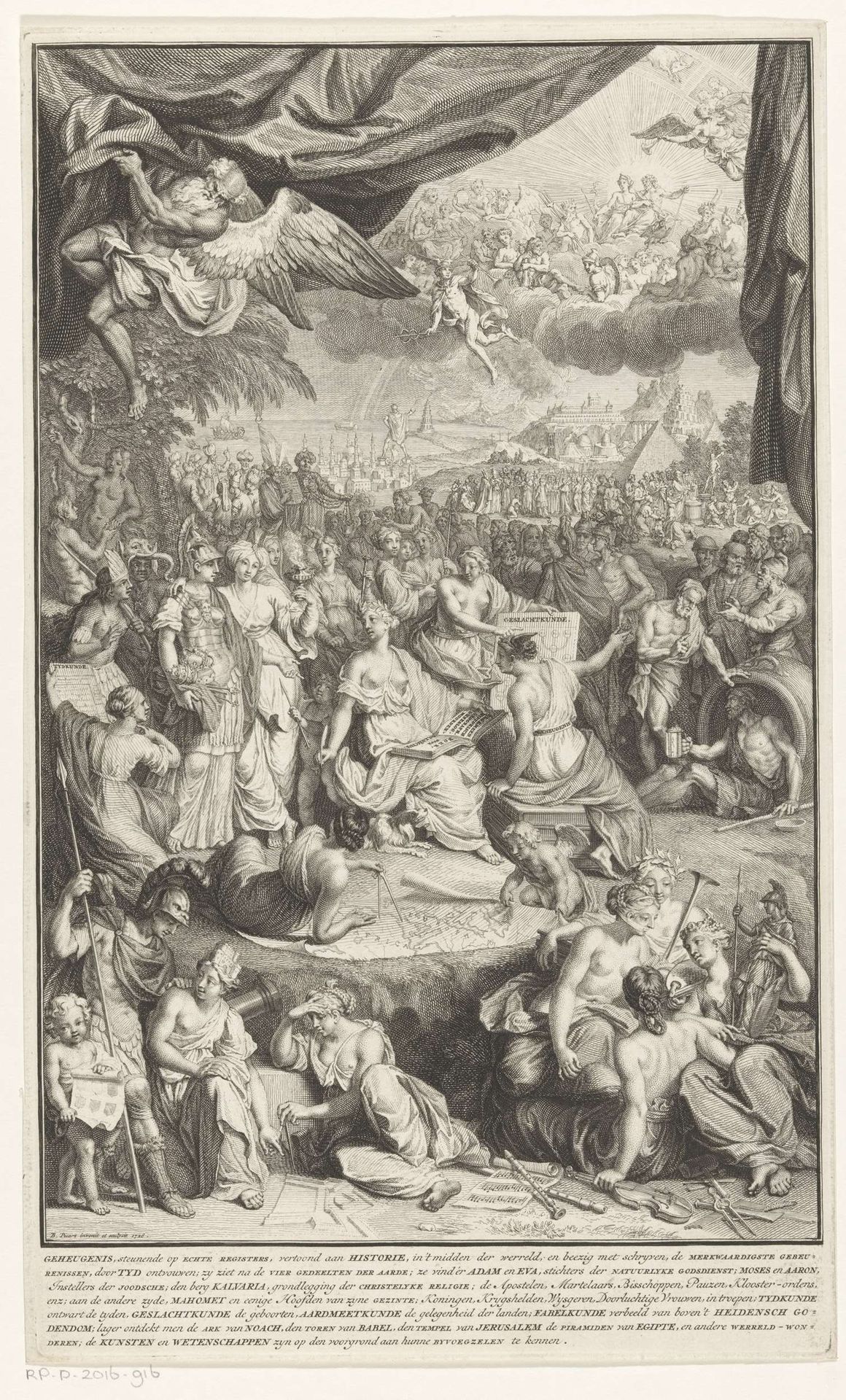
Bernard Picart’s engraving presents us with an Allegory of History, capturing the weight and sweep of time itself. At its center, we see History, a muse-like figure, quill in hand, ready to record the unfolding events before her. This act of writing, a symbol of preserving memory, echoes through time, reminding us of the ancient scribes and chroniclers who sought to immortalize their epochs. Look closer, and you’ll observe the figure of Time, wings spread, drawing back a curtain. This unveiling is not merely a theatrical gesture, but a profound statement on the nature of history as a series of revelations. The presence of Time, often depicted as Chronos devouring his children, suggests history is also about the cyclical nature of destruction and creation. Consider how such symbols resonate even today. We find echoes of Picart's vision in modern monuments and media, each attempting to capture and convey historical narratives. This image serves as a potent reminder of our collective need to understand our past.
Allegorie met Geschiedenis die de historie schrijft
1726 - 1737

Bernard Picart
1673 - 1733Location
RijksmuseumArtwork details
- Dimensions
- height 370 mm, width 222 mm
- Location
- Rijksmuseum
- Copyright
- Rijks Museum: Open Domain
Tags
Comments
Share your thoughts
About this artwork
Bernard Picart’s engraving presents us with an Allegory of History, capturing the weight and sweep of time itself. At its center, we see History, a muse-like figure, quill in hand, ready to record the unfolding events before her. This act of writing, a symbol of preserving memory, echoes through time, reminding us of the ancient scribes and chroniclers who sought to immortalize their epochs. Look closer, and you’ll observe the figure of Time, wings spread, drawing back a curtain. This unveiling is not merely a theatrical gesture, but a profound statement on the nature of history as a series of revelations. The presence of Time, often depicted as Chronos devouring his children, suggests history is also about the cyclical nature of destruction and creation. Consider how such symbols resonate even today. We find echoes of Picart's vision in modern monuments and media, each attempting to capture and convey historical narratives. This image serves as a potent reminder of our collective need to understand our past.
Comments
Share your thoughts