
Curatorial notes
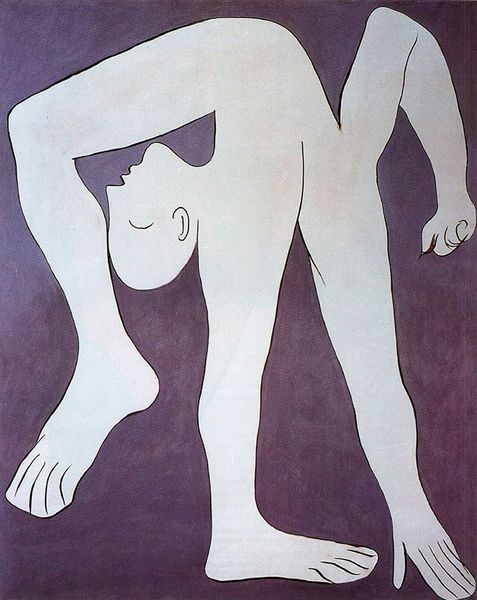
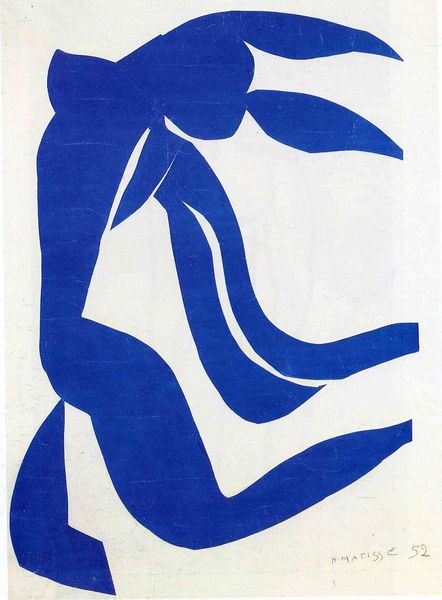
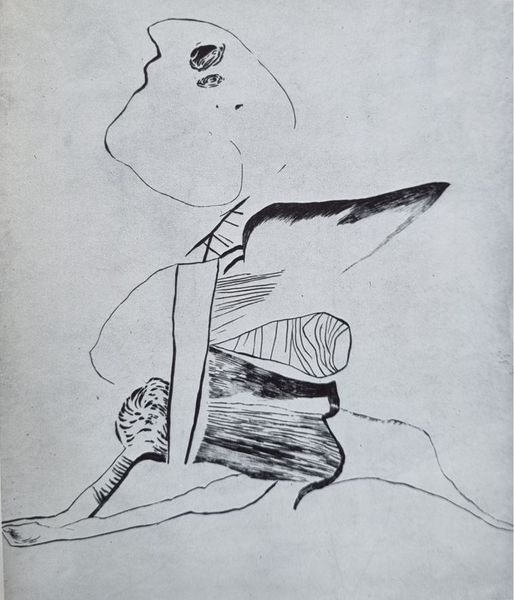
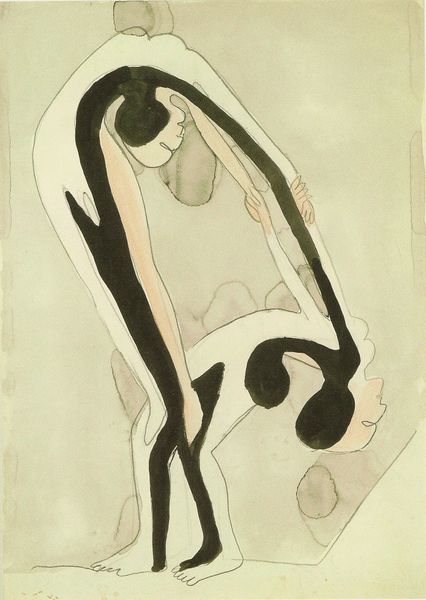
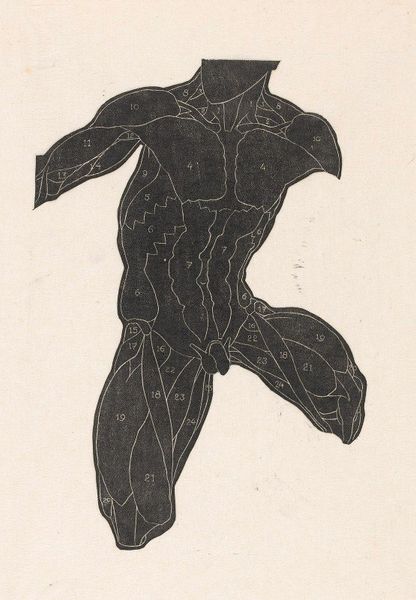
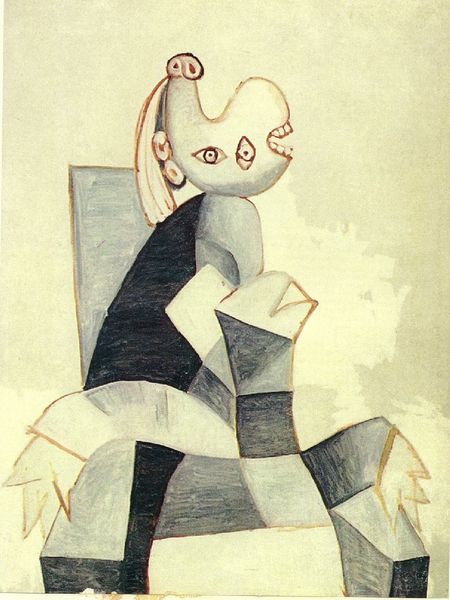
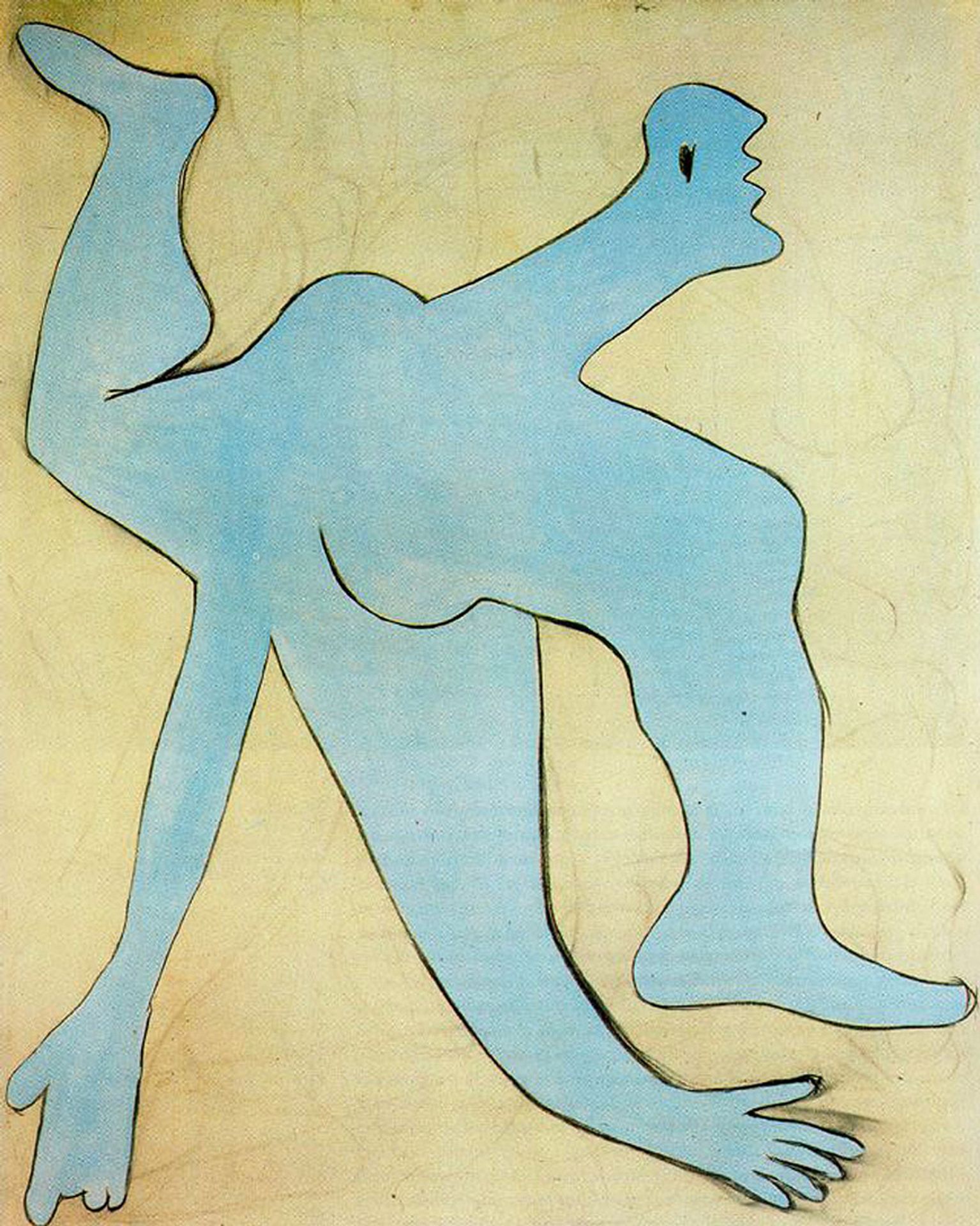
Editor: This is Picasso’s "A blue acrobat", created in 1929. It’s a really striking, mostly monochrome work of a figure in motion. What do you see in this piece, and what draws your eye? Curator: My attention is drawn to the dynamic tension established by the figure's pose. Note how the limbs extend outwards, seemingly defying gravity. The figure is defined by flowing contour lines against a subtle colored background that does not allow for spatial depth. This two-dimensionality contributes to the flattening of form. Editor: That's interesting. I was so focused on the single color that I didn't consider the negative space! Do you see elements of cubism in the monochrome palette? Curator: While the monochromatic approach departs from the polychromatic nature often seen in cubist paintings, consider the fracturing of form implied here. Notice the unconventional proportions, a hallmark of cubist interpretation of the human form. There's a departure from traditional anatomical representation in favor of simplified geometric forms. How might this abstraction challenge the viewer's perception of reality? Editor: It makes me rethink the idea of what a body looks like and what movement feels like. By focusing on line and form, Picasso seems to be capturing something more essential about acrobatics. Curator: Precisely! The artwork thus transcends mere representation. It allows us to reflect on form and balance. Editor: I never thought of the absence of color as such a strong formal element. Curator: Yes, analyzing how artists employ such compositional strategies will help expand your vocabulary for thinking and talking about art.