1580
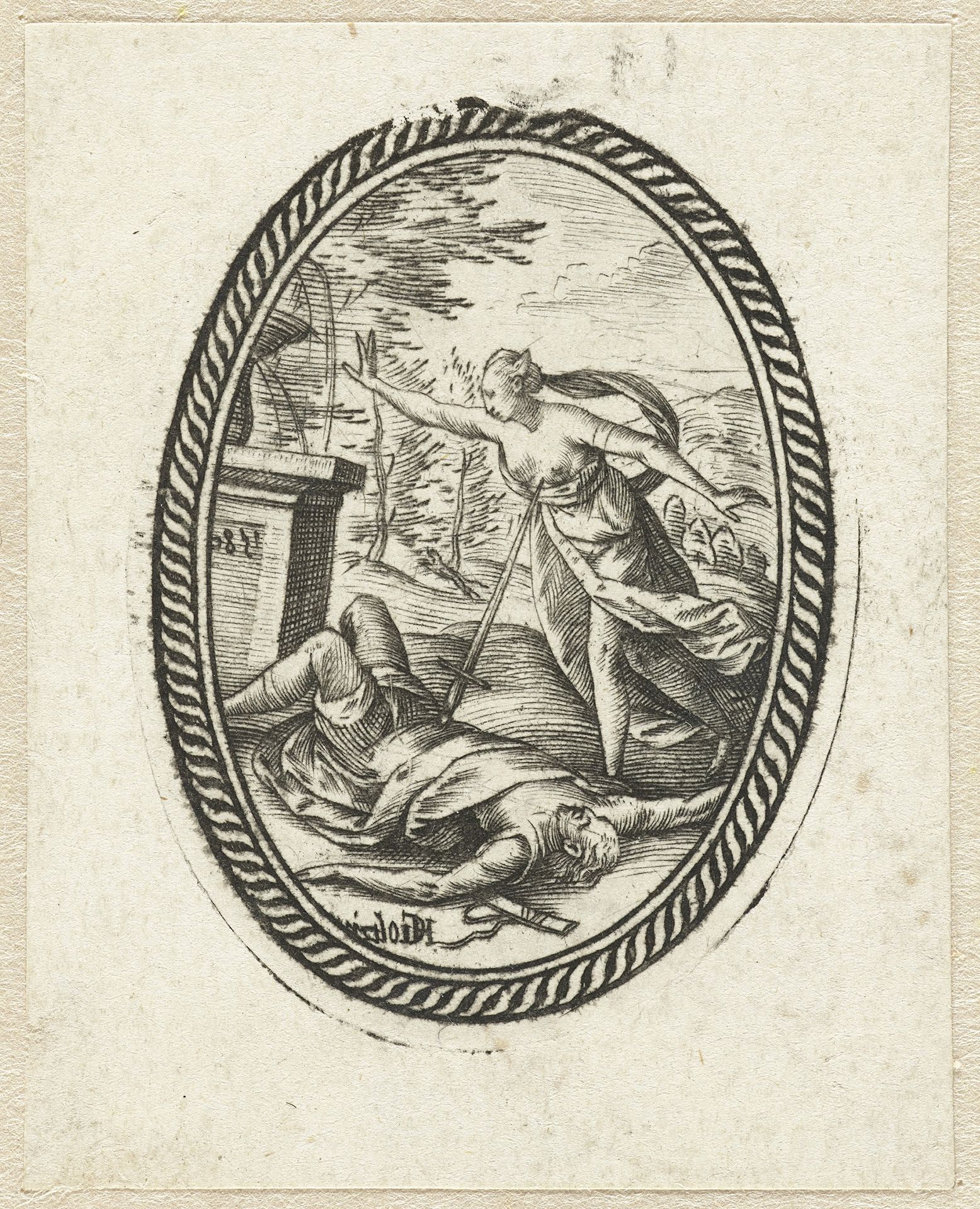
Pyramus en Thisbe

Hendrick Goltzius
1558 - 1617Location
RijksmuseumListen to curator's interpretation
Curatorial notes
Hendrick Goltzius etched "Pyramus and Thisbe," capturing a pivotal moment of Ovid’s tragic tale: Thisbe discovers Pyramus’s lifeless body. The sword, an ancient symbol of honor and decision, here becomes an instrument of despair. Consider the gesture of Thisbe’s outstretched arm. It echoes across centuries, from ancient depictions of mourning figures to Renaissance paintings of lamentation. This motif transcends mere grief; it is a primal scream against fate. Similarly, the sword—often associated with heroism—appears here, inverted, becoming an emblem of self-destruction. This transformation speaks to our deepest fears and anxieties, tapping into a collective memory of loss and despair. These symbols resurface through history, evolving, yet still resonating with the same raw emotions. Goltzius masterfully captures this enduring human drama, compelling us to confront our own fleeting existence.