1700 - 1725
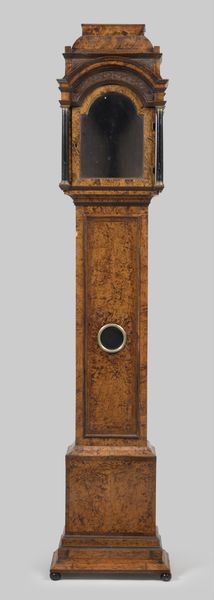
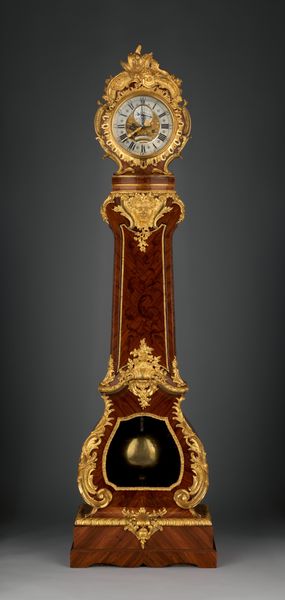
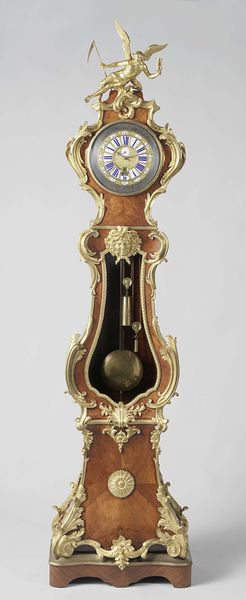
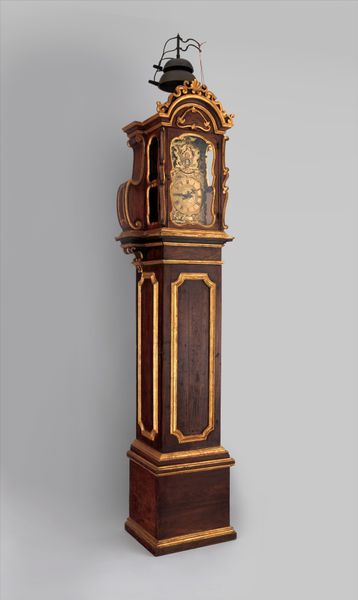
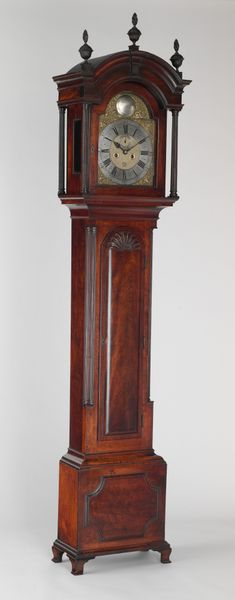
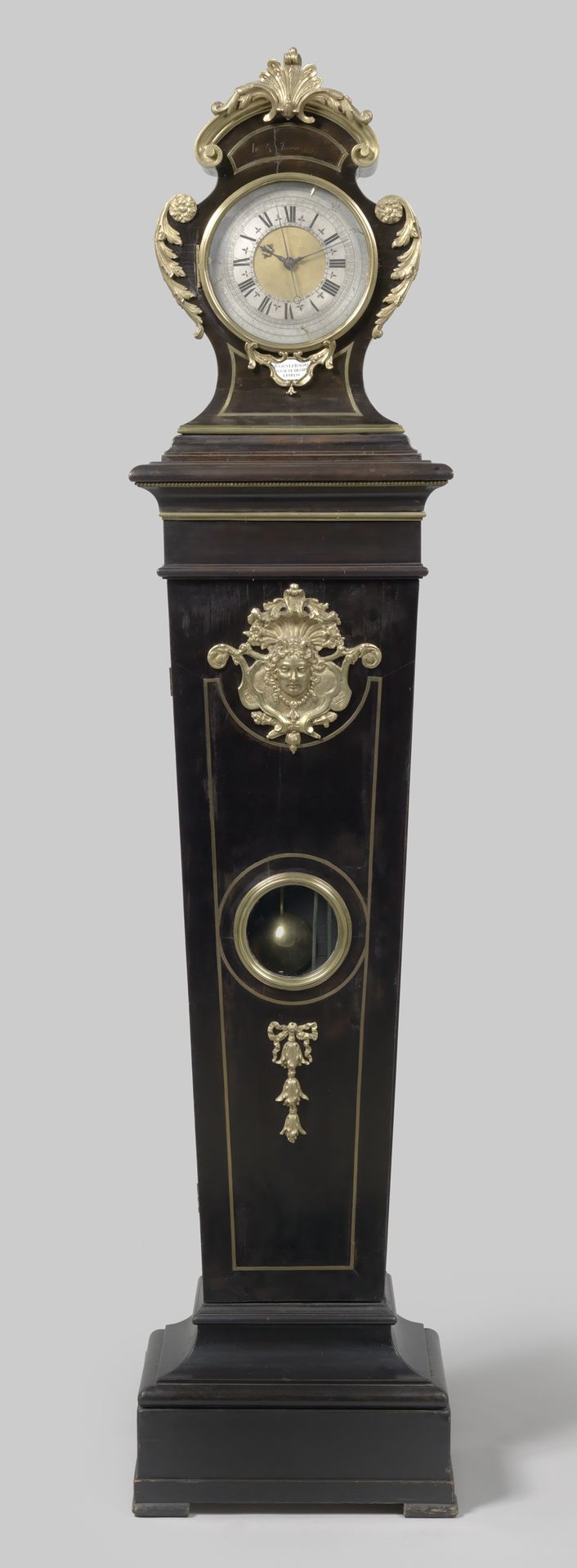
Staande klok, belijmd met zwart gebeitst perenhout

Julien Le Roy
1686 - 1759Location
RijksmuseumListen to curator's interpretation
Curatorial notes
This clock was made by Julien Le Roy, using black stained pear wood. Notice the recurring motif of the laurel wreath; a symbol since ancient Greece associated with victory and status. Note its placement framing the clock face, and repeated as a crest, crowning the emblem, a decorative shield. This placement speaks to a desire for recognition, a marking of status, or a symbolic victory over time itself. Think of how this laurel—a circle signifying eternal glory—echoes in the Roman Imperial portraits. The emperors sought to associate themselves with ceaseless power. The laurel has reappeared through Renaissance paintings, adorning philosophers and poets, each time imbuing its wearer with authority and esteem. Perhaps the owner of this clock subconsciously sought to capture some of that timeless prestige. The repetition of the laurel underscores its importance, appealing to a deep-seated human desire for honor and recognition. This emblem engages our shared, subconscious yearning for immortality.