n.d.
July


Listen to curator's interpretation
Curatorial notes
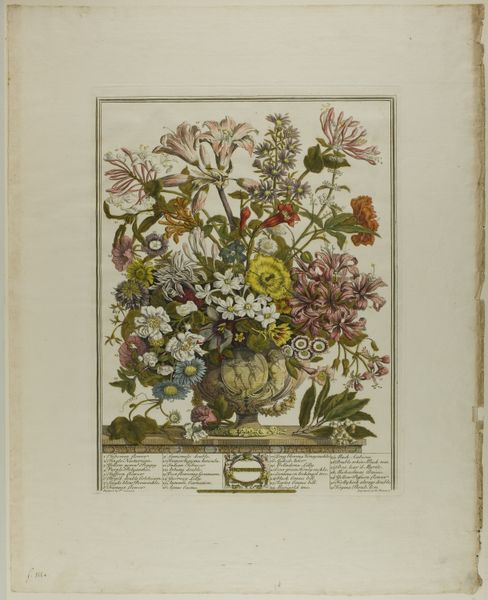
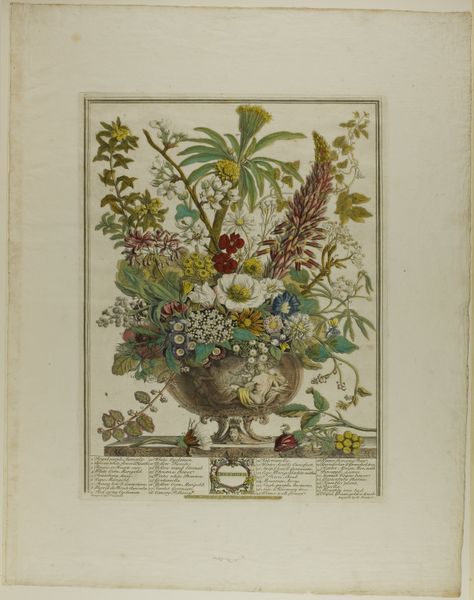
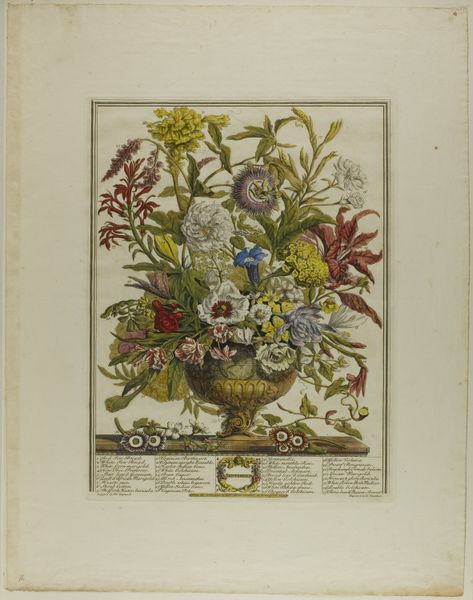
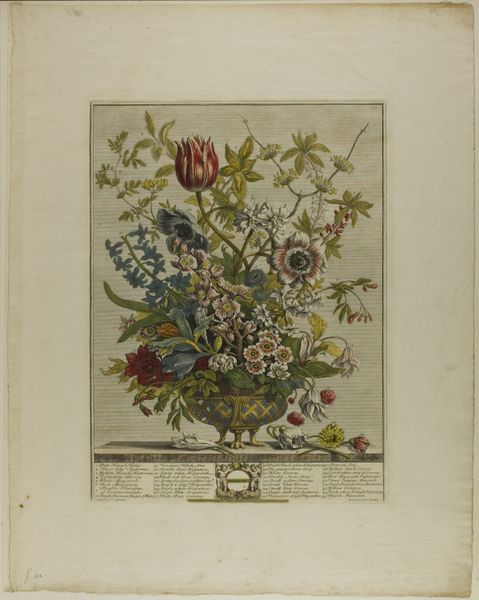
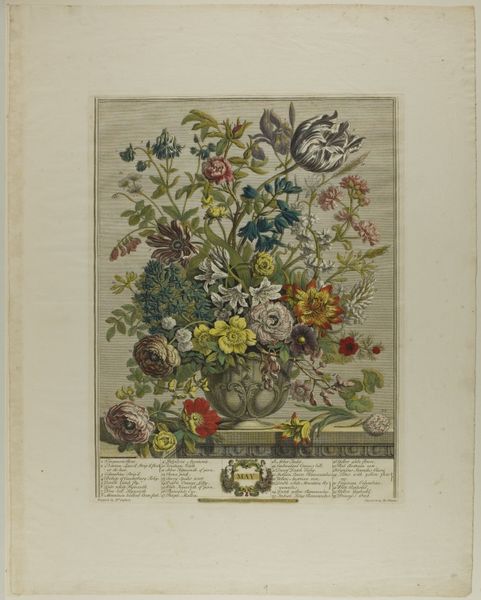
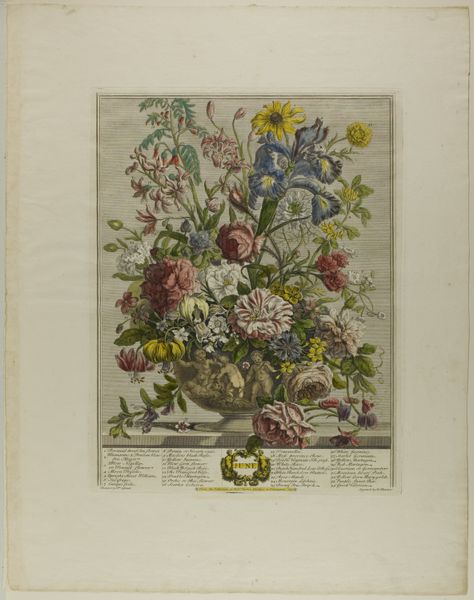
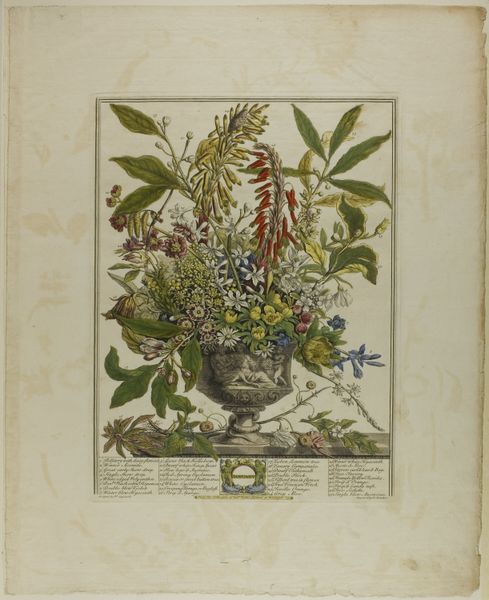
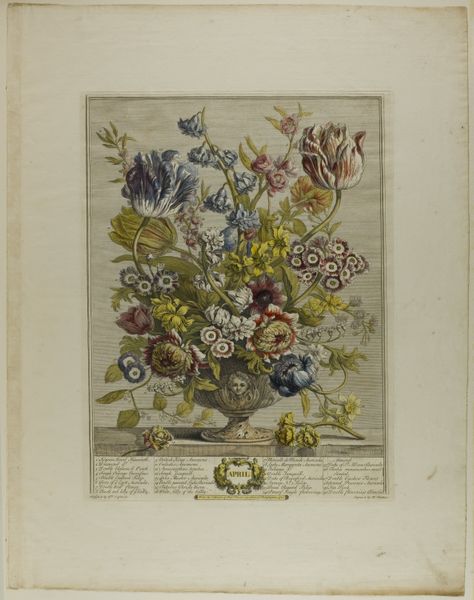
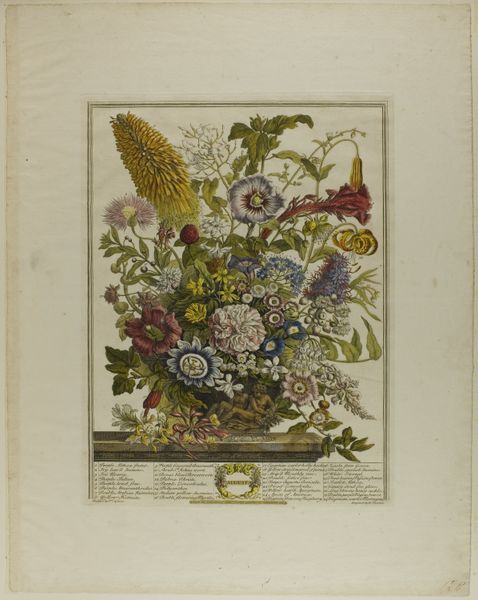
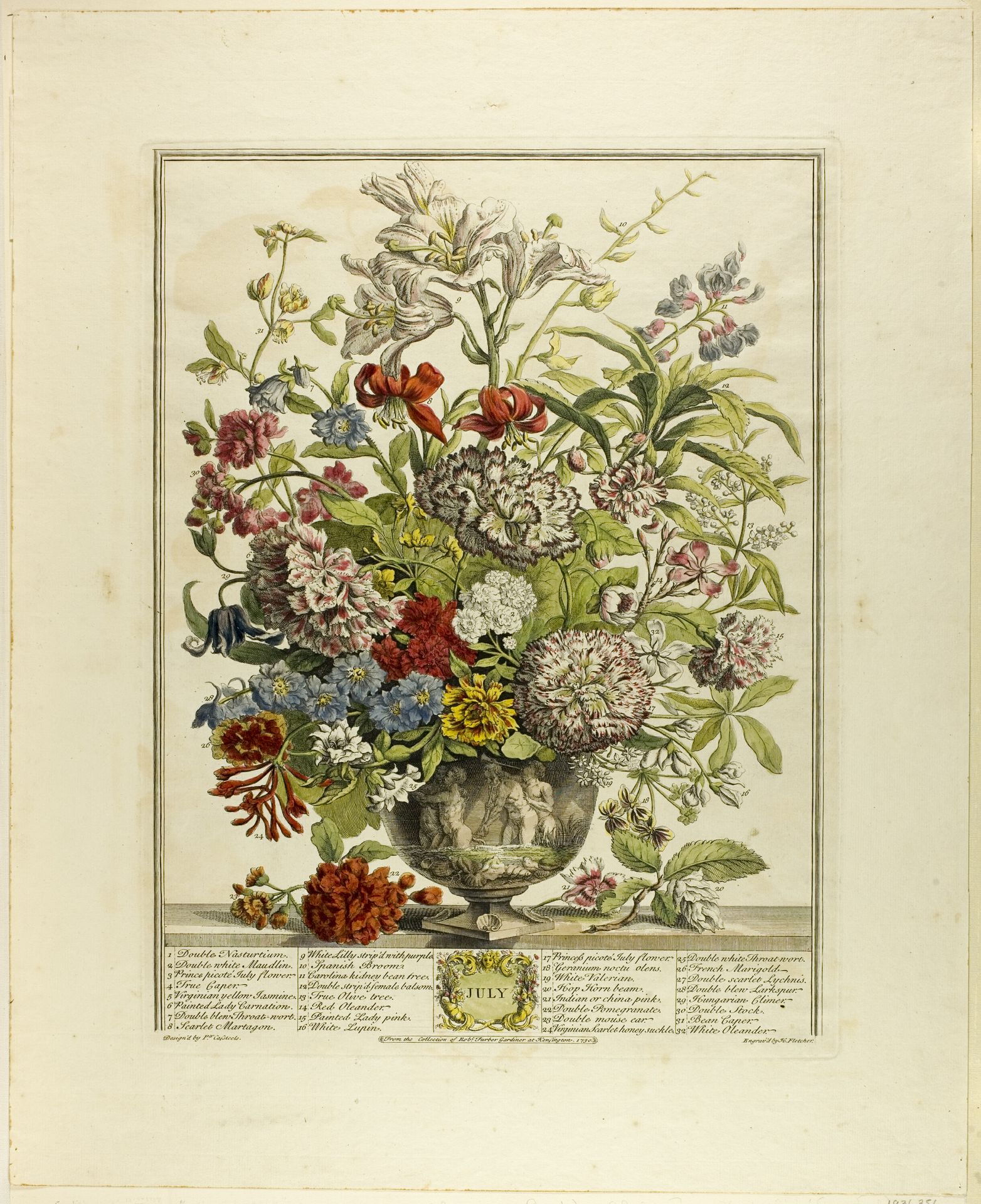
Editor: Here we have a vibrant still life called "July", an etching on paper by Henry Fletcher. It’s brimming with blossoms. I’m struck by the almost overwhelming abundance; it feels so full and lush, like a concentrated dose of summer. What do you see in this piece? Curator: Ah, "July," bursting with the promise of long days! It's interesting, isn't it, how an image can capture the feeling of a season. Beyond just pretty blooms, this work speaks volumes about the period's fascination with categorizing and understanding the natural world. The etching is essentially a floral catalogue, each flower meticulously rendered and identified. You notice that grid with a floral encyclopedia entry, right? What kind of vibe does that layering give you? Editor: A strange mix of art and science, I guess! Almost like a page from a textbook, but undeniably beautiful. Did these kinds of floral prints serve a specific purpose beyond decoration? Curator: Absolutely! They were educational tools, scientific records, status symbols showcasing cultivated knowledge, and purely decorative items— talk about multitasking! Prints like these democratized knowledge in a way; botanical information wasn’t just locked away in the gardens of the wealthy anymore. Editor: That's fascinating! So it's not *just* a pretty picture, but a window into a whole way of thinking about nature. I’ll definitely never look at floral art quite the same way. Curator: Indeed! It is a mirror reflecting how knowledge and art intertwined! Something to bloom upon, and contemplate as we continue to cultivate appreciation.